

























































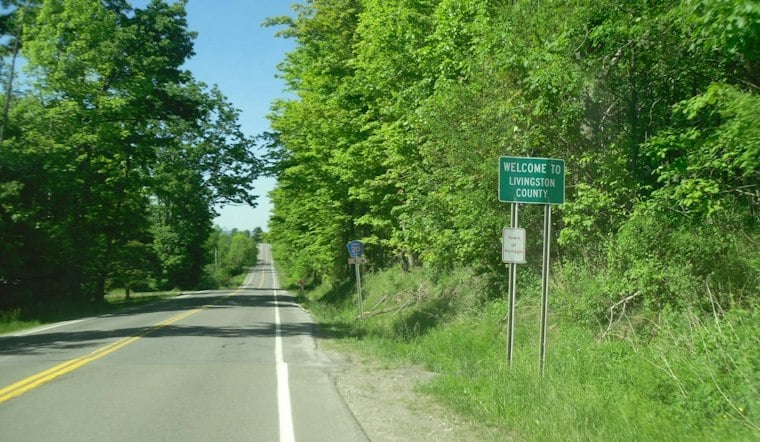
A wild deer harvested in the Town of Sparta has tested positive for chronic wasting disease, marking the first occurrence of the always-fatal illness in a New York wild deer since 2005. The New York State Department of Environmental Conservation confirmed the detection, which has triggered a mandatory testing requirement across a newly established six-town containment area in Livingston County.
How the Positive Case Was Confirmed
The infected animal was an adult female white-tailed deer, identified through DEC's statewide annual wild deer surveillance program, according to the Star-Gazette. A hunter harvested the deer on Oct. 3, and a regional meat processor collected a tissue sample for testing, per reporting from RochesterFirst. Initial testing indicated a positive result, and confirmatory testing on Nov. 4 verified chronic wasting disease in Livingston County's wild deer population, RochesterFirst reported.
The sample was tested and retested at the New York State Veterinary Diagnostic Laboratory at Cornell University, with additional testing now underway at a USDA laboratory in Iowa, the Star-Gazette reported. DEC has activated its chronic wasting disease response plan and says its initial priority is determining the extent of the outbreak and how prevalent the disease is among wild deer in the area, according to RochesterFirst.
Six Towns Now Under Mandatory Testing
DEC has established a containment area covering Conesus, Groveland, North Dansville, Sparta, Springwater and West Sparta, per the Star-Gazette. All hunters who harvest a deer within those towns must submit tissue samples to DEC for CWD testing, according to the NYSDEC. Hunters can submit samples at a DEC check station, a cooperating meat processor, a taxidermist, or a designated collection location, and may also submit just the deer's head at a designated drop site, RochesterFirst reported.
DEC is set to begin collecting on-site samples at containment-area collection stations on Nov. 12, the station's report notes. A transport permit from DEC will be required for any deer harvested within the containment area and taken to a processor or taxidermist outside it, the same account states. Hunters will be notified if their deer tests positive, and DEC will request the venison for proper disposal; those who surrender venison will receive a replacement carcass tag, RochesterFirst reported.
Additional Restrictions and the Road Ahead
Beyond testing, the containment area restricts movement of deer from captive facilities out of the zone, limits rehabilitation of deer from the area, and restricts transportation of deer products, including urine-based lures, outside the containment boundaries, according to RochesterFirst. DEC says these measures are meant to determine how prevalent the disease is and limit its potential spread. The containment area is expected to remain in place for at least five years and could be expanded or adjusted if additional cases turn up, per the same reporting. DEC says it may also add or expand containment areas elsewhere if new positive detections are found, the Star-Gazette reported.
Additional management measures down the line could include reducing local deer populations to keep disease prevalence low and limit spread further, RochesterFirst reported. DEC's own surveillance plan acknowledges that local eradication of CWD may be possible if the disease is caught soon after introduction while prevalence remains low and spread in the wild population is limited, though the agency cautions elsewhere that eradication efforts are difficult, costly and uncertain, according to the NYSDEC surveillance plan.
What Chronic Wasting Disease Does to Deer
CWD is an always-fatal transmissible disease that attacks the brain and central nervous system of deer, moose and elk, the Star-Gazette reported. Brendan Quirion, section head of DEC's Big Game Unit, described the outbreak as very serious and said infected deer may appear healthy in the disease's early stages. “Deer can look otherwise healthy when they're harvested,” Quirion told WHEC. Later-stage symptoms can include significant weight loss, drooling, unusual behavior, walking in circles and carrying the head low, RochesterFirst reported, which is why DEC is asking hunters within the containment area to take part in mandatory testing even if a harvested deer shows no visible symptoms.
No known cases of CWD have been found in humans, RochesterFirst reported, though the Centers for Disease Control and Prevention recommends against eating meat from any deer that tests positive, per the same report. DEC plans to host a virtual information session on Tuesday, Nov. 17, at 7 p.m., where officials will share information about CWD and discuss future management and containment options, according to WHEC and RochesterFirst.
Echoes of New York's 2005 Outbreak
New York's only prior wild-deer detection came in 2005, when the disease was found in seven deer in the central part of the state, according to NPR. At the time, the state drew a 10-mile radius around the locations where the infected deer were found and made it illegal to remove deer carcasses from that zone, with the testing station and related rules expected to stay in place for at least four more years, NPR reported. Since 2002, DEC has tested more than 70,000 wild deer statewide without finding another case until now, the Star-Gazette reported. A 2024 report had separately noted that a captive red deer herd in southern Herkimer County tested positive, and that DEC had by then tested more than 65,000 wild deer statewide since 2005 with no additional cases found, according to CIDRAP. That 2024 captive-herd finding prompted the state to activate its interagency CWD response plan and step up surveillance of wild deer in that area, CIDRAP reported.





