

























































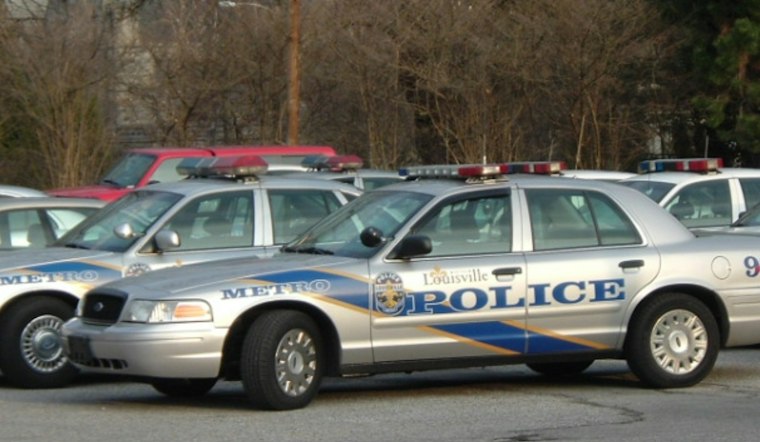
Louisville Metro Police spent just shy of $630,000 in overtime pay between Oct. 11 and Oct. 25, the department's lowest two-week total of the year, after Chief Paul Humphrey overhauled how unscheduled overtime gets approved. The change, put in place at the end of summer, requires direct supervisor sign-off and adds new layers of oversight to a budget line that has blown past its limit in each of the past four fiscal years.
According to The Courier-Journal, Humphrey updated the unscheduled-overtime approach to add oversight and require direct supervisor approval, a shift that followed a review of work hours and a staffing study. LMPD spokesperson Matt Sanders said the revised process has contributed to a significant reduction in overtime costs after about two months, and he said the approach keeps public safety the priority while LMPD remains responsible with taxpayer dollars.
The two-week figure is a sharp drop from recent norms. LMPD had averaged $913,000 in non-scheduled overtime pay over the previous 20 pay periods, the paper's reporting shows, making the late-October total roughly a third lower than the department's recent baseline.
A Department That Keeps Outspending Its Overtime Budget
LMPD is Louisville's most expensive department, and its non-scheduled overtime line has been a persistent trouble spot. The department exceeded its approximately $21.2 million non-scheduled overtime allocation for fiscal year 2025-26 by $2.6 million, or 12%, continuing a streak in which it has gone over budget in each of the past four fiscal years, per the same Courier-Journal account.
For the current fiscal year, LMPD was allocated $264 million overall, including $21 million earmarked specifically for non-scheduled overtime. Officials have attributed much of the department's high overtime spending to a shortage of 300 officers, the station's report notes, though the underlying calculation behind that figure was not detailed.
Staffing numbers show the gap has narrowed only modestly. As of Nov. 5, LMPD had 1,041 sworn officers, including 37 recruits, up from the 1,013 sworn officers the FBI recorded for the department in 2025.
Budget Writers Also Trimmed the Overtime Line
Metro Council's own budget actions have squeezed overtime spending from the other direction. The Courier-Journal reported that the council reduced non-scheduled overtime appropriations by about $1.9 million across public safety agencies, a cut that touched LMPD, Metro Corrections, Emergency Services and Louisville Fire.
A separate Louisville Metro Government announcement about the amended fiscal year 2026-27 budget put the reduction in non-scheduled overtime at $2.2 million. The two figures may reflect different scopes or budget versions, and the available records do not reconcile the discrepancy.
Humphrey Says the Goal Isn't to Eliminate Overtime
When he rolled out the new approval process in September, Humphrey sent a department-wide email clarifying that the goal was not to eliminate overtime but to ensure it was used, in his words, appropriately, strategically and in support of the department's mission. He told officers that officer safety, public safety and fiscal responsibility are not competing interests.
Humphrey also said supervisors were expected to appropriately manage manpower and ensure overtime usage meets the needs of the department and the city. That expectation lines up with LMPD's own standard operating procedure, which states that professional staff will seek supervisor approval before working unplanned overtime or compensatory time, according to the department's LMPD policy page.
Overtime controversies are not new to Louisville policing. A 2020 audit covered by WAVE 3 News found the city spent about $17,571,500 on police overtime from December 2016 through August 2018, mostly tied to special events, with discrepancies totaling 5,000 overtime hours. In seven of 16 events reviewed, overtime costs exceeded the amounts billed to third parties by roughly $300,000, even though LMPD had recorded $2,618,100 in third-party receipts for special events and another $393,900 from reimbursable agreements during that same period.





