

























































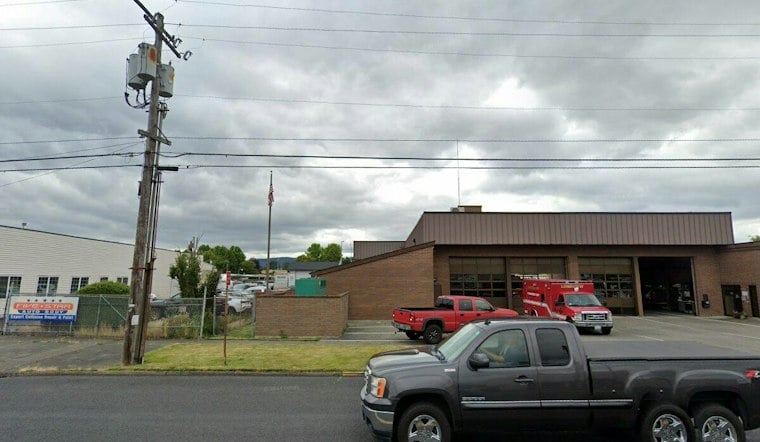
Longview voters have rejected Proposition 1, a Fire & EMS property-tax lid lift that would have funded a third fire station, a new engine and eight new emergency personnel, according to unofficial election returns reported by Lower Columbia Currents. The measure would have added $1.15 per $1,000 of assessed property valuation, raising Longview's property tax rate by about 58% in 2027 and generating roughly $6 million annually for the fire department.
The levy's defeat leaves the city with few clear paths forward to address staffing and coverage gaps that officials and residents have debated for years. Mayor Erik Halvorson said the measure's failure reflected concerns about cost and timing rather than a lack of support for firefighters, according to Lower Columbia Currents. Halvorson identified restoring funding for equipment depreciation and replacement as a pressing need for the department, after the city council cut $1 million earmarked for that purpose in the last budget cycle, though the city has since restored some of that funding.
What Proposition 1 Would Have Funded
According to the City of Longview, the levy was intended to pay for an additional fire station, replacement of aging equipment, and additional firefighters and paramedics or EMTs. The city said the measure would have cost the owner of a median-priced Longview home about $32 per month, while an owner of a $300,000 home would have paid an additional $345 per year under the proposal reported by the seed article. A separate estimate from FireRescue1 put the cost at roughly $460 a year, or $38 a month, for a home valued at $399,900 — the two figures reflect different home values rather than conflicting city estimates.
The proposal would have added eight new positions: five firefighters/EMTs, a deputy fire marshal, a fire prevention specialist and an assistant chief. That staffing increase would have allowed the department to stand up a fourth three-person engine company and raise minimum staffing per shift from nine to 12 firefighter/EMTs, the same report notes. The city said a future Station 83 would have closed a five-minute response-time coverage gap for residents of Columbia Heights and the Highlands, since some areas of Longview currently cannot be reached by emergency vehicles within the national five-minute response-time standard.
Longview Fire currently operates from two stations, on Commerce and 38th avenues, and fields 43 career EMT/firefighters and four paramedic/firefighters across three career-staffed fire units and one command unit, per the city. National standards call for at least four firefighters to staff each engine, but Longview's engines are staffed by three. A 2012 deployment and staffing study recommended the city add two more fire stations and 18 additional firefighters; since then, Longview has hired only three firefighters and lost a fire inspector position.
Call Volume Has Climbed for Years
The city said Longview is responding to significantly more emergency calls today than it did a decade ago. FireRescue1 reported that Longview logged 6,088 calls for service in 2024, down from a 2022 peak of 6,555 but well above the 4,037 calls recorded in 2010. The city said roughly 70 to 80% of current emergency calls are medical in nature, while Lower Columbia Currents separately reported that ambulance calls now account for 85% of the department's responses — figures that differ but both point to medical calls dominating the workload. That outlet also noted that the department's 2025 annual report recorded 5,910 total calls and 191 fire calls, compared with 5,470 total calls and 315 fire calls in 2006.
City officials had weighed other options before placing Proposition 1 on the ballot. Longview previously tried merging its fire department with Cowlitz 2 Fire & Rescue, but that effort did not work out, in part because the firefighters union would have opposed it. The city also considered creating a separate fire department taxing district; FireRescue1 reported that plan was scrapped after being deemed infeasible, while Lower Columbia Currents reported the city abandoned the idea due to public opposition and because it would not have generated additional tax revenue. The city has said Cowlitz 2 provides mutual aid but is not funded or staffed to serve as Longview's primary fire and EMS provider.
Officials Unsure What Comes Next
Councilmember Wayne Nichols called the election results unfortunate and said he did not know what the city should do next, per the seed report. Councilmember Ruth Kendall said voters faced legitimate economic reasons to oppose higher taxes and that Longview needs to regroup and find a different approach to ensure adequate fire coverage citywide. Kendall also pointed to a longer-term fix, saying the city needs more employers to broaden its tax base and ease service costs, since residential development costs more in services than it generates in tax revenue; she said new employers could help fund a fire station while city staff work to remove business barriers and encourage new businesses — framing economic growth as a long-term solution to the funding problem.
Not everyone wanted the levy to pass. Former Longview mayor Spencer Boudreau, a critic of Proposition 1, said he was concerned about the tax increase's impact on landlords and rental rates, and argued the council should instead work to improve medical and fire response times within the city's current resources. Fire Chief Brad Hannig and City Manager Ken Wills did not return calls for comment, according to the seed report.
A Tech Fix Already Underway
Separate from Proposition 1, Longview is moving ahead with a pilot project to install traffic signal pre-emption technology at 16 intersections and on six emergency vehicles, with a planned spring start. The city council approved $245,000 for the effort on September 24, 2026. The system gives responding emergency vehicles a green signal, and a project map identifies intersections along Ocean Beach Highway, Nichols Boulevard, Tennant Way and Douglas Street for the upgrades.
The Federal Highway Administration reports that signal pre-emption saves 10 to 30 seconds at each intersection and can cut 40 seconds to two minutes off travel time through four intersections combined, according to the seed report. Nichols said the technology adds to the city's options but does not meet all of its needs, underscoring that the pre-emption project is a partial measure rather than a replacement for the staffing and station upgrades Proposition 1 would have funded.
Longview's Levy Was Not the Only One to Struggle
Longview was not alone in facing a tough night for fire funding measures in the November 3 election. In Clallam County, Fire District 2's 10-year EMS levy was narrowly trailing in initial returns, according to the Peninsula Daily News; the measure received 55.71% approval but fell short of the 60% supermajority required to pass, while neighboring Clallam County Fire District 1's levy lid lift, which needed only a simple majority, had 56.10% approval. In Franklin County, 62.1% of voters opposed a levy lift for Fire District 3 — 1,299 votes against to 794 in favor — a measure that would have added more than $1 million to the district's budget, according to the Tri-City Herald.
The Proposition 1 tax increase was proposed as permanent, intended to cover long-term staffing costs and ease the effect of the state's 1% annual property-tax growth limit. With the measure's defeat, the funding mechanism the city had built around those long-term costs is no longer in place, and officials have not laid out what, if anything, will replace it.




