

























































The key question in the 1969 Lake Erie Jane Doe case is whether archived evidence can yield a usable DNA profile for comparison with Tammy Quinn, whose mother, Virginia Ann Salinski Quinn, disappeared from Cleveland in 1960. No identification has been made. The Cuyahoga County Medical Examiner’s Office found the evidence after initially believing it had no DNA from the case, Cleveland 19 News reported. Quinn was less than a year old when her mother, then 35, disappeared, and she has spent years trying to learn what happened.
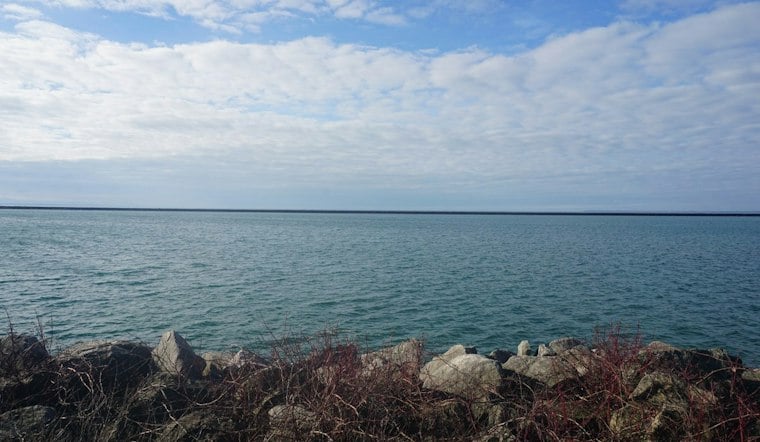
The unidentified woman’s body was found floating in Lake Erie near the Ninth Street Pier in 1969. Investigators estimated she was 35 to 45 years old, about 5 feet 5 inches tall and 201 pounds, with black hair and brown eyes. Virginia would have been 44 that year; Quinn told Cleveland 19 News that her mother’s height and weight were similar to the estimates.
Quinn told the outlet that family photos bore an uncanny resemblance to the Jane Doe case, and that her grandmother and sister also resembled the woman. “But if it’s not my mom, it’s somebody’s mother. So somebody’s missed her and needs to find out who,” Quinn said. She has acknowledged that the woman may not be her mother, but said she intends to keep searching.
A Family History Full of Gaps
Quinn grew up near East 79th Street and St. Clair Avenue in Cleveland, and her father died sometime in the 1970s, according to Cleveland 19 News. Her family never learned what became of Virginia and eventually discovered that no one had reported her missing. Quinn’s sister and her sister’s fiancé searched ancestry sites and unsolved-case databases for a possible match, the station reported.
Quinn said she contacted 19 Investigates after seeing the outlet’s 2024 report on the Jane Doe case. At the time, that report said the woman’s identity and how she died remained unknown. When 19 Investigates requested the original missing-persons report from Cleveland police, the city said the information was no longer available under its records-retention policy, Cleveland 19 News reported.
Old Evidence Surfaces at the Medical Examiner's Office
Justin Wilson, chief investigator for the Cuyahoga County Medical Examiner’s Office, said similarities between the cases led him to search the office’s archives. Investigators found old evidence that could potentially spare the office a costly exhumation, but first they must determine whether it can yield a usable DNA profile for comparison with Tammy Quinn’s.
Wilson said the office is exploring testing options and hopes the old evidence is not too degraded to use. The woman’s death remains unexplained: Wilson described it as an “assumed drowning,” while the manner of death is listed as undetermined. Investigators found no signs of foul play or trauma at the time. Wilson said the office hopes to identify the woman and give her family closure, whether or not she is Virginia Quinn.
How DNA Has Cracked Similar Ohio Cold Cases
Advances in forensic science have helped solve other long-dormant Lake Erie cases in recent years. A woman found on the Lake Erie shore in Sandusky in 1980 was identified as Patricia Greenwood, born in 1948, in 2023 after DNA testing and genetic genealogy work, according to Cleveland 19 News. In another Cuyahoga County case, unidentified remains were positively identified as Danny Lee Mitchell in April 2025 through advanced DNA testing and investigative genetic genealogy, News 5 Cleveland reported — though initial testing in 2023 only confirmed a maternal relationship between the remains and Mitchell's siblings, and it took a second round of testing in 2024 to develop a profile suitable for identification.
Genetic genealogy, which CNN describes as comparing unidentified DNA against profiles the public has submitted to commercial databases, has also helped crack cases well beyond Cleveland. Investigators in Beaver County, Pennsylvania, have said newer DNA testing methods can succeed where earlier testing failed or wasn't available, noting that additional testing options exist now that didn't exist 12 years ago, according to CBS Pittsburgh. In Cincinnati, investigators used investigative genetic genealogy this year to identify Travis Bingham, a man whose body was recovered from the Ohio River in 2003, as reported by FOX19. A separate 1969 Cleveland cold case saw a local nonprofit, the Porchlight Project, agree to fully fund DNA testing and genetic genealogy work, according to Cleveland Scene. None of those cases confirms what will happen with the Lake Erie Jane Doe evidence, but they show how far DNA technology has come since 1969.
Ohio’s Forensic Resources in Context
Available figures offer broad context, not a current Ohio tally: medical examiner and coroner offices reported 11,380 unidentified remains nationwide as of 2018, according to NamUs. That figure does not establish how many unidentified-person cases are currently listed in Ohio. Ohio investigators can also use the state BCI’s Project LINK. According to ABC 6 On Your Side, the program had opened 487 cases and closed 412 since 2021. Those program totals do not show how many cases involve unidentified remains or predict whether the Lake Erie evidence will yield an identification.
The condition of decades-old evidence is another uncertainty. The National Institute of Justice notes that sunlight, heat and humidity can increase DNA degradation and make interpretation more challenging. The condition and testability of the Lake Erie evidence remain unknown.
For now, there is no confirmation that Lake Erie Jane Doe is Virginia Quinn, and whether a usable DNA profile can even be extracted from the old evidence remains an open question for the medical examiner's office. Anyone with information is asked to contact the Cuyahoga County Medical Examiner's Office at 216-721-5610, select 1 and ask for the investigations department.



