

























































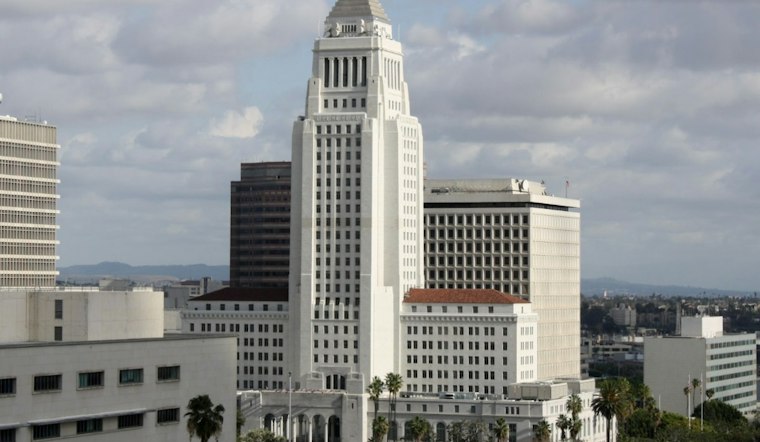
The Los Angeles City Council voted 13-0 to approve a working plan for council expansion and a wider set of governance reforms, sending the next round of charter questions onto a calendar that runs through 2027.
The schedule came from the five-member Ad Hoc Committee on Charter Review, which Councilmember Tim McOsker leads. MyNewsLA reported the unanimous vote and the committee's agreement on the plan. Final proposals are intended to be ready for the November 2028 ballot. That is a target for readiness, not a guarantee that any particular measure will qualify or appear.
A Calendar, Not a Verdict
What the council approved is a work plan, not a new council size, a new voting system, or a rewritten charter. Discussions are scheduled to begin in December with separation of powers and institutional structure.
That first block covers the relationship between mayor and council, executive authority, oversight, checks and balances, and the authority and accountability of general managers. The committee's framing question is blunt enough: who governs?
The city has been here before in a narrower form. The council initiated a process to amend the City Charter in 2022, after a leaked audio recording centered on abusing redistricting to consolidate power for members. Separate corruption scandals involving four former council members produced federal charges and fed calls for transparency and accountability. The new calendar is the latest official attempt to turn that pressure into a sequence of decisions rather than another round of headlines.
Representation Comes Next
From January through March 2027, the committee plans to take up how Angelenos are represented: elections, vacancies, and democratic processes. Council expansion and boroughs are on that list, along with neighborhood-level representation and public trust.
Those are the questions the council already declined to rush. In February, a city Charter Reform Commission recommended growing the council from 15 to 25 members and moving city elections to ranked-choice voting starting in 2032, LAist reported.
In June, council members voted to leave those more controversial recommendations off the November ballot, according to LAist. The working plan puts expansion and elections back on the table in early 2027, after the first institutional-structure discussions, rather than treating the June decision as the end of the argument.
The same LAist account of the commission's recommendation noted the contrast other cities already live with: New York, with 8 million people, has a 51-member council, and Chicago, with 2.7 million residents, has 50. Los Angeles still elects 15. A bigger council would change district size, staffing, and the arithmetic of a majority. A borough system would add another layer between neighborhood and City Hall. Neither is decided by this vote.
Services, Then the Money
April through June 2027 is reserved for service delivery. The agenda includes departmental structure, operations, consolidations and realignment, boards and commissions, appointment authority, and independent oversight.
That is the machinery voters actually encounter: which department answers, who appoints the people who sit on commissions, and whether an oversight body can do more than issue a report. Consolidation sounds efficient until two departments with different constituencies get folded together. The plan at least names those tradeoffs instead of burying them in a single ballot title.
Workforce, pensions, and fiscal governance are last, from July through December 2027. The list runs from civil service, hiring, recruitment, and employee discipline to labor relations, public-safety personnel systems, pension systems, and budget authority. McOsker said the schedule leaves extra time for labor negotiations and, in his words, to "make sure we can do fiscal analysis, actuarial studies if we should have any need for that."
Putting pensions and budget authority at the end is a practical choice. A larger council, a new election system, or a reshuffled department chart all have a price, and actuarial work on pensions is not something a committee finishes between two Tuesday meetings. The extra time is built in if those studies are needed. It is not a finding that they will be.
Voters Already Rewrote Parts of the Charter
The new schedule sits on top of a ballot the city has only just finished. On Nov. 3, voters approved eight measures. Two were tax-related. The other six change aspects of the City Charter and how city government works, MyNewsLA reported. The city is moving forward with plans to implement them.
Those six charter changes are not the same project as the 2027 study calendar. They are already approved by voters. The committee's themes — who governs, how residents are represented, how services are delivered, and how the workforce and the budget are sustained — are the questions council members chose not to settle on that same ballot.
Legal status, effective dates, and implementation details of the eight measures were not independently established beyond that reported voter approval and the city's stated plans to carry them out. What is clear from the sequence is the split: narrower charter and tax measures went to voters this month, while council size and ranked-choice voting did not.
What the 13-0 Vote Actually Starts
McOsker said the point of the long runway is to have final proposals ready to place on the November 2028 ballot. The committee has not recommended a council size, a borough map, or a voting system, and nothing in the 13-0 vote puts a measure on that ballot by itself.
The first scheduled conversation is the least glamorous and the most structural. In December, the committee starts with separation of powers: mayor and council, executive authority, oversight, and what general managers can be held to. Representation, including whether 15 seats is still the right number, waits until January.
Angelenos who want a bigger council, ranked-choice ballots, or a harder look at pensions will have to watch a year of themed discussions before any of it is written as a proposal. The council has agreed on the order of the questions. It has not agreed on the answers.




