

























































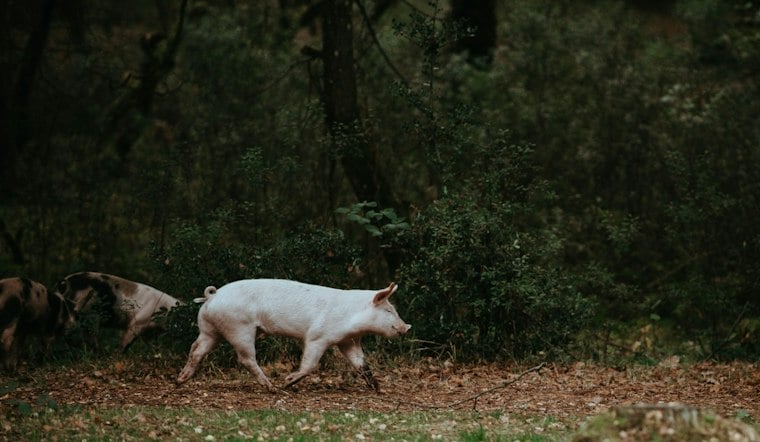
Louisiana is getting roughly $3 million in federal money to fight back against a feral hog population that some estimates put at nearly a million animals statewide. The funding will pay for technicians and advanced traps across 27 parishes, part of a broader push by the U.S. Department of Agriculture to curb the damage feral swine inflict on farmland, waterways and wildlife habitat nationwide.
The money comes from a $51.9 million round of USDA funding awarded to 29 partnership projects in 13 states, according to the Natural Resources Conservation Service. Louisiana's roughly $3 million share was confirmed by NOLA.com, which reported the state received a similar $4 million grant a few years earlier. WBRZ reported the federal government is spending millions to fight feral hog populations across 13 states, including Louisiana.
In Louisiana, the project spans 16.6 million acres across 27 parishes, including parts of the Red River Basin and Mississippi River Basin, according to Meat + Poultry. The trade publication reports the project is meant to establish enhanced surveillance and trapping methods, assess damage to natural resources, and expand coordinated removal efforts across that footprint. NOLA.com's report notes the grant will specifically be used to hire technicians and deploy advanced traps in the field.
Why Landowner Buy-In Matters
Officials hope the funding will draw more landowners into the effort through education and hands-on, field-based training, since much of the hog damage happens on private agricultural and timber land. Feral hogs root up soil, foul waterways and tear into crops, and they also carry diseases that can spread to livestock and humans. The USDA's Animal and Plant Health Inspection Service says its broader strategy for shrinking the animals' range leans on targeted removal, encouraging landowners to report new sightings in hog-free areas, and quickly responding when populations show up or move into new territory, according to the agency's own description of its approach.
Just how big Louisiana's hog problem has become depends on which estimate you use. An LSU AgCenter report found feral swine present in all 64 parishes, with a statewide population estimated at roughly 700,000 to 900,000 animals. A separate 2023 estimate from the Louisiana Department of Wildlife and Fisheries, cited in a different LSU AgCenter article, put the number above 900,000. The estimates differ.
Costly Damage, Disputed Numbers
The financial toll is similarly contested. An LSU AgCenter survey pegged annual losses from feral swine on Louisiana's agricultural and timber lands at $91.1 million, split between $66.2 million in direct production losses and $24.9 million in other damage. NOLA.com, however, reported the cost to Louisiana farmers at around $100 million a year, while an earlier 2013 LSU AgCenter study had placed statewide losses closer to $74.1 million. Louisiana Agriculture Commissioner Mike Strain told NOLA.com that about 90% of the state's feral pigs would need to be captured or killed every year to meaningfully control the population, a far steeper target than the 70% to 75% harvest rate the LSU AgCenter report says is needed just to hold numbers steady.
Even the size of the national program meant to fund fixes like Louisiana's is described differently depending on the outlet. WBRZ characterized the effort as part of a broader $109 million investment in USDA's feral swine eradication and control pilot program, while Meat + Poultry put that broader figure at $105 million. Whichever total is accurate, the $51.9 million announced in funding is meant to flow directly to on-the-ground partnership projects like Louisiana's, which officials hope will finally start bending the curve on a population that has proven difficult to pin down, let alone control.




