

























































Two different questions about the subsurface
The doctoral-winning project by Ayman Said focuses on how carbon dioxide moves underground. According to The Reveille, it combines generative artificial intelligence with physics models to simulate that movement. Said told the newspaper that CO2 may escape through faults, folds, other geological irregularities or former well locations; injection equipment can also create or reactivate such pathways. He said the modeling could help estimate what happens between seismic surveys, describing a snapshot after five years followed by another survey two or three years later.
The Reveille reported that Said’s paper is under review and is expected to appear in Computational Geosciences. Said described the work as building on two earlier research papers. He also told the newspaper he believes he is the first LSU doctoral student to take first place in the international contest.
How underground CO2 storage is regulated
As separate regulatory context, the U.S. Environmental Protection Agency describes Class VI wells as injecting CO2 into deep rock formations for long-term underground storage. That applies to permitted storage projects, not to Said’s research itself. For Class VI projects, EPA guidance identifies site characterization and area-of-review delineation and corrective action, as well as testing and monitoring, reporting and recordkeeping, among the requirements. This guidance provides general Class VI context; it does not establish Texas-specific oversight or detail how an individual suspected leak is handled.
Nicolas Manica’s undergraduate-winning research addresses a different subsurface problem: whether surfactants and varying salinity can improve oil recovery from rock. The Reveille reported that he tested non-ionic surfactants on unconventional Permian Basin rocks and likened them to soap. An LSU repository record describes a related project screening nonionic, anionic and cationic surfactants at different concentrations and brine salinities. The Reveille reported that Manica had worked on the research for almost two years and spent two months writing it up; it also said his paper had been published in OnePetro.
How the students reached the international contest
The Society of Petroleum Engineers says the competition begins with abstract review. Successful applicants present at a regional contest, and regional winners are invited to present a full paper to an international panel at the SPE Annual Technical Conference and Exhibition. The contest spans 14 regions. According to The Reveille, Said competed at LSU in March and advanced to the regional round in May before the international event.
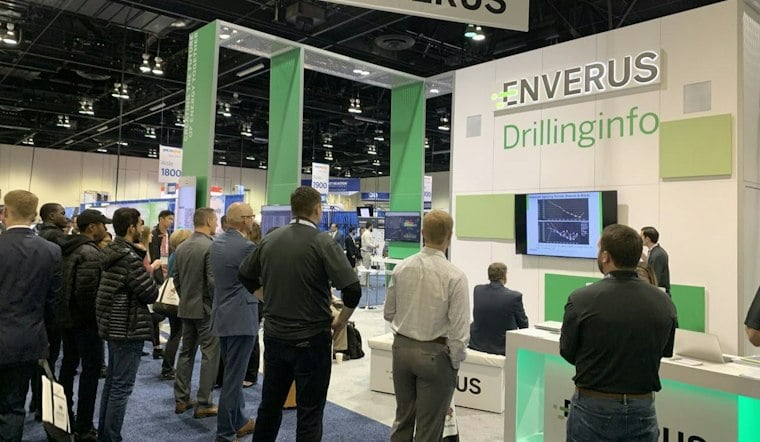
The Reveille reported that the Houston contest ran October 21–23, with LSU junior Nicolas Manica winning the undergraduate division and fifth-year doctoral student Ayman Said winning the doctoral division. Each received $1,000. The newspaper also reported that no LSU student had placed in the international contest’s top three since 2019.



