

























































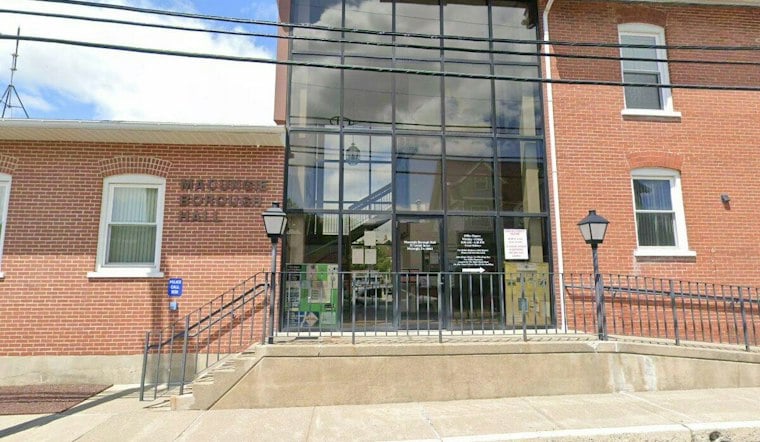
Macungie Borough Council voted 4-2 on Monday to adopt a new agenda policy and meeting code of conduct, capping months of debate over how residents can speak up at public meetings. The rules took effect immediately, and residents in the room applauded once the vote was final.
Council members Megan Sell, Stan Landis, Thomas Ashelman and Greg Reinbold voted in favor of the measure, known as Resolution 2026-20, according to Lehigh Valley Press. Council President Carl Sell Jr. and Councilman Greg Hutchison voted against it, while Lynette Sell was absent from the vote. The new policy grew out of discussions that stretched over several months, covering public comment procedures, agenda preparation and meeting conduct.
What the New Rules Actually Change
The policy sets rules for public participation, agenda preparation, meeting decorum and the authority of the council president during meetings, the outlet reports. One of the more tangible changes bumps the public speaking limit from three minutes to four minutes per speaker. Regular meetings will generally include two public comment periods — one near the beginning for items not on the agenda, and a second held before council takes official action on agenda items.
The resolution's adoption followed a motion from Megan Sell to approve it with language on agenda amendments removed, while keeping a process in place for adding items to future agendas. The measure, per the same account, recognizes the importance of public participation in municipal government and aims to provide a reasonable opportunity for comment consistent with the Pennsylvania Sunshine Act.
Debate Over Comment Limits and Decorum
Not everyone on the dais was sold on giving speakers more time. Carl Sell Jr. argued for keeping the three-minute limit, saying three minutes was sufficient for residents to comment. Hutchison questioned extending public comment altogether, telling fellow council members the council was there to do business, not entertain people.
Resident Paul Licata asked whether the new rules would require council to answer questions raised during public comment. The adopted policy addresses that directly: public comment is not intended to function as a question-and-answer session, though council members or staff may respond to questions at their discretion. The policy also states that council will make a reasonable effort to have staff provide answers after public meetings, subject to legal, logistical, informational and other limitations, the article notes.
Code of Conduct and Disruptive Behavior
Beyond comment timing, the new code of conduct applies to council members, borough staff and residents attending meetings alike. It expects all attendees and participants to behave civilly, orderly and respectfully, and it lays out procedures for addressing disruptive conduct when it arises.
The changes arrive as a borough solicitor has pointed to upcoming changes to the Pennsylvania Sunshine Act, which are expected to take effect in December 2026 and will limit the circumstances under which municipalities can amend meeting agendas. Pennsylvania's Sunshine Act establishes it as public policy to ensure citizens have notice of and the right to attend agency meetings, with the Pennsylvania General Assembly's statutory text framing public access to deliberations as vital to the democratic process. The law's definition of an agency, under a related section of state statute, explicitly includes councils of political subdivisions such as boroughs.
Not Just a Macungie Problem
Macungie is hardly alone in wrestling with how to structure public comment. Long Beach's City Council passed a policy consolidating most public comment into a 90-minute window at the start of its weekly meetings, a move that squeaked through on a 6-3 vote after roughly two hours of mostly negative testimony, according to the Long Beach Post. Under that policy, speakers generally get three minutes, though the presiding officer can trim that down if too many people are waiting, or extend the period in 30-minute increments.
In Muncie, Indiana, city council rules moved public comment to the start of meetings, cut the speaking limit from three minutes to two, and barred comments during the first reading of an ordinance — changes that drew more than an hour of pushback from residents demanding they be reversed, as Indiana Public Radio reported. Meanwhile, in Strathmore, a proposed 10-minute cap on the entire public comment portion of meetings met resistance in mid-October, according to The Spec; that council ended its meeting without adopting any new limit, leaving revised wording to come back before members later.



