

























































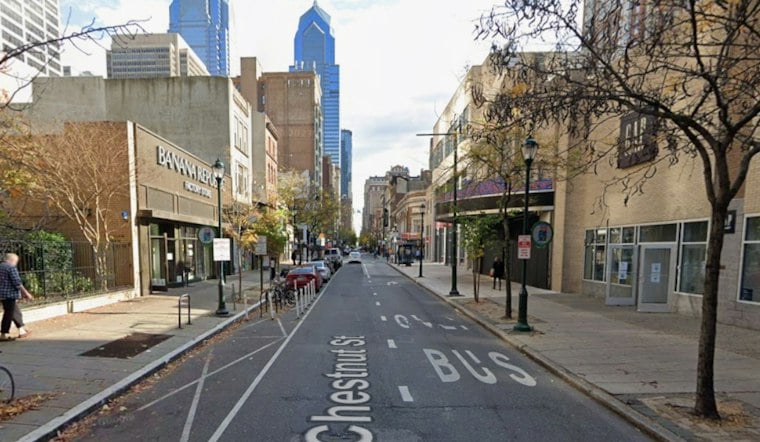
American Trench opened its first Philadelphia city store on November 13 at 1931 Chestnut Street in Rittenhouse, bringing the Main Line-born menswear brand's American-made coats, suiting, and cult-favorite socks into the heart of the city. The storefront caps a search that founder Jacob Hurwitz says took roughly two years of pursuing retail spaces in the neighborhood.
From a Narberth Friendship to a Kickstarter Coat
According to Philadelphia Magazine, Hurwitz and co-founder David Neill both grew up in Narberth and graduated from Lower Merion High School before building what the outlet calls a Main Line-born menswear brand. Hurwitz's inspiration reportedly traces back to 2009, when he bought a vintage Aquascutum raincoat in London. Philly Mag reports that Hurwitz and Neill launched the company in 2013.
The founders turned that raincoat obsession into a business the only way a scrappy startup could in the early 2010s: they mounted a Kickstarter campaign with a $15,000 goal to produce an American-made trench coat, as the Inquirer reported. The campaign pulled in $19,108 from 125 backers, per Kickstarter's own project page. Those first coats were sewn in Newark, New Jersey, and sold for $725, the Inquirer's reporting noted, while the company's since-beloved socks were created as a way to support the campaign without buying a coat.
Socks That Reportedly Caught Bad Bunny's Eye
Those socks have come a long way from their Reading, Pennsylvania origins. Today American Trench's socks are knit in Hickory, North Carolina, and at some point Bad Bunny reportedly noticed a pair, according to the seed facts behind this report. The brand has leaned into domestic production elsewhere too: its wool is woven in Connecticut, and the company imports Irish tweed from Magee of Donegal for pieces it can't make stateside. The signature trench coat itself is built with weather-resistant Ventile fabric, which FashionUnited describes as cotton grown and spun in the USA, then shipped to Switzerland to be woven into fabric.
The push toward domestic manufacturing sits inside a much smaller industry than it used to be. A report from The Philadelphia Citizen found that just 410,000 Americans now work in apparel and textile production, down from 1.6 million in 1990, and that only 2 percent of apparel bought in the United States is actually made here.
Signing the Lease After a Two-Year Search
Hurwitz's team first toured the Chestnut Street storefront in June and signed the lease in early September, Philly Mag reported, closing out a search Hurwitz says spanned roughly two years of chasing Rittenhouse retail space. The finished shop was outfitted locally: Nice Condo woodworker Chris Held built the shelving, while Tim Gleeson handled the metalwork. Hurwitz described the overall look as “Poisoned Ivy,” what Philly Mag characterized as a mischievous twist on Ivy League prep.
Vintage pieces sourced from Stickball in Old City and Hidden River in Collegeville round out the space, and a Stickball Princeton shirt reportedly serves as the store's centerpiece. On the racks, shoppers will find barn coats, suiting, sweaters, selvedge denim, basics from the brand's Original Equipment line, and mesh shorts alongside the outerwear that built the company's name. Philadelphia Magazine describes the Philadelphia storefront as a dedicated, tightly curated retail space.
Not the Brand's First Suburban Storefront
Rittenhouse isn't American Trench's first physical shop. The company opened its first brick-and-mortar store in Ardmore, at 15 East Lancaster Avenue, in late 2023, according to both Philly Mag and Main Line Tonight, which reported the opening happened in mid-November that year. That Ardmore location still houses the brand's warehousing and distribution for online orders. The company told Main Line Tonight it opened the Ardmore boutique partly because it had outgrown its previous space and wanted both storage and retail room along with a way to interact with customers directly, adding that using U.S. factories, especially in the Delaware Valley when possible, is a corporate value.
Looking ahead, the brand plans to introduce smaller sizes next year and expects a more substantial tailored women's collection in 2028, Philly Mag reported, suggesting the Chestnut Street shop is meant to grow alongside the label rather than serve as a one-off flagship.



