

























































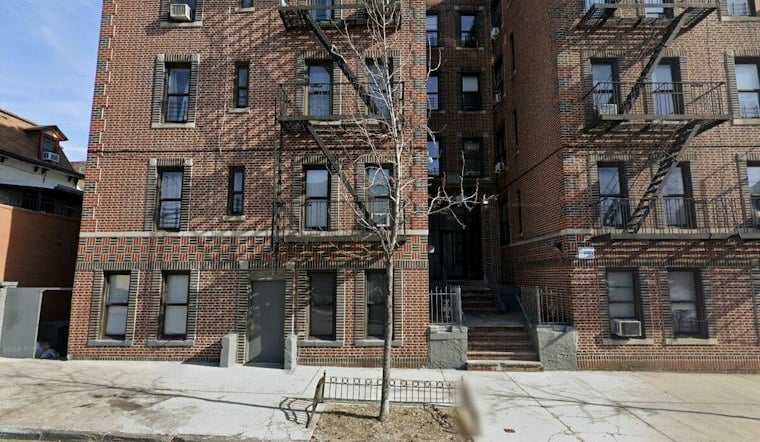
New York City has sued landlord Barry Singer in Bronx Supreme Court, accusing him and the limited liability companies he controls of letting dangerous conditions fester in buildings across the Bronx and Brooklyn while dodging more than $1 million in city charges. The city is asking the court to force repairs and is seeking more than $10 million in damages and penalties tied to what officials describe as years of neglected violations and unpaid obligations.
The lawsuit, filed by the Mamdani administration, marks the first time the city has used New York's False Claims Act against a building owner over allegedly evaded city payments, according to Mirage News. Reporting on the case varies: Gothamist describes the complaint as covering 10 buildings with a combined 299 apartments, while Mirage News describes the case as concerning 11 buildings. The two outlets also diverge on Singer's potential financial exposure — Gothamist reports the complaint says he could be on the hook for roughly $8 million if found liable, while Mirage News reports the city is seeking more than $10 million in damages and penalties overall.
Singer is accused, per the lawsuit, of allowing dangerous conditions to persist while failing to repay city obligations, and of racking up hundreds of building safety, maintenance, and public health violations. City filings cited by Mirage News allege he improperly avoided paying more than $1.05 million, plus interest, for charges and judgments tied to emergency repairs, pest control, and court judgments. Properties tied to Singer reportedly include unauthorized construction, deteriorating facades, bulging and leaning walls, and rusting fire escapes.
Two Bronx Buildings at the Center of the Case
Court papers single out 2500 Webb Avenue in the Bronx, which the lawsuit says has 456 open violations, including 183 classified as immediately hazardous. The building's facade was described in the lawsuit as an immediate hazard with the potential to collapse, and the property also reportedly has inadequate pedestrian protection and an obstructed fire escape, as detailed by both Gothamist and Mirage News.
A second property, 3030 Heath Avenue, has been under a full vacate order since a four-alarm fire on January 15, 2025, per the lawsuit as reported by Mirage News. The building reportedly has 261 violations, including 105 deemed immediately hazardous, with conditions that include missing roof sections, water damage, missing windows, a partially collapsed loft area, and gas valve problems. The lawsuit alleges the building's owner failed to comply with orders to repair the fire damage.
What the City Is Asking the Court to Do
Beyond compelling repairs, the city is seeking civil penalties of $1,000 per day for each violation of the Nuisance Abatement Law, according to Mirage News. Under the state False Claims Act, the administration is also pursuing treble damages and penalties of up to $28,619 per violation — the mechanism behind the case's untested legal theory, since Gothamist notes the city's False Claims Act argument in this matter has not yet been tested in court. The allegations against Singer have not been adjudicated.
Mayor Zohran Mamdani said the administration would use new legal strategies to hold landlords accountable when existing enforcement tools fall short, according to VINnews. New York City Corporation Counsel Steven Banks said the case targets landlords who allegedly ignore housing violations while hiding behind shell companies to avoid responsibility, per the outlet's reporting.
Part of a Broader Push on Problem Landlords
The lawsuit grows out of the administration's Fix the City initiative, which aims to compel property owners to maintain safe housing or transfer properties to more responsible owners. The Housing Rights Initiative collaborated on the legal strategy behind the case. Aaron Carr, the group's founder and executive director, praised the administration's use of the state False Claims Act against landlords accused of violating tenant protections.
The Singer case surfaces as the administration pushes its Block by Block housing plan, which aims to build 200,000 new affordable homes and preserve another 200,000 over the next decade, backed by a $22 billion affordable-housing capital investment over five years, according to Mirage News. Separately, Crain's New York has reported that Singer had fallen behind on a mortgage tied to Bronx affordable housing, though that reporting is separate from the new lawsuit.





