

























































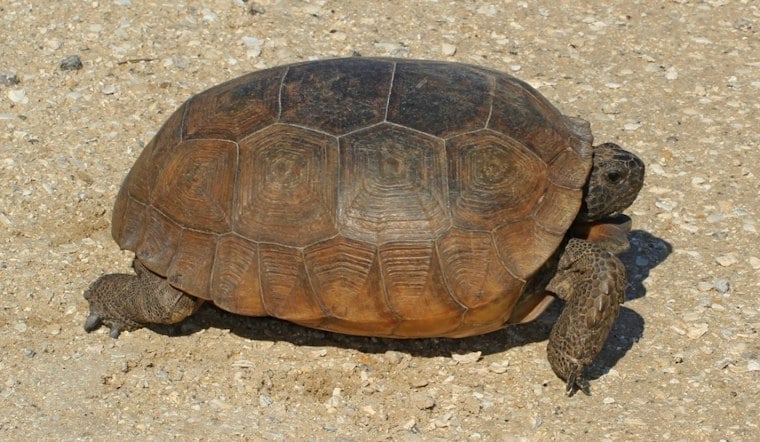
Manatee County has a new milestone resident at Duette Preserve: its 500th gopher tortoise, relocated last week through the county's Gopher Tortoise Relocation Project. The arrival marks the latest step in a years-long effort to give displaced tortoises a permanent, protected home away from construction sites and development projects across the region.
The county announced the milestone in a Facebook post from Manatee County, Florida Government titled “500 tortoises and counting!” According to Pulse of Manatee, the county is “welcoming the 500th gopher tortoise to Duette Preserve” as part of a program designed to relocate tortoises displaced by public infrastructure projects and private development in Manatee County and central Florida to protected land owned by the county.
Duette Preserve's recipient site includes 452 acres of quality upland habitat, and it carries a Tier 1 designation, meaning it offers the maximum long-term protection available for gopher tortoises through a perpetual conservation easement, per the county's Natural Resources Department. That protection matters because gopher tortoises are considered a keystone species of Florida's dry sandy upland habitats, with their burrows serving as shelter for other wildlife — though sources differ on exactly how many species rely on them, with estimates ranging from more than 350 to close to 400 depending on the source.
A Growing Operation With Room to Expand
The milestone follows a steady build-out of the county's relocation program. Manatee County welcomed its 100th relocation to the Duette site in September 2024, according to WWSB, which at the time described the burrows as refuge for more than 360 other wildlife species.
The program has continued to scale since then. The county currently operates out of one 500-acre site within Duette Preserve that can accommodate up to 826 tortoises, with plans to open three additional locations within the preserve, according to the Observer. Manatee County Natural Resources Director Charlie Hunsicker has said the more than 21,000-acre Duette Preserve could ultimately accommodate up to 2,000 tortoises, though not all of those spots are available yet.
Funding and Demand Behind the Relocations
Money is flowing into the effort alongside the tortoises. The county is set to collect $725,040 over five years from the Florida Turnpike Enterprise to rehome 191 gopher tortoises at Duette Preserve, the Observer's reporting shows. The Florida Fish and Wildlife Conservation Commission has said demand for recipient sites like Duette remains high given the pace of development happening across the state.
That demand traces back to displacement on the ground. Manatee County officials have said construction and infrastructure projects are a common reason tortoises end up needing new homes, a point raised in earlier coverage from ABC Action News, which also cited refuge estimates of at least 360 other species relying on tortoise burrows.
Legal Protections Shape the Process
Gopher tortoises are protected under Florida Administrative Code 68A-27, according to the county's recipient-site page. That page also notes that the Florida Fish and Wildlife Conservation Commission implemented a rule in 2007 eliminating the “take” of gopher tortoises and requiring that they be relocated out of the path of development and into a permitted recipient site — the regulatory backbone of programs like the one now operating at Duette Preserve.
Research elsewhere offers a more cautious note on relocation outcomes generally. A 2024 study examining 2,822 relocated tortoises at the Nokuse recipient site in the Florida Panhandle found population models indicating a 5 to 7 percent annual decline, concluding that the survival rates observed were unlikely to produce self-sustaining populations, the Observer reported. That research concerned Nokuse specifically, not Duette, but it underscores why wildlife officials continue to monitor relocation programs closely as Manatee County's own tally keeps climbing.





