

























































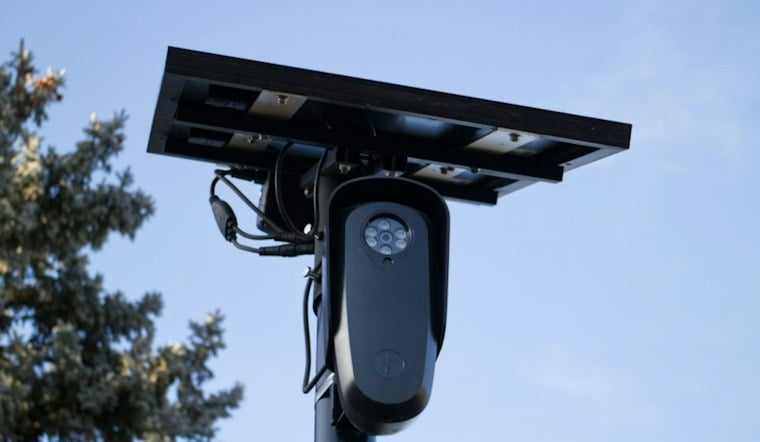
Manchester's Board of Directors voted 5-4 to end the town's contract with Flock Safety, setting in motion the removal of all 18 automated license plate reader cameras installed around town. The board's resolution calls for the cameras to be shut down and covered before they come out entirely, with the removal planned before the end of the year.
The decision, which board members cited privacy concerns and fears of potential misuse of collected data in reaching, was first reported by NBC Connecticut. Public commenters at the meeting largely opposed keeping the cameras, though a smaller number spoke in favor of retaining them, according to the same report. Resident Laura Cassenti said protecting residents' personal information should be a priority, the station noted, while camera supporters argued the devices are valuable tools for police investigating crimes.
A Program That Started in 2022
Manchester's relationship with Flock dates back to 2022, when the first cameras went up around town. By August, the town had grown its network to 17 fixed cameras and one portable unit, according to CT Insider. That same month, the Board of Directors had already approved a moratorium on adding any new cameras beyond the 18 already in use, a sign that unease over the technology was building well before this week's termination vote.
Manchester Police Chief William Darby told the outlet at the time that the department used its portable Flock camera on a limited basis for criminal investigations, saying the technology “has helped us solve crimes much more quickly and much more efficiently.” That argument resurfaced in the more recent debate: Flock technology reportedly helped police make an arrest connected with a stabbing on Sunday, and resident Steve Allard questioned why the town would take away a resource used by police, per the seed report.
Manchester police credited the system with helping solve another violent case earlier this year. In a stabbing investigation on Flower Street, officers used the department's Flock system to locate an image of a suspect's vehicle traveling through town and obtain its information, according to WTNH. New York State Police license plate reader technology then assisted in a traffic stop and arrest tied to that case.
Manchester Joins a Growing List of Towns
Manchester's reversal makes it at least the fourth Connecticut town to terminate its Flock program, following Windsor, Killingworth and Ledyard, according to the seed report. The pullback stretches further across the state: South Windsor was at least the sixth Connecticut community to end or suspend automated license plate reader use in 2026, joining Windsor, Killingworth, Ledyard, Milford and Newtown, as detailed by CT Mirror.
South Windsor's town council went further than a pause, directing police to stop using the cameras immediately and arrange for their removal within 60 days, the outlet reported. Milford took a more cautious route, with its Board of Aldermen voting to pause camera use pending further study by a technology committee. Windsor and Killingworth had simply opted to turn their cameras off by August, per CT Insider's reporting.
A Statewide Debate Over Surveillance Scale
The Manchester vote lands amid a broader statewide reckoning with how widely license plate readers have spread. Three-quarters of Connecticut law enforcement agencies report deploying a combined 1,564 fixed ALPRs, with Flock supplying about 40% of them, CT Mirror found. Nationally, the company has built a network of 120,000 cameras across 49 states.
That scale has drawn scrutiny from Washington. U.S. Senators Josh Hawley and Richard Blumenthal have raised concerns that Flock's network records 20 billion images each month with little regulatory oversight over how that data is stored or used, according to CT Mirror. Gov. Ned Lamont urged municipalities to pause new Flock installations and asked the Police Officers Standards and Training Council to recommend standards for deployment and use, the outlet reported.
Flock's own published Connecticut terms specify that customer data is retained for 21 days, or a shorter period if the customer requests it, and that the data cannot be shared with a third party without the customer's prior written authorization for a specific purpose, according to the company's state-required provisions. Those terms describe an exception allowing access under a warrant or court order from a judge or magistrate, but they explicitly exclude subpoenas and grand-jury demands from that exception.





