

























































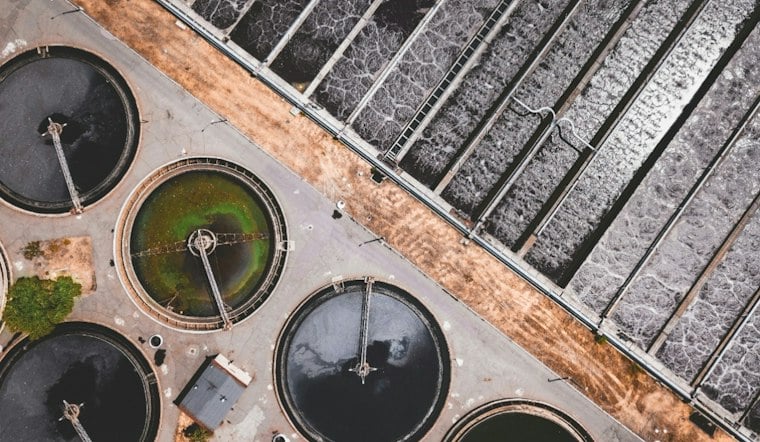
Manteca is moving forward with $6.8 million worth of water treatment facility improvements at two municipal wells after testing turned up “forever chemicals” at levels that exceeded state notification thresholds. The city has awarded a construction contract and is temporarily diluting the affected groundwater with treated surface water while permanent treatment systems get built.
According to the Manteca Bulletin, the City Council was notified by the Water Division on Oct. 21, 2025, that Perfluorooctanoic Acid (PFOA) and Perfluorohexane Sulfonic Acid (PFHxS) were detected in raw water source samples from Well 22 at Walnut Place, at levels exceeding state notification levels. Two days later, city staff released a Request for Proposals for professional design services covering the Well 22 PFAS treatment facility's plans and specifications, the outlet reported.
The Manteca City Council has since awarded Conco West the contract to add treatment facilities for two wells at Walnut Place Park, per the same report. The treatment facilities planned there will treat the groundwater directly to remove the chemicals, rather than relying solely on dilution.
Blending Water as a Stopgap
In the meantime, Manteca is diluting the affected groundwater to below the state's notification level by blending it with treated surface water from the South San Joaquin Irrigation District, the Bulletin reported. That blending approach is a temporary bridge rather than a permanent fix, since the treatment facility being built at the well site is what will ultimately strip the chemicals from the groundwater itself.
PFAS are a group of synthetic chemicals used in industrial and consumer products for their resistance to water, grease and stains, with applications ranging from firefighting foam and non-stick cookware to water-repellent fabrics and food packaging, per the outlet's reporting. The Environmental Protection Agency has established stricter national standards for PFAS in recent years, adding pressure on water systems statewide to address legacy contamination.
How California's Notification System Works
California's notification levels are non-regulatory, health-based advisory levels set by the Division of Drinking Water for chemicals that don't yet have legally enforceable maximum contaminant levels, according to the Bulletin. Once a chemical exceeds its notification level, a water system must notify its local governing body, and the state recommends directly informing customers as well.
If contaminant levels climb further to what's known as the response level — often 10 to 100 times the notification level — the Division of Drinking Water recommends taking the affected source out of service or treating it, the outlet reported. Manteca must achieve full compliance with all maximum contaminant levels before 2029, per the same reporting.
Paying for the Fix
The city of Manteca joined a class action lawsuit against PFAS manufacturers 3M, DuPont, Tyco and BASF and has recovered $2,638,315.26 to put toward known PFAS treatment, the Bulletin reported. But the settlement doesn't cover all of the current work: the outlet's reporting notes that $4.2 million of a separate $6.3 million work total falls outside what the settlement pays for, without specifying how that figure relates to the $6.8 million in improvements described elsewhere in the same report.
Remaining project costs are expected to come from the water operation and maintenance fund, which is supported by monthly household water charges in Manteca, according to the outlet. The project is not expected to affect the city's general fund.
Manteca Isn't Alone in the Valley
Forever chemicals have also turned up in municipal wells in Ripon, Lodi and Stockton, the Bulletin reported. Regional testing data compiled by the Record shows more than 1,050 water systems nationwide have reported average PFAS levels above the EPA's newer limits. In Lodi, PFOS levels averaged 1.3 times the federal limit at one well, with seven chemicals detected across three locations and a peak reading of 1.6 times the threshold, the Record found. Ripon's numbers were higher still, with PFOS averaging three times the federal limit at one well where three chemicals were detected.
Similar fights are playing out well beyond the San Joaquin Valley. In Wisconsin, the village of Weston plans to spend roughly $5 million on a PFAS removal system at its Well 5 site to serve both Wells 1 and 5, with construction anticipated around 2029, according to the Wausau Pilot & Review. That outlet also reported that Weston's Well 4 returned to service with a permanent carbon treatment system last October, after running on a temporary setup since December 2022.
Conco West, the contractor awarded Manteca's project, has handled PFAS treatment work elsewhere in California. The company says on its website that it recently completed the Stoneridge Well PFAS Treatment Project for Zone 7 Water Agency using a design-build approach that included pre-purchased PFAS treatment vessels.





