

























































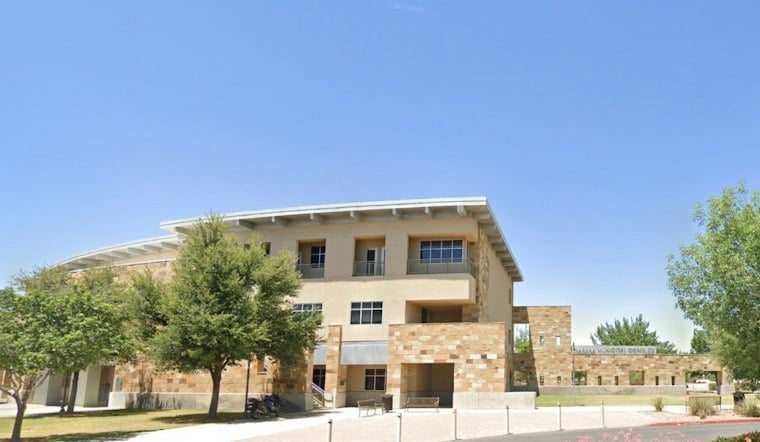
Marana’s Town Council has added a new ordinance to the town code making it illegal to camp on public property, a move that gives police the authority to cite or arrest people who refuse to leave after being warned. The change took effect after the council heard presentations from the town’s police chief and senior assistant town attorney on Oct. 2, and it arrives as other Southern Arizona towns adopt similar rules of their own.
According to Tucson Local Media, the ordinance prohibits camping on public property, in stormwater conveyances, or in other areas subject to flooding. It also bars people from storing camping paraphernalia on town land or damaging, altering, or excavating public property while camping. The law defines camping broadly as residing on or using public property as a temporary or permanent place of living or lodging, but it carves out exceptions for cooking or picnicking in a park, town-authorized events, official government duties, and emergency response situations. The ordinance excludes private property entirely and does not apply to boondocking in approved parking lots, applying only to town land.
Violating the new code is a class 3 misdemeanor that can bring a fine of up to $500, as much as one month in jail, and up to one year of probation, the outlet reports. Each day a violation continues counts as a separate offense, meaning penalties could stack for someone who doesn’t move along.
Police Say Compliance Comes First
Marana Chief of Police Jeffrey Pridgett told the council that the town’s first goal is to obtain compliance in public camping situations rather than jump straight to punishment, per the same report. Officers are required to inform individuals of the violation and seek voluntary compliance before escalating, and they must give people a reasonable opportunity to comply before any citation or arrest can happen.
If someone does not comply, officers may then issue a citation or make an arrest, but the process includes documentation at every step. Officers document violations in a report and in a police database, and they provide the person with a card listing a case number and the officer’s own number, the news outlet notes. Pridgett said officers explain the violation, document it, and continue seeking compliance throughout the encounter, and he said the department networks with local organizations to connect people in violation with resources, including the U.S. Department of Veterans Affairs, the Salvation Army, Community Bridges Inc., and CODAC Health, Recovery & Wellness.
That outreach approach echoes past efforts by Marana police. The department’s Urban Camping Task Force has previously focused on the welfare and safety of the homeless community, providing outreach services or referrals rather than only enforcement, according to Tucson Local Media.
Complaints Drove the Proposal
Senior Assistant Town Attorney Luke Fischer told the council that camping violations are assessed based on the totality of circumstances, the outlet reports. He said Marana’s urban camping problem is growing as the town itself grows, pointing to complaints the town has received about temporary shelters, tents, and vehicles left on public property. Those complaints have included an RV parked for a prolonged period in Dove Mountain, an SUV parked on a street in Continental Ranch, and vehicles abandoned on public property elsewhere in town.
Fischer characterized the move as proactive rather than a response to an emergency, saying Marana is acting ahead of a crisis rather than reacting to one. During the discussion, Councilmember Cavanaugh asked what steps officers must take to show that voluntary compliance was genuinely attempted, a question that points to how enforcement will be scrutinized going forward.
Part Of A Wider Regional And National Trend
Marana isn’t alone in adopting this kind of rule. Oro Valley passed its own public camping regulations on Oct. 21, and Sahuarita passed similar regulations back in February, according to the same Tucson Local Media report. Nationally, 15 states now have public camping laws on the books, the outlet reports, a trend that follows the U.S. Supreme Court’s 2024 ruling in City of Grants Pass v. Johnson, which found that public camping laws are constitutionally allowable.
Other cities’ experiences with similar bans show mixed early results. In Portland, Oregon, where a public camping ban took effect Nov. 1, 2025, police issued 120 citations and charged 58 people in the ban’s first year, though some individuals were charged more than once, according to OPB. Despite those citations and charges, the station reports that enforcement had produced zero convictions a year in. More than 600 people there agreed to move into shelter instead of receiving a citation, OPB reports, while city data indicated roughly 1,000 people declined shelter during a camp removal over the same period. Those figures offer a point of comparison only; they don’t indicate how Marana’s ordinance will play out as it moves into enforcement.





