
























































Martin Selig Real Estate has completed loan modifications totaling nearly $500 million across 12 downtown Seattle office buildings, a restructuring that is set to pull nine of those properties out of receivership. The agreements cover roughly 2.2 million square feet of office space, including the company's own Second Avenue headquarters, at a moment when the 89-year-old developer's once-dominant local footprint has been battered by years of rising vacancy and falling revenue.
According to Newmark, the modifications split across two financing arrangements: nine buildings tied to a loan serviced by Midland Loan Services and three more buildings financed under a separate facility. Newmark says the agreement is structured to bring those nine properties out of receivership before the end of 2026, though the brokerage's materials do not confirm that the exit has already happened. Martin Selig Real Estate chief executive Matt Alisch said the deal gives the company room to maneuver again. “The agreements provide clarity and stability for the portfolios and reinforce our ability to transact and invest in our buildings for the long term,” Alisch said in the announcement.
The nine properties were placed under receivership after Selig told lenders in 2024 that his firm could not repay a $379 million loan tied to those buildings, according to The Seattle Times. That default came amid a broader reckoning for the company: by 2025, Martin Selig Real Estate could not cover more than $850 million in loans, and two-thirds of its roughly 30 office buildings had already been placed under outside management or transferred to lenders, per the same account from The Seattle Times.
From Skyline Icon to Distressed Landlord
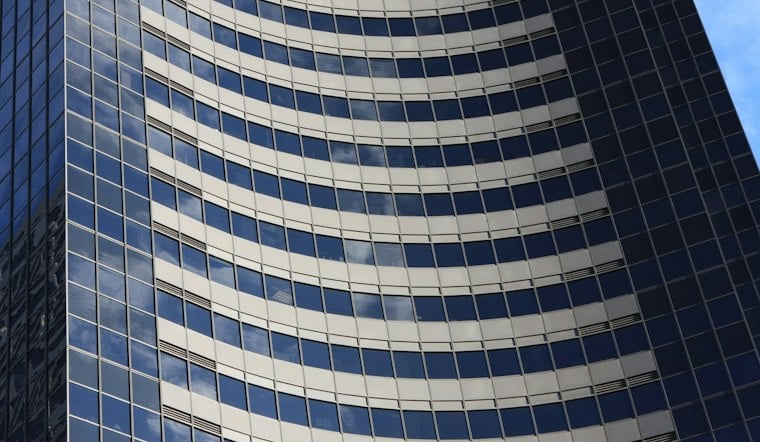
Selig's fall from prominence has been dramatic given his history. He once controlled more than one-third of downtown Seattle's office space, including the Columbia Center, Seattle's tallest building at 76 stories, the Seattle Times reports. The pandemic-era shift to remote work hit his portfolio hard, driving vacancies up and revenues down across the company's holdings, the newspaper's reporting shows.
Other coverage has tracked the toll in granular terms. The Puget Sound Business Journal reported that Martin Selig Real Estate faced around $618 million in distressed loans backing 16 of its 31 office buildings, and the outlet's more recent reporting documented that the company handed three more properties — one apartment building and two office buildings in Lower Queen Anne — to a receiver. Separately, The Real Deal reported in 2024 that the company risked imminent default on $239 million in loans tied to seven buildings totaling about 1.1 million square feet, with occupancy across those buildings sliding from 92% in 2017 to 69% the following year. The Seattle Times, citing Trepp, reported that loan was transferred to a special servicer and flagged for imminent maturity default, and The Real Deal reported that Jordan Selig said the firm was in talks with CWCapital about modifying those terms.
A Market Still Deep in Oversupply
Downtown Seattle office vacancy sits around 38%, near record highs, according to Cushman & Wakefield figures cited by the Seattle Times. Cushman & Wakefield's own third-quarter 2026 data put overall downtown vacancy at 35.8%, up 70 basis points from 35.1% a year earlier, while absorption for the quarter came in at negative 116,000 square feet — an improvement of 72.7% year over year. The firm also reported nearly 1.9 million square feet of new office leases signed downtown through the first three quarters of 2026, a 30.1% increase from the prior year, alongside a steep drop in investment sales: just under $34 million transacted downtown through three quarters, down 67.6% from the $105 million recorded at the same point in 2025.
Newmark's separate research, covering the broader Puget Sound market rather than downtown alone, found vacancy fell to 22.8% in the third quarter, its third straight quarterly decline, alongside 315,500 square feet of positive absorption — the region's strongest quarterly showing of the year. The Seattle Times notes that even with those gains, the Seattle area's office-space surplus would take roughly eight years to fill if demand returned to pre-pandemic levels. The paper also reports that Selig's 12 restructured buildings have an average age of 38 years, according to county records, and that roughly half of their office space currently sits available, per Newmark.
Betting on Flexibility and AI Tenants
Newmark broker Jesse Ottele told the Seattle Times that the loan modifications make the properties easier to market and allow the brokerage to close deals with fewer procedural layers than before. “Flexibility is key in the current market,” Ottele said, according to the paper's reporting. He also reported a surge of new tenants arriving over the previous six to nine months, many of them artificial intelligence companies hunting for cheaper space and flexible lease terms.
Selig has signaled he is willing to meet that demand with bargain rates, including low-rent and short-term deals, the Seattle Times reports. Still, it remains unclear how many leasing deals the company will actually be able to complete under the new arrangement, according to the same reporting — an open question that will determine whether this restructuring marks a genuine turnaround or just a longer runway for a landlord still working through years of distress across downtown Seattle's weakened office market.