

























































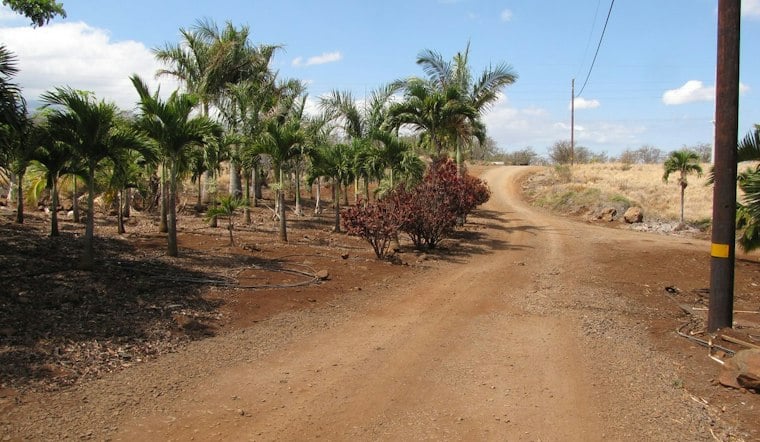
Maui County opened its first Safe Parking program Wednesday morning in Puʻunēnē, just before crews began clearing the Pūlehu Road encampment in Kahului that had grown to roughly 60 people at its peak. Twenty-three residents from that encampment agreed to move into the new lot, which offers a legal place to park and sleep in vehicles overnight along with access to services county officials hope will eventually lead people into permanent housing.
The temporary site sits on county property in Puʻunēnē and can hold up to 50 vehicles, according to Hawaii News Now. County officials describe Safe Parking more broadly as a designated, legal place for people experiencing homelessness who live in their vehicles, where they can park and sleep overnight while connecting with supportive resources, according to Maui Now. Mayor Richard Bissen had said in September that the Puʻunēnē site would be ready in approximately six weeks.
A Program Built Around Those It Serves
Maggie Willis, who leads the effort as director of the county Department of Human Concerns, said officials surveyed unhoused residents about their preferred amenities and rules and co-designed the program alongside community members, service providers and advocates. Willis started her county role in April 2026 after spending more than two decades working with unhoused people in major California cities, per the Hawaii News Now report. She described the Pūlehu Road encampment's peak population at about 60 people.
The program waives some traditional requirements, including valid vehicle registration and safety checks, reflecting what Willis called a person-centered, trauma-informed approach. The site includes lighting, space, bathrooms and water fixtures, and the county says it will provide 24-hour security, potable water, toilets, handwashing stations, showers, laundry, food and access to housing resources. Officials call it the first program of its kind in Hawaiʻi and a temporary pilot while the county finalizes a permanent location.
Residents Describe a Familiar, Exhausting Cycle
Tricia Clements has moved between Maui encampments for the last decade and agreed to relocate to the Safe Parking program this week. She said she wants a home but cannot afford one, and described rushing to prepare for her fourth move while caring for her husband, who is blind and deaf. County officials began notifying encampment residents about the clearance roughly two weeks before Wednesday's cleanup.
Clements was also among the 24 people displaced when the county cleared an encampment in Maui Lani a year earlier, in November 2025, according to the Hawaii Journalism Initiative. The county cited increased crime complaints and 13 fires in the area that year as reasons for that cleanup. Similar sweeps followed in 2025 at Amala Place and Ukumehame, both tied to safety, sanitation and fire concerns, the outlet reported.
A Permanent Site Still Taking Shape
The Puʻunēnē location is meant as a bridge while the county works toward a purpose-built, permanent Safe Parking site on county property in Kahului, though officials have not announced its exact location. An earlier plan to use Maui Economic Opportunity property off Hansen Road fell through after the site sustained significant flood damage during the March 2026 Kona Low storms, Maui Now reported in July, leaving a contractor ready to operate but with nowhere to go.
Hawaiʻi Public Radio reported in late October that the temporary Central Maui site was expected to serve about 50 people, most of whom were already staying along Pūlehu Road, with plans for portable toilets, hand-washing stations, potable water, lighting and round-the-clock private security. That same report detailed Maui County Bill 133, a proposed six-month pilot that would let homeless residents keep vehicles on county land overnight while lifting requirements for a valid driver's license, registration and safety check.
Homelessness Numbers Tell a Mixed Story
The push for Safe Parking comes as Maui County's broader homelessness numbers have barely budged on paper but shifted underneath the surface. The county's 2026 Point-in-Time Count found 651 people experiencing homelessness, nearly unchanged from 654 in 2024, per Maui Now. But Honolulu Civil Beat reported that unsheltered homelessness specifically jumped 40% between the two counts, a sign that more people are living outdoors rather than in shelters.
County teams and community partners have ramped up outreach in response. Over the three months before September's update, crews and partners conducted more than 60 outreach efforts, completed more than 25 cleanups, removed more than 10 tons of waste and debris along with 56 abandoned vehicles, and helped three people transition from encampments into permanent housing, according to Maui Now's September report.


