

























































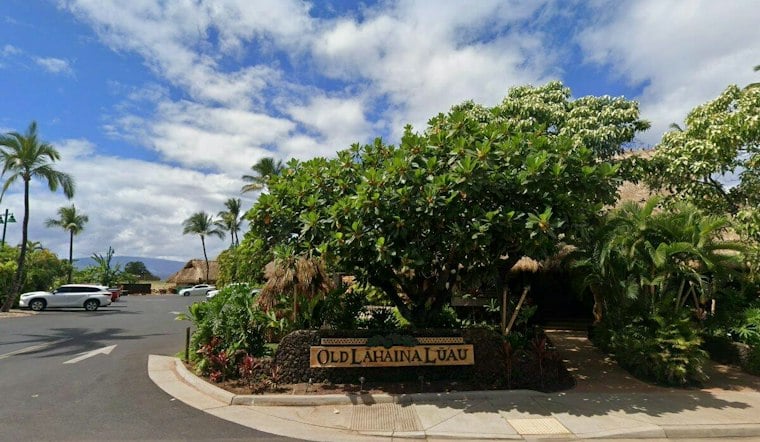
Skippy Hau spent 36 years wading through Maui's streams counting native fish and snails nobody else was watching, and now the nonprofit working to protect those same waterways wants the whole island to know his name. Hawaiʻi Land Trust says it will honor the retired state aquatic biologist as its 2027 Champion of the Land at the 25th annual Buy Back the Beach benefit lūʻau, set for January 23, 2027, at Old Lāhainā Lūʻau from 5 to 9 p.m.
The award, according to Hawaiʻi Land Trust, recognizes people whose sustained contributions leave a lasting legacy across Hawaiʻi's biocultural landscape. Hau began working with the islands' aquatic resources in 1979 and retired in December 2021 after 36 years as a biologist with the state Department of Land and Natural Resources' Division of Aquatic Resources. His career, the organization notes, spans more than four decades of field research on native stream species, sea turtles, coral reefs, estuaries and anchialine ecosystems.
Much of that work centered on Nā Wai ʻEhā, the four storied streams of Central Maui, where Hau's research data and biological surveys provided key evidence during the contested case hearings, Hawaiʻi Land Trust says. The organization credits that evidence with helping establish instream flow standards that restored natural mauka-to-makai water flows to Central Maui, work supported by Hui o Nā Wai ʻEhā, of which Hawaiʻi Land Trust is a member.
A Legacy Measured in Fish and Snails
Hau's long-term studies include native ʻōʻopu migration and recruitment, hīhīwai in Maui streams, sea turtle nesting and health, and nearshore reef resiliency, per the land trust. A graduate of James B. Castle High School in Kāneʻohe, he earned a bachelor's degree in biology from the University of Hawaiʻi at Mānoa before beginning his long career with the state.
A 2022 profile in The Maui News reported that Hau first joined DLNR in January 1979 as an unpaid intern from the University of Hawaiʻi at Mānoa before accepting a position as Maui aquatic biologist in 1985. The DLNR told that outlet that the presence of native animals in the upper reaches of the Wailuku River is believed to be the result of what many call the “Skippy Effect.” In that same profile, reflecting on his retirement, Hau told The Maui News, “I will miss the kids and students.”
That sentiment tracks with what he's reportedly still doing. Since retiring, Hau can still be found working in Maui's streams, according to Hawaiʻi Land Trust, which says he volunteers across the island, providing field data, mentoring educators, and working with schools and community groups to introduce young people to native aquatic plants, animals and stream ecosystems. Denby Freeland, the organization's director of ʻāina education and community impact, said Hau brings energy to HILT's ʻāina-based programs and helps Maui keiki appreciate native river and reef ecosystems.
Why the Streams Still Need Watching
The honor arrives as the waters Hau spent his career studying keep losing ground. A report examined by Environment Hawaiʻi found approximately 10 to 15 percent less water across Nā Wai ʻEhā based on the 20-year period of record from 2004 to 2023. At Waiheʻe River monitoring stations, median flows over that period were 9.6 percent lower than medians recorded from 1984 to 2007, while Wailuku River flows dropped by 12.8 percent at the median, 11.1 percent at Q70, and 11.8 percent at Q95 compared with that earlier baseline.
Those numbers underscore why the restoration work Hau's data helped support remains unfinished business for the streams of Central Maui. Hawaiʻi Land Trust describes itself as a statewide nonprofit that protects and stewards ʻāina through eight community preserves, 55 conservation easements, and its stewardship and community programs.
Toasting a Legacy at Lahaina's Shoreline
Proceeds from Buy Back the Beach support HILT's operations, the organization says, and this year's gathering, per the land trust, will include a sunset pāʻina, local cuisine, cocktails, auction items and live entertainment. Tables, individual tickets and sponsorships are available, and guests must be 21 or older. As first reported by Maui Now, the January evening will mark the benefit's 25th year of raising support for the land trust's work across the islands.





