

























































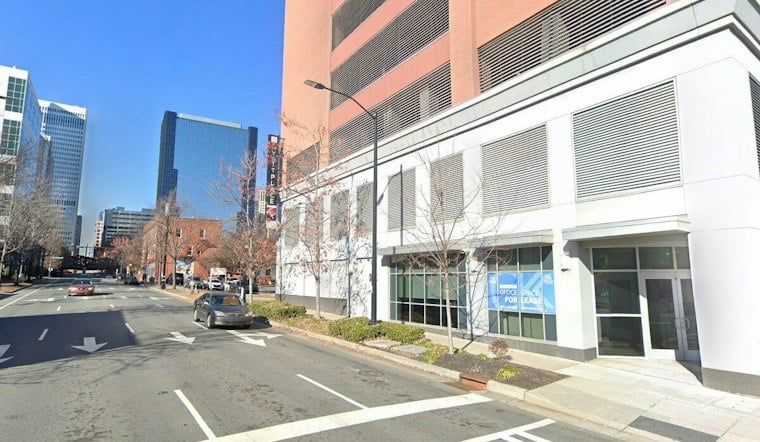
A proposed Mecklenburg County air-quality permit would let Digital Realty keep a hyperscale data center on Moores Chapel Road online through a blackout with 242 diesel generators. Together they would total 726 megawatts, a backup fleet that would rival the output of some utility-scale power plants, and the permit would allow more than 100 tons of air pollution a year.
Regulators had not decided as of Wednesday. WFAE reported that the generators would be for blackouts, and that the pollution they could emit includes smog, carbon monoxide and other hazardous air pollutants. A permit of that size is still a proposal, not a green light.
A Backup Plant on Moores Chapel Road
The numbers are the story before any engine starts. Two hundred forty-two diesel machines, 726 megawatts, and an annual allowance above 100 tons of air pollution is not a spare generator behind a warehouse. WFAE's comparison to utility-scale plants is the useful scale: this is backup power sized like a generating station, parked at one campus and meant to run when the grid fails.
What the proposal does not settle is how often those engines would actually turn. The reporting does not set operating-hour limits, a testing schedule or a pollutant-by-pollutant inventory for this permit. It also does not establish that the generators have been installed or run. The decision still in front of county air-quality regulators is whether Digital Realty may operate them during blackouts under the terms on the table.
That distinction matters in west Charlotte, where the site is already moving as a data-center campus rather than a speculative rezoning. Backup power is the unglamorous half of the hyperscale pitch: the servers are sold on staying up, and the diesel is what the company would burn to get there.
Land, Rezoning and 400 Megawatts
Digital Realty bought the land in 2024. Data Center Dynamics reported a more precise deal: the company acquired the site in November 2024 for $160 million. Charlotte City Council approved the rezoning in 2025. Councilmember LaWana Mayfield was the only member to vote no.
The company has said the rezoned site will house two buildings that could support up to 400 megawatts of IT capacity, The Charlotte Observer reported in May 2025. That figure is computing load, not the 726 megawatts of diesel backup now in the air permit. The two numbers answer different questions: how much equipment the campus could host, and how much emergency generation the company wants permission to run when the lights go out.
By May 2025, the Observer, citing Data Center Map, put the regional count at about 36 data centers. Moores Chapel Road was already being described as the largest data center heading to North Carolina. A $160 million land buy, a near-unanimous rezoning and a two-building plan were in place well before this week's permit story.
A Moratorium That Stops Short
Charlotte does have a moratorium on new data centers. It does not reach this one. Council approved the project before the pause, and WFAE reports that the moratorium does not apply to some huge projects already underway.
On Oct. 26, council voted unanimously to extend the moratorium until Oct. 18, 2027. WFAE's account of that vote said the pause halts approval of new permits and leaves existing data-center permits unaffected. The political signal and the legal reach are not the same thing. A unanimous extension can look like a hard stop on the industry. Projects that cleared rezoning before the rules changed can keep moving, and an air-quality permit is a county decision sitting beside a city land-use pause.
Mayfield's lone 2025 no vote is the only recorded dissent on the rezoning itself. The later moratorium vote was unanimous. Residents watching both actions can reasonably ask which projects the city actually froze and which ones were already too far along for the pause to matter. Moores Chapel Road is in the second category.
Why the Industry Still Burns Diesel
Diesel backup is ordinary in this business, which is part of why a 242-unit proposal can arrive looking like standard equipment rather than an exception. Inside Climate News has described on-site diesel generators as the tool operators use to keep a facility online 99.999 percent of the time. Diesel became the preferred fuel for many backup or emergency generators because it can be stored on site and is readily available.
Federal rules, as that reporting describes them, limit diesel-generator use for non-emergencies such as machine testing to 100 hours, with up to 50 of those hours available for demand-response programs. Those are national constraints on routine running, not a finding about how Mecklenburg County would write this permit. Environmental and industry experts cited in the same account warn that diesel backup can cause air pollution and could be highly problematic unless clear rules are established and enforced.
The local permit language already names the downside: more than 100 tons a year, including smog, carbon monoxide and other hazardous air pollutants. What it does not do is turn a blackout fleet into a power plant that runs every day. The tension is in the contingency. A machine sized to rival a utility plant can be legally framed as emergency equipment and still be large enough that a bad outage, or loose testing rules, would put a serious pollution source in a neighborhood.
Hamlet, Leesburg and a Decision Still Open
North Carolina has already said yes to a larger diesel lineup elsewhere, and that approval is now in court. On Sept. 1, state regulators approved air-quality permits for Amazon and Duke Energy to operate a combined 649 diesel generators at a data-center campus under construction near Hamlet, WRAL reported. Amazon's permit covers 592 emergency generators. Duke Energy's separate permit covers 57 temporary generators meant to supply power until the campus connects to the grid.
The Southern Environmental Law Center, representing the Richmond County Coalition for Justice and Black Empowerment, challenged those two minor-source permits. The petitions argue the generators should have been permitted together as a single major source under Clean Air Act requirements. WRAL reported that the state's process did not require modeling of the combined emissions from the Amazon and Duke sets. None of that decides Digital Realty's Mecklenburg application. It does show how a backup fleet can be split across permits, and how advocates are testing whether that split undercounts the source.
The law center has also pointed to a July 2025 outage at a Microsoft data center in Leesburg, Virginia, where it said 62 backup generators emitted more particulate matter and smog-forming nitrogen oxides in seven days than the facility's permitted annual limit. Sixty-two is a fraction of either the Hamlet lineup or the 242 proposed for Moores Chapel Road. An outage, not a routine test, was enough to blow past a yearly cap.
For Charlotte, the immediate fact is narrower. County regulators still have not approved, denied or modified the Digital Realty permit. Until they do, 726 megawatts of diesel remains a requested backup plan for a campus the city already rezoned, on land bought for $160 million, outside a moratorium that runs through October 2027.





