

























































A 60-year-old Venezuelan national who lived in Miami was sentenced to 12 years in federal prison for running an international money-laundering network that moved more than $1 billion through bank accounts, shell companies and cryptocurrency wallets. Jorge Figueira pleaded guilty to conspiracy to commit money laundering and agreed to a $1 billion money judgment as part of the deal.
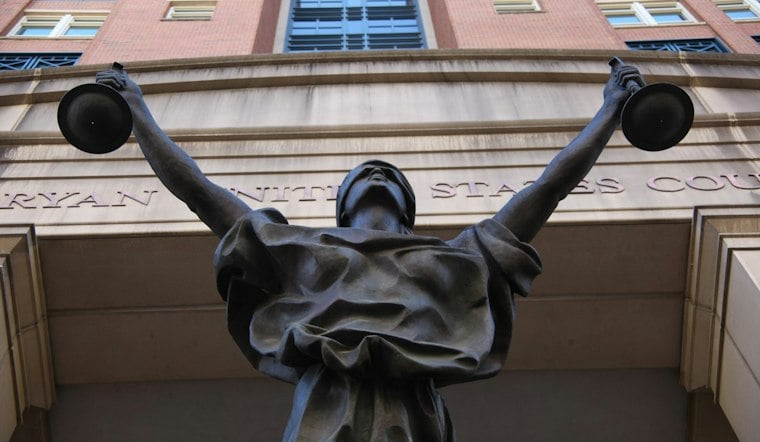
U.S. District Judge Rossie D. Alston Jr. handed down the sentence in Alexandria, Virginia, according to the Miami Herald. Alston imposed a 144-month term, three years below what prosecutors had asked for, and tacked on three years of supervised release once Figueira finishes his prison term. The court had determined that federal sentencing guidelines actually called for life imprisonment, but the charge Figueira pleaded to carried a statutory maximum of 20 years.
Prosecutors said Figueira's operation moved funds for drug traffickers and other illicit actors between the United States and other countries, relying on four companies he owned and operated. According to the newspaper's reporting, a sentencing memorandum tied money flowing through the network to people associated with the Houthi movement, Iran's Islamic Revolutionary Guard Corps, a sanctioned Russian oligarch, a sanctioned Russian bank and an Iranian oil broker. Figueira also acknowledged laundering proceeds from sanctioned Venezuelan oil companies, per the sentencing memorandum.
How the Network Moved Money
Network members allegedly collected large amounts of cash from representatives of drug-trafficking organizations, then moved it through bank accounts, shell companies and cryptocurrency wallets while charging fees based on the amounts transferred. Participants reportedly used encrypted communications and coded language to arrange transactions, and sometimes exchanged serial-number verification codes from U.S. or foreign currency bills to confirm couriers were legitimate.
A cryptocurrency wallet tied to the case received more than $1 billion in Tether — a digital currency designed to hold a value equivalent to the U.S. dollar — and sent out roughly the same amount, rarely holding a substantial balance. Figueira's operation moved funds to recipients in the United States, Colombia, China, Panama and Mexico, federal prosecutors said.
The case traces back to October 2023, when an FBI confidential source met a suspected international money launderer in Panama City and claimed involvement in counterfeit merchandise while seeking someone to clean the proceeds. The intermediary reportedly said he could clean the money easily. Investigators later met Figueira in person in Miami on two occasions, in September 2024 and February 2025.
Undercover Transactions Totaled $330,000
Investigators arranged seven controlled transactions involving Figueira's network, totaling $330,000. In the first two operations, an undercover source delivered cash to an intermediary's business in Colón, Panama, and the companies tied to Figueira then deposited the money, minus an agreed fee, into an FBI-controlled bank account within hours. A third controlled operation involved a cash delivery in Miami that used a currency serial number as a verification code, and in later transactions, Figueira arranged Tether payments to cryptocurrency wallets instead of cash drop-offs. Fees charged on those controlled transactions ranged from less than 1% to 10%, the Herald reported.
A separate analysis from Elliptic examined one of the FBI-controlled transactions involving $50,000 and found the funds passed through nine distinct cryptocurrency transactions in just 22 minutes before reaching a broker. Elliptic also identified what it called Figueira's macro-wallet as receiving $1.05 billion in USDT across 3,381 incoming transactions between April 2024 and June 2025 — a scale that lines up with the billion-dollar figure prosecutors cited, though the exact scope of each tally isn't identical across reports.
Conflicting Figures on the Scale of the Operation
Reports on the total volume of money involved diverge. DL News reported that the Justice Department identified approximately $1 billion moving through digital wallets used by Figueira and his operation, consistent with the figure cited in the Herald's reporting. But the Institute for Financial Integrity reported a notably higher figure, saying approximately $2.8 billion moved through accounts Figueira managed over a two-year period from July 2023 to July 2025. The available evidence does not establish whether those two figures measure the same accounts or time period.
Crypto laundering of this kind has become increasingly common on a particular blockchain network. DL News noted that, according to TRM Labs, more than half of illicit crypto activity in 2024 occurred on the Tron network, the same infrastructure underlying much of the Tether movement described in Figueira's case.
Defense Pushed Back on Government's Math
Figueira's lawyers disputed the government's use of total transaction volume to calculate punishment, arguing the seven FBI-controlled transactions generated just $9,823.63 in fees for his companies — a fraction of the $330,000 those controlled transactions totaled. The defense portrayed Figueira as a first-time offender whose legitimate financial businesses were swept into an investigation that exaggerated his culpability, telling the court his businesses were legally incorporated in Florida, maintained bank accounts, paid federal taxes and conducted documented transactions. His attorneys also said he had no previous criminal record and cooperated with investigators, and that he lived with his wife in a modest rental apartment in Miami; he has a wife and two adult children.
Prosecutors, for their part, pointed to shell companies, coded communications, cryptocurrency wallets and repeated concealment transactions as evidence of a deliberate laundering scheme, and argued Figueira suggested using coded language to distinguish drug proceeds from legitimate funds. Prosecutors acknowledged that some of the funds moving through the network might have originated from legitimate activities but were mixed with criminal proceeds, and said Figueira acknowledged that some of the money he handled came from drug trafficking. The court overruled Figueira's objection to the pre-sentence report before Alston handed down the 144-month sentence.
The U.S. Department of Justice's Eastern District of Virginia office confirmed the sentence in a statement, saying Figueira was sentenced to 12 years in prison for laundering over a billion dollars in illicit funds, according to the U.S. Department of Justice, Eastern District of Virginia.




