

























































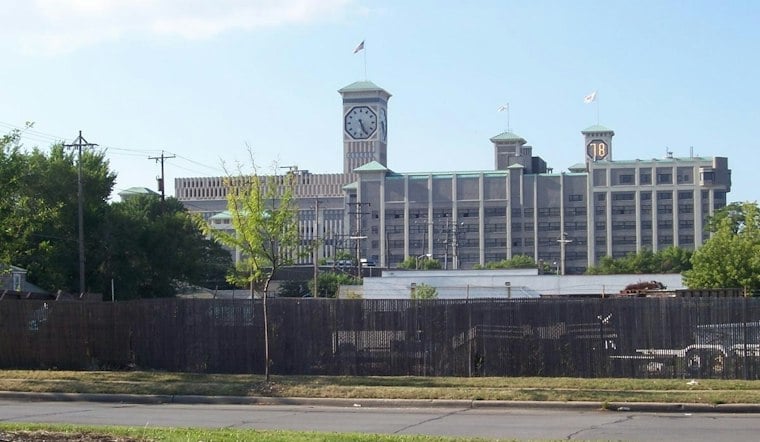
Fresh greens are now growing inside the headquarters of a major Milwaukee corporation, and they're headed straight to food pantries instead of grocery store shelves. Clock Tower Farms, a hydroponic indoor farm built inside Rockwell Automation's Milwaukee headquarters, is fully operational and has begun regular food production and distribution, according to the company.
The farm is a partnership between Rockwell Automation, Feeding America Eastern Wisconsin and Fork Farms, as reported by Post Register. At maximum capacity, the operation is designed to run 72 Fork Farms Flex Acre hydroponic systems capable of growing approximately 200,000 pounds of leafy greens and other produce annually, according to investingnews.com. Notably, that figure differs from Rockwell Automation's earlier announcement, which projected the farm could produce as much as 149,000 pounds of food annually when fully operational — the reason for the updated projection has not been explained.
From Seed to Pantry Shelf in Weeks
Inside the farm, seeds germinate and develop into seedlings within roughly two weeks of planting before being transferred into the Flex Acre growing systems, where energy-efficient LED lights drive photosynthesis and nutrient-rich recirculating water feeds the roots. Rockwell's PlantPAx control system monitors and automatically adjusts nutrients, pH, and water levels based on the crops growing at any given time. Greens are typically ready for harvest after about three weeks, and once picked, they go directly to distribution — traveling from the Clock Tower Farms dock onto Feeding America Eastern Wisconsin trucks, often within hours of being harvested, the nonprofit says on its website.
That short supply chain is intentional. The model avoids long-term storage, delays, and unnecessary handling, connecting each harvest directly with the communities Feeding America Eastern Wisconsin serves. The organization, which was founded in 1982 by the Rotary Club of Milwaukee and operates food banks in Milwaukee and Appleton, says it will operate the farm and distribute its harvest through its own network. Feeding America Eastern Wisconsin also describes itself as Wisconsin's largest hunger relief organization and a locally led, independently operated member of the national Feeding America network.
Harvest Headed to Nearly 600 Partner Agencies
The produce grown at Clock Tower Farms will be distributed through Feeding America Eastern Wisconsin's network of nearly 600 hunger-relief partners serving 35 counties across Eastern Wisconsin, per investingnews.com's reporting. According to a Feeding America Eastern Wisconsin executive cited by the Green Bay Press-Gazette, the projected harvest amounts to enough greens to provide 38,500 people a side salad every week, year-round. The same report notes that Rockwell donated the farm's space and growing systems, and that the nonprofit said the project would supply pantries with produce at no cost.
Feeding America Eastern Wisconsin also says the hydroponic approach saves up to 5.9 million gallons of water compared with traditional farming methods. Rockwell employees volunteered to build, clean, and prepare the growing systems before launch and will continue supporting the farm through its regular operations going forward.
A Response to Rising Pantry Demand
The timing lines up with a troubling trend across the state. About 804,000 Wisconsin residents, or roughly 13% of the state's population, experienced food insecurity in 2024, up from 427,000 people, or about 7%, in 2021, according to the Milwaukee Journal Sentinel. The newspaper also reported that food pantry attendance in the region rose 10% over the prior year, following a 30% jump the year before that, and that child food insecurity within the 35-county service area climbed from 16% to 20% in just the past year. Feeding America has estimated it is short 120 million pounds of food needed to feed everyone experiencing hunger in Eastern Wisconsin, per the same Journal Sentinel report.
Feeding America Eastern Wisconsin itself says its food pantries are experiencing some of their highest levels of demand in more than a decade, and the Green Bay Press-Gazette separately reported that the organization's partners saw average increases of 15% to 30% in users this year. Fresh produce in particular can be hard to come by at food pantries: a 2024 Sheboygan County Food Bank survey found that only 44% of county pantries could offer fresh produce year-round, the Press-Gazette noted.
Executives Frame It as a Scalable Model
Rockwell Automation Chairman and CEO Blake Moret said the company's technologies can help simplify complex challenges and create meaningful community impact. Feeding America Eastern Wisconsin President and CEO Monique Kelley said Clock Tower Farms strengthens local food systems and expands access to nutritious produce, while Fork Farms CEO Alex Tyink said the company's technology enables fresh food production where it can have its greatest impact. Rockwell Automation, Fork Farms and Feeding America Eastern Wisconsin describe themselves as creating a scalable model for delivering fresh food where it is needed most.
Rockwell Automation, which is headquartered in Milwaukee and describes itself as a company dedicated to industrial automation and digital transformation, employs approximately 26,000 people and operates in more than 100 countries as of its fiscal year ending in 2025. Fork Farms, a food access technology company headquartered in Green Bay, develops indoor hydroponic farming technology and digital tools aimed at year-round food production. Together, the partners describe Clock Tower Farms as a first-of-its-kind indoor farm combining hydroponic growing systems with industrial automation, built to demonstrate what's possible when organizations collaborate on food access, sustainability and community well-being.




