

























































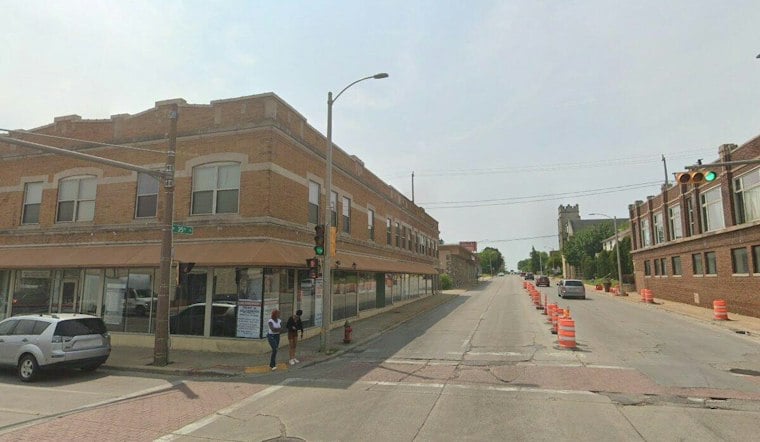
Milwaukee is on the verge of wrapping up a roughly $23 million campaign to strip lead hazards out of more than 300 homes, with the city's health department expecting to hit that mark by the end of the year. The work is concentrated in four neighborhoods long burdened by the city's aging housing stock and its legacy of lead paint and lead pipes.
According to WTMJ, the effort is focused on Sherman Park, Metcalfe Park, Harambee and Clarke Square, where crews have been replacing deteriorating windows, doors and other surfaces that could expose families to lead-based paint or dust. The Milwaukee Health Department is carrying out the work alongside Milwaukee Habitat for Humanity, and the project is backed by a $23.7 million American Rescue Plan Act investment plus a separate $7.7 million grant from the U.S. Department of Housing and Urban Development, per the same report.
Mike Totoraitis, cited in that report, said lead poisoning can have lifelong consequences for a child's health and development, and that removing lead hazards from homes is one of the most effective ways to prevent exposure.
A Problem That Stretches From Paint to Pipes
The push to clear old paint hazards comes against the backdrop of a much larger lead burden across Milwaukee's housing and water infrastructure. At the end of 2025, Milwaukee Water Works still had more than 55,000 residential properties with lead water lines on at least one side, and had not yet identified the pipe materials serving another 27,000 properties, according to milwaukeenns.org. The utility has replaced nearly 15,000 pipelines since broader replacement efforts began in 2017, the outlet reported.
To decide which properties get priority, the city relies on a scoring system that leans heavily on neighborhood disadvantage. Seventy percent of a property's score comes from the Area Deprivation Index, 25% from the share of local children who have tested positive for lead poisoning, and just 5% from how dense lead service lines are in the area, milwaukeenns.org reported. The city updates those scores every other year as new information comes in, per the same account.
Schools Faced Their Own Reckoning
Lead hazards have also forced a reckoning inside Milwaukee Public Schools. The district completed lead-paint cleaning across nearly 100 school buildings in 2025, WTMJ reported. That cleanup followed a crisis detailed by CNN, which reported that the district launched a plan to inspect, clean and repaint more than 100 schools after a child was found to have lead poisoning linked to peeling paint at a school.
A report submitted to the Wisconsin Legislature found Milwaukee schools needed more than $250 million in deferred maintenance, CNN reported. By the time of that reporting, the district had spent nearly $2 million to clean and repaint seven schools, with remediation set to start on two more. CNN also noted that roughly 1,000 Milwaukee children test positive for lead poisoning each year, with about 15 hospitalized for acute symptoms and roughly 200 recording blood lead levels above 15 micrograms per deciliter.
A History of Incremental Fixes
Milwaukee's current effort builds on more than a decade of piecemeal funding fights. The city had abated 17,000 properties at a cost of $66 million since 2004, according to a 2019 report from Urban Milwaukee. That same year, the city received a $5.6 million HUD grant intended to cover lead-abatement work on an estimated 320 homes over three and a half years, split between $5 million from the Lead Based Paint Hazard Reduction Program and $600,000 from the Healthy Homes program.
That 2019 grant targeted homes where children had tested with blood lead levels above five micrograms per deciliter, or where other federal housing funds were already being used to improve the property, Urban Milwaukee reported. The city's 2020 budget at the time included $21 million for lead-related work, the outlet noted — a sum in the same ballpark as the roughly $23 million effort now nearing completion.
Accountability has been a recurring theme in the city's lead response. A 2018 audit found no evidence that Milwaukee's health department had notified about 6,000 families that their children had elevated blood lead levels, CNN reported. More recently, Milwaukee Habitat for Humanity has offered free lead-abatement services to homeowners in the Sherman Park area, according to a notice posted by shermanpark.org, which said people who own and live in a home built before 1978 may qualify.



