

























































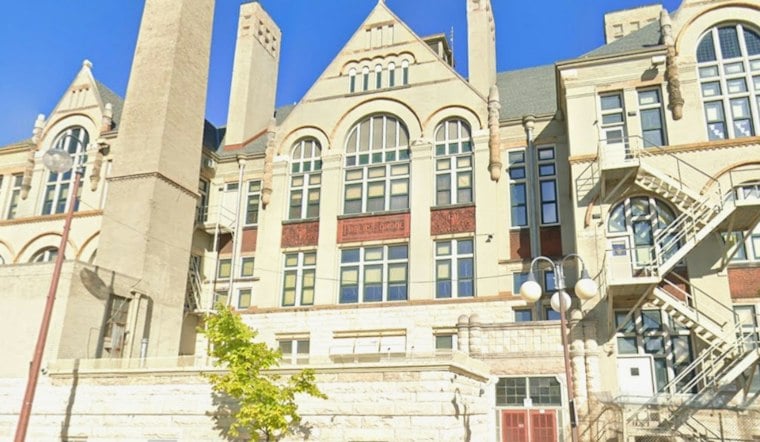
Nearly five years after Milwaukee students first stood outside Milwaukee Public Schools’ central office demanding better lunches, the fight is still going — even as students and faculty say things are getting better. Aamira Mister, a sophomore at Golda Meir, says she still brings food for friends so they can skip the cafeteria altogether, and she still describes the meat served there as mystery meat because, she says, students do not know what they are eating, according to WUWM 89.7 FM.
A Food Fight That Started With a Rally
As WUWM reports, the fight for better lunches at Milwaukee Public Schools is ongoing, even though things are improving. The district has a long-running effort to improve school lunches, and Milwaukee students have organized around the issue for years, pushing the district to rethink how it feeds roughly 70,000 kids. Lisbella Leen, a sophomore at Hamilton High School, is among the students who have kept the pressure on, alongside Hamilton art teacher John Fleissner, who has watched the campaign unfold from inside the building.
The roots of the frustration go back to the pandemic, when MPS shifted to preparing almost all school lunches at two central kitchens, sending pre-packaged meals out to be reheated at individual schools. Students and teachers say the food got so bad that teachers at one point ran a fantasy football league where the loser had to eat the school lunch, as reported by WUWM 89.7 FM. The pre-packaged meals were widely described as unappetizing, and the frustration eventually turned into organized action.
Six Demands Born From Thousands of Survey Responses
After returning to school, MPS students completed a survey on cafeteria food, with thousands of students across the district taking part — though outside counts of that effort have varied. According to the Wisconsin Examiner, YES, the youth arm of Voces de la Frontera, said its survey gathered input from more than 1,000 MPS students, while TMJ4 reported the group received 2,000 responses on what students wanted changed in their cafeterias. Improvements to school lunch were the single most frequent request to come out of that feedback.
From those responses, YES! students built a list of six demands, which the group announced at a press conference while circulating petitions. The demands called for fresh on-site cooking, an end to the central-kitchen model, more meal options, larger portions and fair pay for kitchen staff, as noted by Voces de la Frontera. The Wisconsin Examiner reported that the broader campaign also pushed for locally sourced ingredients and regular meetings between MPS and YES.
Staffing Gaps Still Shape What Gets Served
Back in 2022, then-MPS board president Bob Peterson said the district simply didn’t have enough kitchen workers to prepare food at schools, telling the Wisconsin Examiner, “We have 150 job openings for kitchen workers.” He noted that MPS had offered all of its employees a $15 minimum wage since January 2021, but suggested that might not be enough to pull in new kitchen hires. MPS has since said its school-lunch problems were directly related to the pandemic, supply-chain issues and a shortage of food workers, according to Urban Milwaukee.
That staffing math hasn’t fully resolved. MPS now has roughly 680 kitchen staff spread across 140 sites, with more than 80 vacancies still open, per the WUWM report. The district holds job fairs constantly and continually recruits kitchen workers, but when staffing falls short, MPS serves less elaborate meals instead of more ambitious ones. Fleissner has said MPS hiring can take a long time, delaying how quickly new applicants actually get into jobs.
A Task Force and a Seat at the Table
The push for change did produce institutional movement. The school board unanimously approved a resolution to implement a School Lunch Justice Task Force, TMJ4 reported, and the Milwaukee Journal Sentinel later reported that the board agreed to form a Food Justice Task Force bringing together YES students, school staff, board members and administrators to shape recommendations. MPS also put about $4.6 million in federal COVID relief funds toward remodeling a central kitchen for training, recipe testing and educational programs, according to the Milwaukee Journal Sentinel.
MPS and YES! students continue meetings through a working committee, which aims for school meals to become a reason students want to come to school, not a reason they stay away. Students and faculty report real improvements, including simply having a seat at the table with the district, and MPS Chief Operating Officer Michael Turza has been part of those ongoing conversations, per a report from WUWM 89.7 FM. School lunches now include more options than when students first made their demands back in 2022, though Mister says about six students she personally knows still skip lunch because they find it unappealing — and she says that matters because lunch shapes the wider school environment, not just the cafeteria.
Why the Fight Still Matters, Researchers Say
University of Wisconsin-Madison professor Jennifer Gaddis, who has researched and written about school lunch since before the pandemic, has pushed for more attention to the labor of the workers who prepare it, noting that school food workers and programs are often criticized, attacked or misrepresented in the media. She has said the fight over school lunch reflects something larger about how society values young people.
Underlying all of this is funding: MPS is a community-eligible program site, meaning every student can receive a government-paid free breakfast and lunch, with eligibility determined by the district’s poverty rate. That funding comes through the community eligibility program along with a small amount of state aid, money that has to stretch across the push for fresher food, better pay and enough staff to serve it all. Nearly five years after the first demands went public, Milwaukee’s school lunch fight remains, as WUWM put it, a work in progress.





