

























































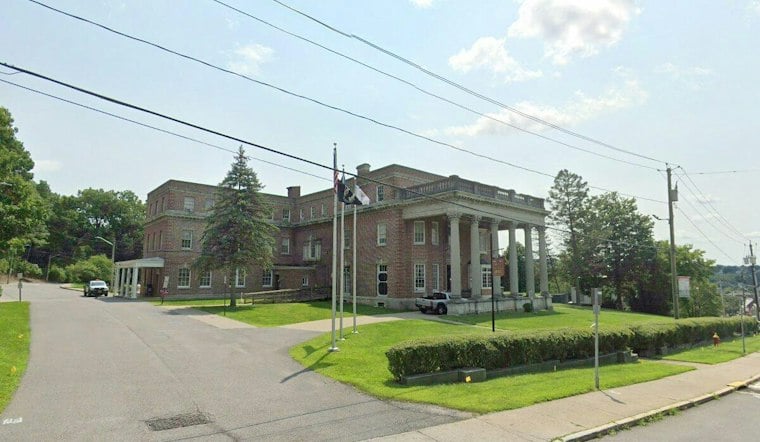
Mohawk’s latest six-month extension keeps a pause on new battery energy storage projects in place while the town works on zoning rules. The Town Board approved the extension the previous week, just before the original moratorium was set to expire on Saturday.
The town first enacted a six-month moratorium earlier in 2026, according to The Daily Gazette. Supervisor Janet DePalma said the town had not completed its work before the pause was due to expire. Officials expect to review proposed zoning updates next month, and DePalma said a public hearing is likely to be scheduled for February.
Planning Board Tasked With Drafting New Rules
The planning board is responsible for studying battery-system issues and recommending zoning regulations for the town to consider. DePalma said the aim is tighter oversight, not an outright ban on battery storage.
Mohawk has tightened its rules for solar development over time rather than banning it. DePalma said officials are likewise weighing battery regulations against the town’s rural character and interest in energy development.
Fires Elsewhere Push Safety Concerns Into Focus
The caution isn't happening in a vacuum. Fires broke out at lithium-ion battery facilities in Jefferson, Orange and Suffolk counties in the summer of 2023, and a battery facility in Warwick, in Orange County, caught fire for a second time in December 2025. New York updated its fire code in response, with stricter battery safety standards taking effect in 2026.
What State Records Show About Storage and Fire Risk
For a statewide view of storage deployment, NYSERDA’s energy-storage map tracks installed capacity, project counts and annual trends across New York since 1990, using interconnection data and information from agency incentive programs. The data description establishes the map’s statewide scope and measures, but does not provide specific recent-year changes or local totals. For the separate battery-storage fires in Jefferson, Orange and Suffolk counties in summer 2023, the state’s Inter-Agency Fire Safety Working Group reported no injuries and no harmful toxin levels detected in available post-incident air, soil and water analyses, according to NYSERDA.
Even so, the broader safety picture has been improving. A separate report notes that the rate of fires at battery storage facilities nationally dropped to 0.03 fires per installed gigawatt in 2024, down from 1.5 fires per gigawatt in 2018 — a 98% decline, according to The Daily Gazette. That same report details a proposed 10-megawatt battery storage facility in nearby Northampton, where Carson Power has planned two 5-megawatt, four-hour storage systems using six lithium-ion battery units — a project that has drawn opposition in Fulton County, separate from Mohawk's own moratorium.
A Patchwork of Local Responses Across the Region
Mohawk's wait-and-see posture stands in contrast to several neighboring communities that have moved to ban battery systems outright. The city and town of Amsterdam, along with Florida and Glen in Montgomery County, have enacted battery bans, and Amsterdam's local law prohibits battery energy storage systems in all zoning districts within the city, according to the Daily Gazette's reporting. Gloversville has banned the systems outright as well.
Other Fulton County municipalities have leaned toward pauses rather than permanent bans. Johnstown, Northampton and Perth have each enacted or extended battery moratoriums during 2026, with the city of Johnstown among those extending its own pause this year.
A Second Moratorium Looms Over Data Centers
Battery storage isn't the only development issue Mohawk is racing to regulate. The town adopted a separate six-month moratorium on data centers in August 2026, which runs through February 13, 2027, and DePalma said that pause will likely need its own extension so updated laws can be prepared and adopted in time.
That local effort follows state action: New York imposed a one-year moratorium on new hyperscale data centers consuming at least 50 megawatts after Governor Kathy Hochul signed an executive order enacting a partial data-center pause in July 2026. State agencies and officials are now tasked with assessing the effects of data-center development and crafting standards for future projects meant to protect ratepayers, the environment, the energy grid and communities. Mohawk officials, however, found that the state's moratorium didn't go far enough, since it applies only to the largest facilities.
DePalma argued the state pause left municipalities like Mohawk with insufficient time to adopt local zoning rules covering data centers of all sizes, not just the hyperscale projects targeted by Albany. Town officials have flagged the size of potential data centers and their substantial electricity and water demands as chief concerns. Perth, also in Fulton County, enacted its own one-year data-center moratorium in June 2026. “We want to know where they're going, how many there's going to be, how big they're going to be,” DePalma said, adding that she expects officials will ultimately balance protecting the town and its residents with allowing new development to move forward.



