

























































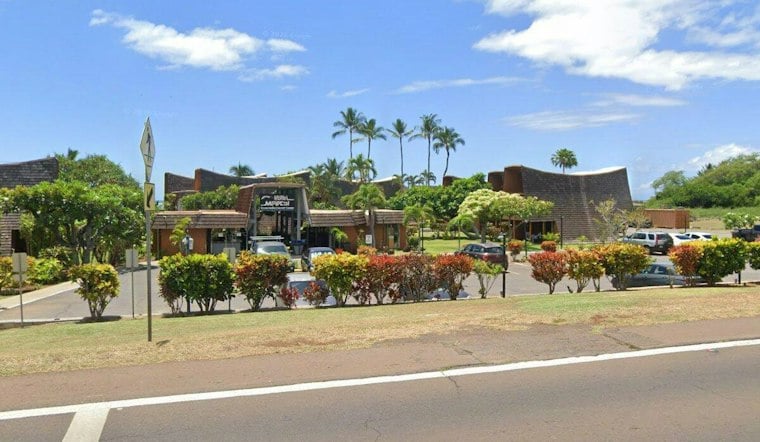
Hotel Molokai's oceanfront restaurant is open again, more than a year after it went dark, now carrying a new name and a new owner. Pāʻina Molokai held its grand opening on Friday, November 20, at the beachside spot east of Kaunakakai, with a ribbon-cutting ceremony led by longtime hotel manager Michael Drew and new owner Sean Rhim.
The restaurant sits within a hotel that has been part of Molokai’s visitor industry for decades. Hotel Molokai’s first 31 units opened in December 1966, and contemporary newspapers billed it as the island’s “first modern tourist hotel” and “first major bid for tourism,” according to the Society of Architectural Historians’ account of the hotel. Pāʻina’s reopening thus restores dining at a long-established oceanfront property, even as its new name and ownership mark a change for the restaurant.
The restaurant had sat closed since July 2025, according to The Molokai Dispatch. Drew, who has managed Hotel Molokai for 20 years, said he wanted the reborn restaurant to serve as a community gathering place for celebrations — a mission baked right into its name, since pāʻina means to gather. Hotel Molokai's own website had flagged the November 20 date as the restaurant's official opening.
Opening night drew a full slate of cultural programming. Maile Naehu performed an opening oli, Robert Sahagun offered a blessing, and Raymond Hiro welcomed guests at 5 p.m., per the Dispatch's account. Bryson Santiago, a local musician who also works as a hotel security guard, played alongside Hiro for hula performances by Moana's Hula Halau, while acts including Aka Gurl, Da Hunnehz, Just Kani and Da Jukes performed at poolside concerts.
A New Owner With Island Ties He's Been Chasing
Sean Rhim, who spends most of his time in New Orleans, approached Drew about purchasing the restaurant back in 2025, the Dispatch reports. Rhim has long wanted to move to Hawaii, and the two worked together to launch Pāʻina Molokai once the deal came together. Drew said Rhim understands and supports his community-focused vision for the space, a detail Drew shared according to the same report.
That vision nearly hit a snag before it ever opened. The launch was delayed by liquor license processes, which weren't cleared until late October, the Dispatch notes. The liquor-license process was not cleared until late October.
Molokai liquor licensing falls under Maui County, whose Department of Liquor Control handles applications for new or temporary licenses as well as transfers and changes to existing licenses. The county assigns those matters to its Licensing & Permits Division, as outlined on its liquor-license information page. The delay described by Drew was therefore tied to a county-administered step in getting the restaurant ready to serve alcohol, rather than simply a restaurant opening date.
Room for 200 and Three Meals a Day
The reimagined space seats more than 200 people and features a white stone bar, a stage and poolside tables, according to the Dispatch's report. The restaurant's assistant manager is Sonja Domingo.
Drew said the restaurant plans to operate seven days a week, serving three meals a day, and that it would stay open unless flooding forced a closure. The opening menu featured pupus and entrees built around seafood, chicken, beef and local produce, though Drew said the full lineup would be confirmed and shared in the coming weeks.
Drew also emphasized the restaurant's local roots, saying that 80 percent of its profits come from the community itself.
The restaurant’s community focus comes as Molokai’s visitor economy faces a sharp drop in arrivals. The Hawaiʻi Tourism Authority counted 23,482 visitors in 2025, down 21.5% from 2024, while visitor spending fell 10.7% to $26.9 million. Residents’ views are mixed: 45% said tourism had brought more benefits than problems, and 37% said they had a voice in tourism-development decisions. Those figures appear in the authority’s 2026–2028 Molokaʻi destination-management plan.





