

























































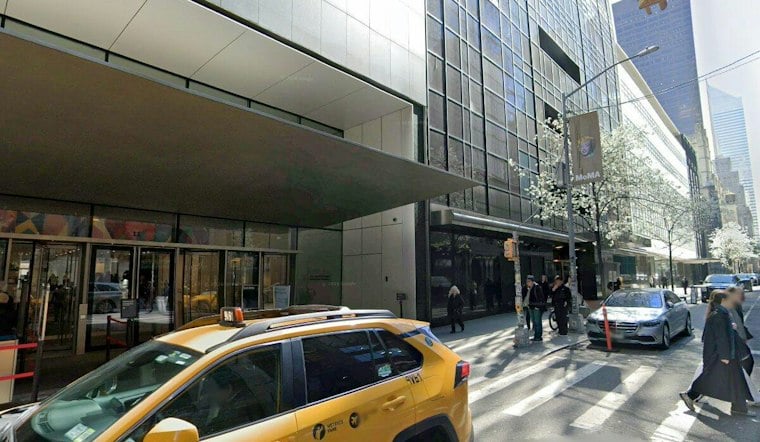
The Museum of Modern Art is preparing to turn over its galleries to the loudest, most contradictory decades in design history. Bold Is Better: ’80s and ’90s Design is set to bring together almost 150 works from MoMA’s own collection, spanning furniture, lighting, graphic design, textiles, fashion, video, technology, and craft, in a show that treats the Memphis-era rebellion and the rise of personal computing as two sides of the same story.
According to a report from Bustler, the exhibition is scheduled to run from January 17 through May 22, 2027, in New York. The show is organized by curator Tanja Hwang, working alongside Amanda Forment, a former curatorial associate, and Paul Galloway, a senior collection specialist in MoMA’s department of architecture and design, per the same account.
Three Lenses on Two Turbulent Decades
The exhibition is structured around three thematic sections, the report notes, each tackling a different facet of how design evolved across the period. The first section, as Archinect describes it, focuses on 1980s designers challenging modernist principles with expressive forms, historical references, and unconventional materials.
That section centers on objects like Ettore Sottsass’s Carlton, a multifunctional furniture piece developed through the Memphis collective and dated to 1981. The exhibition also includes Shiro Kuramata’s How High the Moon armchair, made of nickel-plated steel mesh and dating to 1986. Gaetano Pesce’s Feltri armchair, an armchair made from resin-infused felted wool, also traces to 1986, according to the same report.
From Analog Rebellion to Digital Culture
The second thematic section shifts toward design and mass culture, including the transition from analog to digital technologies. That strand brings in April Greiman’s Pacific Wave, a piece of digital graphic design dating to 1987, alongside pop-cultural touchstones: the exhibition includes Tetris (1984) and SimCity 2000 (1993), the latter identified as video game software and attributed to Will Wright, as well as Nirvana’s Nevermind album cover from 1991.
Fashion gets its place in this section too, with the exhibition including Maison Martin Margiela’s original Tabi boots, dated to roughly 1990. The breadth underscores how the show treats consumer culture, not just design objects, as part of the same creative current.
Materials Pushed to Their Limits
The final section examines material innovation and manufacturing in the late 1980s and 1990s, highlighting designers who treated unconventional substances as a design statement in themselves. Alberto Meda’s Light Chair, a carbon-fiber chair dating to roughly 1987, and Anna Castelli Ferrieri’s Armchair Model 4814, a recycled-plastic chair from 1988, both appear in this grouping, per the report.
Marcel Wanders’s Knotted Chair, which uses rope to create a rigid structure, dates to 1995 and extends that same material experimentation toward the end of the period covered by the show. Harry Allen’s lighting fixtures, made of ceramic and steel and dating to 1994, also appear in the exhibition.
Technology as Design Object
Perhaps no object in the show captures the era’s pivot from analog to digital quite like Apple’s iMac desktop computer, made of polycarbonate and electronics and dated to 1998. Its inclusion alongside SimCity 2000 and Tetris places consumer technology on equal footing with furniture and fashion as objects worth studying as design.
Tanja Hwang, the exhibition’s curator, framed the period as something more layered than a simple pendulum swing. “The 1980s and ’90s were not solely a period of rebellion followed by a return to order,” Hwang said, according to Archinect, describing the decades instead as generative and diverse.
A Show Built From MoMA’s Own Collection
Because the exhibition draws almost entirely from MoMA’s existing holdings, the show doubles as an argument for how the museum’s own archive has quietly tracked design’s shift from handcrafted provocation to mass-produced ubiquity. Sottsass’s Carlton room divider, made of plastic laminate and wood, measures 77 1/2 by 75 by 15 5/8 inches, while Kuramata’s How High the Moon armchair measures 28 1/2 by 37 3/8 by 32 3/4 inches, giving a sense of the physical scale visitors can expect to encounter.
Greiman’s 1987 poster, designed for an exhibition at the Museo Fortuny in Venice, is a lithograph measuring 34 3/4 by 26 7/8 inches, further illustrating how graphic design from the period sits alongside furniture and technology in the show’s galleries. With the opening still roughly two months away, the exhibition promises a dense survey of a design era that, as Hwang suggests, resists easy categorization.





