

























































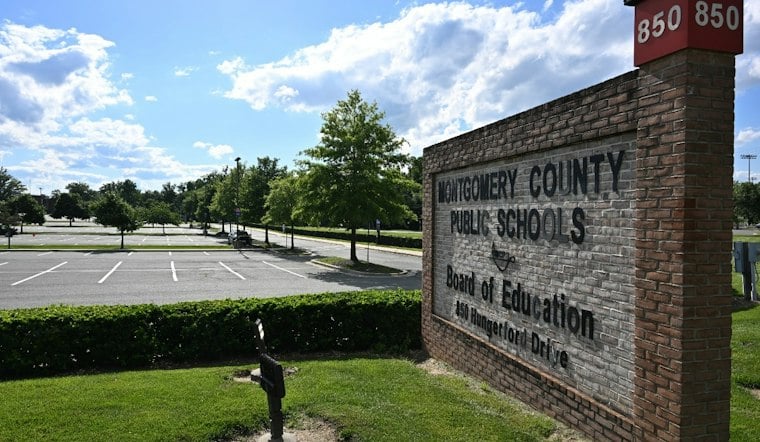
Montgomery County Public Schools has put forward a draft regulation that would let individual teachers decide if, when and how approved artificial intelligence tools show up in their classrooms, rather than imposing a districtwide ban or blanket mandate. The proposal sets limits on how student and staff data can be used, bars AI from making final decisions about people without human review, and opens the door to AI assisting with lesson planning and administrative work.
The draft was reported as an 11-page document, and Bethesda Magazine reported it was released Nov. 17. Montgomery County Public Schools itself has said the proposal is open for public comment through Friday, Dec. 18, with the goal of establishing what the district calls comprehensive procedures governing the ethical, responsible, equitable and secure use of AI, according to a district community update.
Under the draft, MCPS educators would get to determine whether and how MCPS-approved AI tools enter their classrooms, per Bethesda Magazine’s reporting. The regulation also spells out a list of prohibitions: no entering students’ or staff members’ personally identifiable information into unapproved AI tools, no letting AI make a final decision about a student or employee without human review, and no using AI to collect biometric, behavioral or location data. Vendors would also be barred from using district data to train AI models or build algorithms.
What the Rules Would Require in Practice
The draft directs that cloud-based or generative AI systems anonymize data to the fullest extent possible, and it explicitly prohibits AI-created deepfakes, voice cloning, misinformation and misrepresentation of academic work, the outlet reported. Students and staff would be required to cite and acknowledge when AI is used in their work, and AI-generated material could not substitute for what the regulation calls original output. Staff would also be barred from relying solely on generative-AI detection technology to determine academic dishonesty.
On the instructional side, the draft says AI can assist with instructional planning, data analysis and administrative tasks, while students would get learning opportunities built around AI literacy and responsible use. Library media specialists are named as the key building-level contacts for that literacy work. Automated systems, per the draft, should not make final consequential calls on grading, program placement, academic tracking or special education eligibility without a human checking the outcome.
How This Fits Maryland's Broader AI Push
The regulation builds on the Montgomery County Board of Education's updated Policy IGS, Educational Technology, adopted May 21, 2026, which states that AI tools are intended to support, rather than replace, active, teacher-led instruction, authentic learning, and workflow optimization, according to the district's online digital tools page. That same policy directed the superintendent to write implementing regulations, which is what the new draft represents. Separately, the district says its standard vetting process for online digital tools takes at least 60 days from submission to a final approval or denial decision.
The draft also requires that any AI tool be vetted using the Maryland State Department of Education's AI tool evaluation rubric, which looks at data privacy, pedagogy and safety standards. Maryland's Artificial Intelligence Ready Schools Act includes § 7-2202, titled “Guidance on artificial intelligence,” according to Maryland law.
An Advocate Says the Plan Does Not Go Far Enough
Not everyone is satisfied with handing the decision to individual teachers. Betsy Tao, head of the MCCPTA Technology Committee and a parent advocate, criticized the draft policy and regulations as insufficient, warning that delegating AI decisions to teachers could prevent consistent enforcement across classrooms, Bethesda Magazine reported. Tao has also described AI as “kryptonite to learning” because it shortcuts critical thinking, and she said the incoming school board should take strong action on AI policy.
District spokesperson Liliana López said the draft regulation establishes safeguards for ethical, responsible and secure AI use, and that protecting students while ensuring AI supports rather than replaces meaningful teaching and learning is the priority, according to Bethesda Magazine's reporting. López also said Google had not given MCPS information about changes involving Google Search and AI, after Google announced earlier this month it would restrict its search function if school districts reject AI tools built into its K-12 software.
Lawsuits and Parent Pushback Loom Over the Debate
The policy conversation is unfolding against a backdrop of lawsuits alleging AI tools have harmed student mental health, including one alleging a 13-year-old planned to end her life after talking with a chatbot-like feature on her school-issued laptop. The Wall Street Journal reported that a former John F. Kennedy High School student in Silver Spring used a school Chromebook chatbot first for homework help and later as a confidante. The DMV Parent Coalition has called for a moratorium on student-facing AI altogether, while Wootton High School senior and student newspaper online editor-in-chief Catherine Bucsa, who wrote a September op-ed criticizing increased use of AI-created art and posters by school staff, said she believes AI should be regulated by use and student age rather than banned outright.
Experts Say Vetting and Literacy May Beat a Ban
Some education experts interviewed for the original reporting favor a different approach than an outright prohibition, focusing instead on vetting tools, finding more purpose-driven AI learning tools, and building AI literacy. Jing Liu, director of the Center for Educational Data Science and Innovation and an associate professor of education policy at the University of Maryland, said AI tutoring systems can identify student mistakes and recommend practice problems. Liu added that giving educators autonomy may help, but only if MCPS also supports and trains teachers on responsible AI use. Daniel Umana, manager of the Montgomery College Digital Learning Center, said students should investigate and interrogate AI-generated answers rather than accept them uncritically.
How Montgomery Compares to Neighboring Districts
Montgomery County's teacher-autonomy model is one approach among nearby Maryland school systems. Frederick County banned AI for students in all grades, according to The Baltimore Sun. Montgomery County residents have until Dec. 18 to weigh in before the district moves toward a final version of its own rules.




