

























































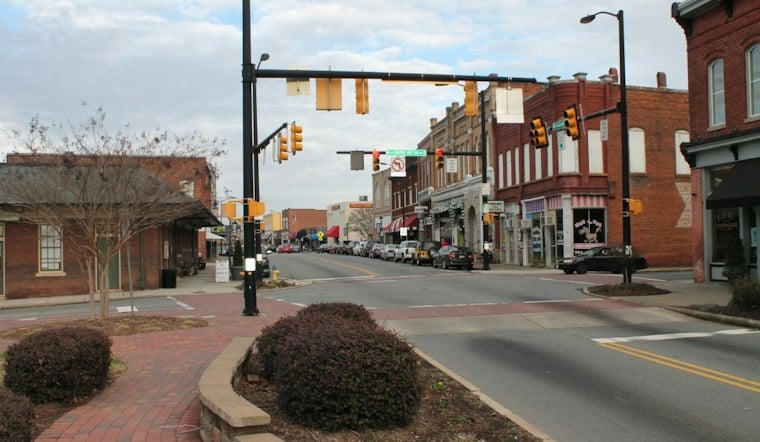
Mooresville commissioners voted unanimously Monday night to freeze new data center applications for 12 months, giving the town time to figure out whether the massive computing facilities belong there at all. The pause takes effect immediately and puts the brakes on new proposals while officials study how data centers would affect everything from the power grid to local water supplies.
Commissioner Gary West said the moratorium gives Mooresville breathing room to decide whether to allow data centers in the first place, and if so, under what conditions. According to Queen City News, West pointed to a list of specifics the town needs to sort out, including energy usage, water usage, where it goes, where it doesn’t go. Town leaders framed the pause as an attempt to find a balance between supporting business growth with the potential environmental and electrical impacts that come with hosting the server farms.
Mooresville Joins a Crowded Field of NC Towns Hitting Pause
Mooresville is far from alone. Queen City News reported that 56 other municipalities across the state have adopted a moratorium on data centers, a wave that has swept through North Carolina communities large and small. The outlet named Kings Mountain, Statesville and Waxhaw specifically among the towns that have already enacted their own pauses.
Those local actions vary in length and scope. Statesville's City Council unanimously approved a 180-day moratorium on Sept. 14 covering the acceptance, processing and approval of development applications for data centers, according to WBTV, a measure that does not affect data centers already approved before the freeze. Waxhaw's Board of Commissioners passed its own 12-month moratorium after a public hearing, which the Charlotte Observer reported passed without opposition and will remain in effect until August 10, 2027.
North Carolina law allows local governments to temporarily pause development approvals, but sets conditions for doing so. A moratorium must identify the problems it addresses, the approvals it covers, why its duration is necessary and what work officials will undertake during the pause. The law also exempts some projects with existing permits or qualifying prior approvals, and requires new facts and completed steps before a moratorium can be extended. Those requirements are laid out in North Carolina’s moratorium statute.
Charlotte has taken an even longer view. The city's council voted to extend its existing data-center pause through October 2027, Queen City News reported, after Carolina Public Press noted the council had originally approved a 150-day moratorium on new development. Carolina Public Press also reported that dozens of local governments have passed data center moratoriums in the last six months, describing what it called moratorium fever spreading across the state. Elsewhere, the Apex town government set its own one-year moratorium on data centers and cryptocurrency mines in the spring, as reported by The News & Observer.
A Chatham County dispute shows how earlier project steps can complicate a pause. In September, a Superior Court judge ruled for developer Eco TIP West in its lawsuit over a county moratorium that had halted its proposed 750-megawatt data center, awarding liability and attorney fees while leaving damages for later. The ruling did not explain which legal argument decided the case or declare all local data-center moratoriums invalid, as the court coverage noted.
Water, Power and Noise Concerns Driving the Pushback
The resistance isn't happening in a vacuum. The News & Observer has reported that residents in communities weighing these facilities have raised noise and pollution worries alongside concerns about water and electricity consumption. Those worries echo the specific considerations Mooresville's West cited in explaining the vote.
Water demand can depend heavily on how a facility manages heat. Some data centers use evaporative cooling, which consumes more water but less energy; closed-loop systems recirculate water and generally use less water but more energy. Others rely on outside air or refrigeration-based systems. That means the resource impact is not identical from one facility to another, and cooling choices can shape both water use and electricity demand, as coverage of North Carolina’s data-center boom explains.
The scale of the industry's footprint helps explain why so many towns are hitting pause before committing. The Data Center Coalition said the facilities delivered more than $1.3 billion in state and local taxes in North Carolina in 2024, a figure cited by Carolina Public Press that underscores the financial stakes on both sides of the debate. At the same time, the North Carolina Collaboratory has said it is working with NC State University to examine the cumulative stress data centers place on the state's five major river basins and the localized impacts on smaller communities, research aimed at answering questions many towns are grappling with right now.
Energy demand is part of that equation too. The Collaboratory has cited the latest estimates projecting that total net load for Duke Energy Carolinas and Duke Energy Progress could increase between 16% and 60% over the next 15 years, though that projection is not attributed solely to data centers. For Mooresville, the yearlong pause gives commissioners a window to weigh those broader regional pressures against the specific zoning, siting and utility questions now on the table at home.




