

























































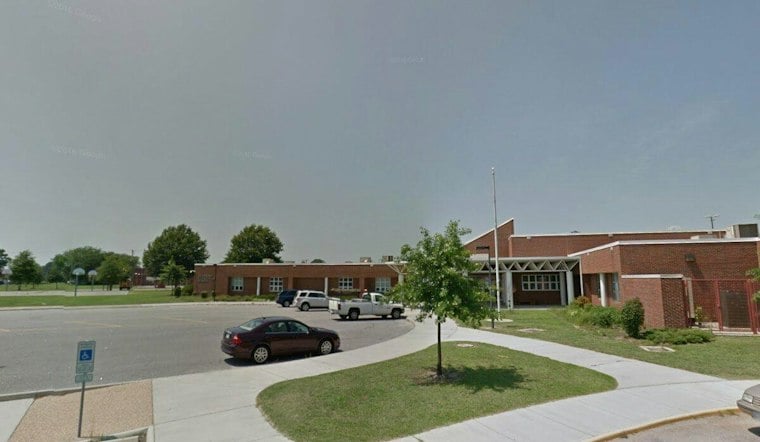
An 11-year-old autistic student was confined for more than two hours in a makeshift enclosure built from classroom furniture strapped together, according to an amended lawsuit his mother filed against eight Hampton Roads school boards. Joshua Sikes died at home days after the confinement at Pembroke Elementary School in Virginia Beach in November 2024, and his mother, Julie Xirau, is now seeking millions of dollars in damages over what she says happened to him in the days before his death.
The amended complaint, filed October 27 and later moved from state court to federal court in Norfolk at the request of lawyers for four employees of the Southeastern Cooperative Educational Programs, adds claims against the school boards and SECEP's joint board, according to WHRO. Sikes was confined in a classroom run by SECEP, which provides alternative and special education services for Hampton Roads schools and was founded in 1978. The lawsuit alleges his rights were violated under the Americans with Disabilities Act and claims SECEP's policies, customs and practices caused violations of his constitutional rights and contributed to his injuries and death.
What the Lawsuit Alleges Happened Inside the Classroom
According to the complaint, no one reported Sikes' treatment as a seclusion incident, and no one was disciplined for the confinement. The suit alleges employees breached their duties by confining Sikes or allowing the confinement to continue, failed to protect him after he hit his head in the enclosure, failed to provide medical care, and failed to tell Xirau what had happened to her child. The lawsuit also claims the school boards share responsibility for Sikes' trauma and injuries.
A wrongful death lawsuit against SECEP and its employees was first filed in January 2026, and SECEP employees have denied the claims in that case. The state medical examiner's office found that Sikes died at home of natural causes from complications of a seizure disorder — a finding separate from the lawsuit's allegations connecting his death to the confinement. Virginia Beach Child Protective Services determined there was evidence of neglect by an unknown abuser but found a separate allegation of physical abuse unfounded, and a spokesperson for the Virginia Beach prosecutor said officials had seen absolutely no evidence to charge any employees, per the same WHRO report.
No Authorized Seclusion Room at the School
Sikes' school had no authorized seclusion room, and the article notes that an impromptu seclusion area was not allowed in any classroom. Virginia Beach police, Child Protective Services and SECEP all investigated Sikes' treatment following his death. The SECEP joint board includes representatives from school boards in Chesapeake, Franklin, Norfolk, Portsmouth, Suffolk, Virginia Beach, Isle of Wight County and Southampton County.
An attorney for SECEP declined WHRO's request for comment from the organization or its executive director, and spokespeople in Chesapeake, Norfolk, Portsmouth and Virginia Beach also declined to comment, the outlet reported.
Virginia Beach Ended Dedicated Seclusion Rooms Earlier This Year
Before policy changes this year, SECEP operated Virginia Beach's only two locations with authorized seclusion rooms and was responsible for nearly all reported seclusion incidents in the city, according to school-record data cited in the same account. In February, Virginia Beach ended the use of dedicated seclusion rooms in the city, and the number of seclusions declined afterward. A Virginia Beach advisory committee that included parents of children with special needs had earlier formally recommended the school district end its use of seclusion, per an earlier WHRO report.
How Virginia Law Defines Seclusion and Restraint
Under the policy governing SECEP classrooms, seclusion is defined as the involuntary confinement of a student alone in a room or area from which the student is physically prevented from leaving, according to SECEP's Policy on Physical Restraint and Seclusion. Restraint, by contrast, is a practice that restricts a student's movement. The procedures allow staff to use restraint or seclusion in an emergency only when other interventions are, or would be, ineffective, and seclusion and restraint are permitted only when serious physical harm is a risk. The policy also requires continuous visual observation and monitoring while a student is restrained or secluded, subject to an emergency exception, and says SECEP must provide parents a written incident report within seven calendar days.
Virginia law reinforces these limits. Under Virginia Code § 22.1-279.1:1, the state Board of Education is required to identify and prohibit methods of restraint or seclusion it determines pose significant danger to a student and to establish safety standards for seclusion. For Xirau, the legal fight over how those standards were applied — or ignored — in her son's final days continues to play out in federal court.





