

























































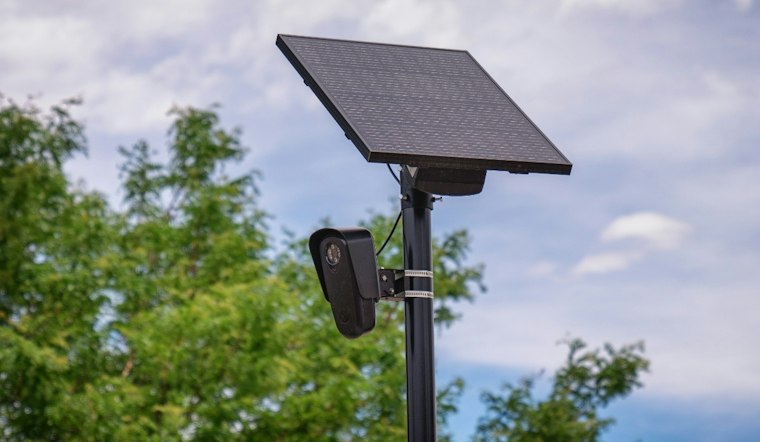
Mount Pleasant's town council is set to take up a first reading of an ordinance governing its network of 22 Flock license-plate reader cameras at its Nov. 10 meeting, with town officials saying the new rules could not take effect before December. The move follows a second round of discussion by the town's Police, Legal, and Judicial Committee over how the cameras are used, monitored and retained.
The town's legal department expects to have a draft ordinance ready for that first reading, according to WCIV. Officials say the measure is meant to spell out what ALPR technology the police department uses, strengthen public accountability, and improve transparency around how the cameras operate. The ordinance would also require town council oversight and approval before any additional cameras are placed around town.
Mayor Will Haynie said expanding the camera network would no longer be a decision made quietly behind closed doors. Any new camera placement, he said, would have to happen publicly with the permission of the elected representatives of the people. Haynie has also pointed to a public-facing portal where residents can see how the town's Flock cameras are used and how many inquiries come through the system.
How the Cameras Are Monitored
Mount Pleasant's ALPR system captures license-plate images on public infrastructure, and that data only lasts for seven days before it's purged, per the town's current practice. Police Chief Mark Arnold has said the department can see when another agency accesses one of its captured plate images, along with that agency's stated justification for the search. If something looks off, the town's police will flag it and reach out to the person responsible.
That retention window reflects a broader shift among Flock's law-enforcement customers. The company has updated its recommended data retention period to seven days for new customers, down from 30, according to Spectrum News. A September report from WCIV similarly found that a majority of Tri-County agencies using Flock had either implemented or were reviewing a seven-day retention policy.
Earlier reporting from WCIV detailed additional safeguards already in place at Mount Pleasant Police, including a published Transparency Portal and participation in Flock's Audit Assistance program, along with monthly manual reviews of officers' camera usage. At that time, Chief Arnold said the department had not found any instances of misuse or inappropriate use of its cameras. The chief has also said Mount Pleasant does not share Flock data with federal agencies such as ICE, according to The Post and Courier.
Searches, Arrests and a Discrepancy in the Numbers
Officers generally need a case number to run a search through the system, though a computer-aided dispatch number can be used initially during an emergency, per Live 5 News. That outlet reported that Flock alerts had contributed to 40 cases resulting in arrests so far that year, and that police had searched the system 219 times in the preceding 30 days. The Post and Courier, however, put that search count at 215 over the 30 days preceding Oct. 7 — the reason for the discrepancy between the two tallies isn't established in either report.
Running the system isn't cheap: Mount Pleasant's contract with Flock costs the town around $70,000 annually, the Post and Courier has reported. Chief Arnold has pointed to specific examples of the technology's reach, including an instance where an outside agency searched a Mount Pleasant plate in Georgia ten times.
No Statewide Rules, So Towns Are Going Their Own Way
Mount Pleasant's push for a local ordinance comes against a backdrop of statewide regulatory silence. As of early September, South Carolina had no statewide laws governing ALPRs — no caps on how long data can be retained and no penalties for misuse, according to South Carolina Public Radio. That same report found DeFlock had identified 1,415 ALPR cameras spread across 41 counties statewide, and documented vandalism incidents targeting Flock cameras in Irmo, Bluffton and Traveler's Rest.
A bill before the state legislature, Bill 447, would add a new statute section defining license-plate reader systems, specifying which entities may use them and setting guidelines for the information they collect, according to the South Carolina Legislature's bill page. The excerpt available does not establish the bill's current status or final language.
In the absence of state guardrails, local governments have landed in very different places. Oconee County Council voted in mid-September to defund its Flock cameras entirely and ban them from county property, a move South Carolina Public Radio described as the first repeal of an ALPR investment by any governing body in the state. That ordinance applies only to county-owned property and doesn't reach ALPRs used by municipal police departments. Spartanburg County Council, by contrast, unanimously approved a proposed ordinance regulating access to its cameras and stored data, including a $500 fine for each individual misuse violation, according to WBTW; that measure still needs two more readings before it's official.
Mayor Haynie has said the department must address potential misuse and establish protections to prevent it, a framing that echoes the accountability goals town officials have attached to the ordinance heading into next week's meeting. Whatever language the council takes up on Nov. 10, officials have been clear that the earliest any ordinance could take effect is December.



