

























































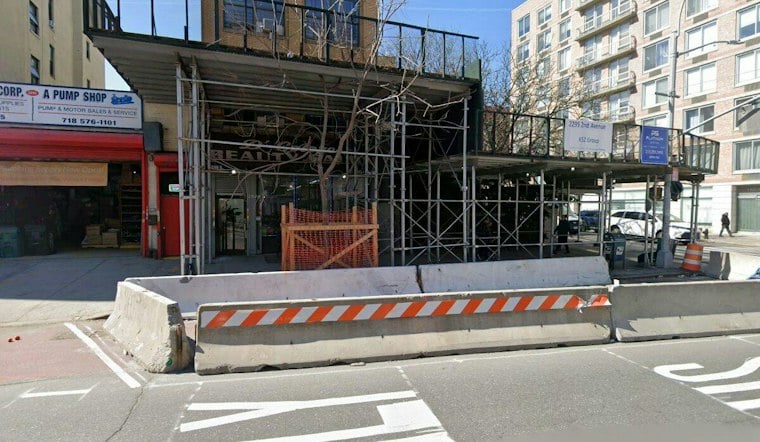
The MTA has approved a transit easement for a housing project in Harlem, amid plans for the Second Avenue Subway expansion.
Crain's New York reported the approval Monday.
What the Easement Reserves
An easement is not a sale of the block. In a July 2025 account of Second Avenue Subway Phase 2, the MTA said it retains the right to the space inside a privately owned-property easement for the period the agreement specifies. Temporary easements, the authority said, last a defined stretch, often four years, timed to planned construction.
Most of the easements Phase 2 requires are below the surface, and typically well below the foundations of buildings already standing or still to come. City code still requires coordination with the authority for any excavation within 200 feet of subway infrastructure.
Three Stations North of 96th Street
The housing interest is hitching itself to a line the neighborhood does not have yet. The MTA says Phase 2 will bring subway service back by extending the Second Avenue line north from 96th Street to 125th Street, with new stations at 106th, 116th and 125th streets.
The route on a map is the easy part. The authority says it must acquire properties for station entrances, ancillary facilities and the launch of tunnel-boring equipment, and that this acquisition is underway. It has already held a series of public hearings to take comment on property acquisition and eminent domain.
That is a blunter instrument than the easement Crain's reported. One path is a reserved right under private property for a set period. The other is the MTA taking sites it says it needs to put entrances, equipment and station works in the ground.
Federal Money and a Station Contract
The federal commitment is already on the books. In November 2023, the MTA's project history says, the Federal Transit Administration signed a full funding grant agreement providing $3.4 billion for Phase 2.
Contracting has moved since then. In June the MTA awarded Contract 3 to the Skanska-Walsh-Traylor joint venture to build the 106th Street station. That is one station, not the whole extension to 125th Street, but it puts a named contractor on the southernmost of the three new stops.
The July 2025 easement document also has the authority looking at what can rise on its own sites. "We are evaluating opportunities to incorporate transit-oriented development at the sites of new station entrances and ancillary buildings," the MTA wrote. Private developers asking for an easement, and the agency weighing development on entrance and ancillary parcels, are two versions of the same unfinished line being treated as real estate.
Listings Along the Avenue
A StreetEasy listing for 2293 Second Avenue in East Harlem describes the address as a development site with potential for a 20,800-square-foot, 10-story residential building. The listing also says the area has recently been rezoned for higher floor-area ratios on the avenues. Those are a listing's claims about capacity and zoning. They are not the design, unit count or schedule attached to Monday's easement approval.
Crain's has reported that Abraham Biller was planning a project along the Second Avenue Subway extension route.
Between 96th and 125th, the calendars are already out of sync in a familiar New York way. Phase 2 has a $3.4 billion federal grant, a contractor on the 106th Street station and an acquisition process still underway. The housing easement lets at least one private project move in legal step with a subway that has not opened those three stations yet.



