

























































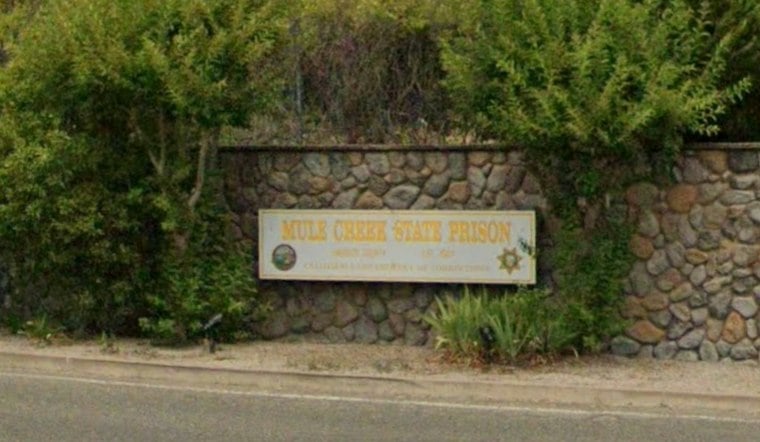
For a decade, Los Rios Community College District sent instructors through the gates of Mule Creek State Prison in Ione to teach roughly 500 incarcerated students working toward degrees. That ended in fall 2026, when the district suspended in-person classes at the Amador County facility, leaving students to rely on mailed coursework instead.
In fall 2026, Los Rios Community College District stopped sending instructors to Mule Creek State Prison in Ione, ending a decade of in-person classes for roughly 500 incarcerated students pursuing degrees. Students there now rely on mailed coursework and other available options. The suspension followed an April 2026 vote by the Los Rios College Federation of Teachers, according to The Sacramento Bee.
The union made a return to classes in 2027 conditional on the district complying with their agreement. Union representative Jason Newman told the Bee that the district had not met provisions on faculty training and safety, and that some instructors were unsure where they could go or how to navigate lockdowns inside Mule Creek. The union wants the district to coordinate more closely with prison authorities, Newman said, and remains interested in talks because faculty want to resume teaching there.
What Mule Creek Students Lost
Los Rios began its Prison and Reentry Education Program in 2016 with the California Department of Corrections and Rehabilitation, according to CapRadio. The program expanded to five correctional facilities. At Mule Creek, about 20 volunteer instructors taught roughly 500 students per semester in subjects including communication studies, computer science, entrepreneurship and social work, according to the Bee.
For Jerry King, the classes helped open a path beyond prison. In 16 years of incarceration, he earned an associate degree in social work and human services from Folsom Lake College and a bachelor's degree in communication studies from Sacramento State. King was released in September 2026 and is now studying in a humanities master's program at CSU Dominguez Hills. He hopes one day to direct a community college prison education program.
Kalinda Jones, a Folsom Lake College professor and one of the first Los Rios instructors at Mule Creek, was among the program's early instructors, the Bee reported.
The Dispute Had Earlier Roots
A 2024 memorandum of understanding between Los Rios and its faculty union set out training and workplace protections, including district coordination of prison training schedules and communication channels for resolving concerns, according to the Bee. That year, the district also investigated nine faculty members over allegations that they had transported student letters without authorization. The letters raised concerns about insufficient educational resources, CapRadio reported. Faculty said at the time that classroom materials arrived slowly and their prison-teaching training was inadequate.
The union president said all nine faculty members were exonerated on July 18, 2024, CapRadio reported. Los Rios separately said an independent investigation found no evidence of wrongdoing by any district employee.
The Cost of Keeping Classes In Person
The district says financial and planning constraints are among the obstacles to restarting the Mule Creek program. Art Pimentel, president of Folsom Lake College, which hosts the prison education program, told the Bee that the union's pause effectively ended Los Rios' relationship with CDCR. In-person prison instruction requires substantial subsidies for administration, faculty and mileage, he said.
Los Rios previously received $1.5 million from the state in 2022 and $950,000 from the federal government in 2023 for its prison programs. The district is now focusing on its Folsom State Prison partnership, which serves about 130 students per semester, and the state-funded Rising Scholars program. Meanwhile, the union is negotiating its next contract.
Students at Mule Creek have turned to correspondence courses since in-person instruction ended. CDCR has strengthened its relationship with Lake Tahoe Community College to provide correspondence courses, the Bee reported. CDCR did not say whether it is pursuing other in-person partnerships, but said it is seeking college districts willing to teach face to face. The agency says every state prison has at least two community colleges offering associate degrees and that in-person teaching remains available at nearly all California prison facilities.
Pell Grants for Eligible Prison Education Programs
Otherwise-eligible incarcerated students could receive Pell Grants beginning July 1, 2023, if enrolled in an eligible prison education program, according to the U.S. Department of Education’s Office of Career, Technical, and Adult Education. That federal eligibility can make grant funding available to students in qualifying programs, but it does not establish which California prison-college programs are approved or whether the coursework currently available at Mule Creek qualifies.
California's Changing Mix of Classroom and Remote Courses
Mule Creek's shift to remote coursework comes amid a wider debate over how incarcerated students learn. A 2024 Legislative Analyst's Office report recommended expanding online courses to address limited prison classroom space, according to CalMatters. Separately, an analysis reported by Open Campus found lower success rates for correspondence courses than for in-person classes. It found that 60% of California Community Colleges instruction was delivered outside the classroom, mostly by correspondence, and that incarcerated students took longer to graduate.
The state has spent $23.2 million over three years to distribute 30,000 laptops to incarcerated students, as digital coursework begins to replace mailed packets, CalMatters reported. During the pandemic, one instructor used mailed coursework. In fall 2025, 24 of the state's 116 community colleges partnered with prisons, with more than 21,000 course enrollments; 20 colleges offered in-person instruction at prison sites, CalMatters reported. Its analysis also found that 8.5% of people who earned an associate degree while incarcerated were convicted within three years of release, compared with 41.9% of all people released in the 2018–19 fiscal year.





