

























































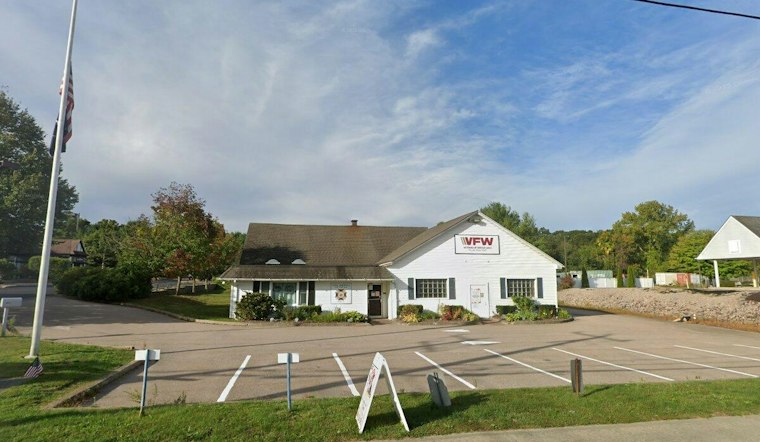
A petition now circulating through Mystic VFW Post 3263 is asking Stonington to scrap a cap the town placed on its property-tax exemption for 100% disabled veterans, a benefit Connecticut law otherwise allows those veterans to claim in full. Post commander Eric Johnson says the cap is already hitting roughly a third of the town's most severely disabled former service members, and he wants it gone.
Johnson, who told WFSB he served eight years in the Air Force, said 44 veterans with 100% disability ratings live in Stonington, and that 13 of them are affected by the town's cap. He led the petition drive and said he plans to bring it before the town. The document could be signed at the VFW post on Route 1 in Mystic until 4:30 p.m. Tuesday, according to the same report.
“We as veterans do not ask for handouts, we don't ask for stuff to be given to us, however our 100% disabled veterans need our help,” Johnson said, per WFSB's report.
How the Cap Works
Stonington's cap ties the exemption to the town's median assessed home value, which stands at $315,500, according to the station's reporting. Instead of letting qualifying veterans avoid property taxes on their full home value, the cap limits how much of a home's assessed value can be exempted under the benefit.
That cap traces back to a vote Stonington's selectmen took on September 24, 2025, according to a report from The Westerly Sun, which said the measure would cap the exemption amount at the median assessed value of residential real property in the municipality. The same report noted the broader package of changes was also designed to explicitly include so-called TDIU veterans — those rated for total disability based on individual unemployability — and Gold Star families among those eligible for exemptions.
Filing Rules Veterans Must Meet
Under the town's standing rules, eligible veterans must submit a D-2 application to the Stonington Assessment Department by January 1 each year, along with proof of their 100% permanent-and-total disability status, according to the department's own guidance. Separate guidance from the same office says veterans claiming disability exemptions must submit proof from the U.S. Department of Veterans Affairs stating their disability percentage during the assessment period, with a new filing required only if that percentage later changes.
The fiscal stakes behind exemptions like these have drawn scrutiny elsewhere in the state. A 2025 report from Yahoo News found that data from 100 of Connecticut's 169 municipalities showed roughly 2,400 qualifying veterans producing a combined revenue loss of more than $12 million, with the numbers continuing to grow. That same report said 29 Stonington veterans qualified for exemptions reflected in July 2025 tax bills, a figure that removed $6.5 million from the town's 2024 grand list and amounted to a $135,208 loss in tax revenue; it's a separate measure from this week's count of veterans affected by the town's cap, covering a different time period.
A Similar Fight Playing Out in New York
Stonington's dispute echoes a move playing out this month in New York, where the Onondaga County Legislature approved a local law creating a property-tax exemption for the primary homes of eligible permanently and totally disabled veterans, according to WRVO Public Media. A legislator there said the change would add the remaining 25% to exemptions veterans were already receiving, which totaled about 75%, while Ricky Mills, commander of the Camillus American Legion and a U.S. Army veteran, noted that counties, towns, and school districts in the state can each choose whether to opt into the benefit.
In Stonington, it remains to be seen whether Johnson's petition will persuade town officials to revisit the cap they approved last fall. For now, the VFW post's push represents the latest local flashpoint in a statewide conversation over how far municipalities should go in honoring the state's promise of tax relief for its most severely disabled veterans.





