

























































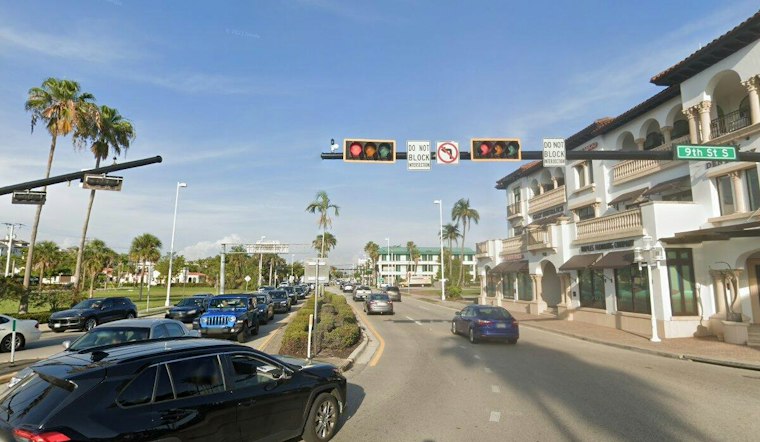
Naples' St. Patrick's Day parade, a Fifth Avenue South tradition that just marked its 50th year, may not march again in 2027. The Naples St. Patrick's Foundation has told the city it is done organizing the event, and so far nobody else has stepped forward to take it over.
The foundation notified the city in May that it was leaving the parade business, and as of now, Naples city staff have received no application for a special permit to host the parade in 2027, according to The News-Press, which first reported the foundation's exit. Patrick Kirk, the parade's chief marshal and its grand marshal for more than a decade, said the decision to stop organizing was totally financial, with costs nearly tripling over the last few years. Kirk told the paper he wished the city good luck keeping the parade going and said he believed it would carry the tradition on proudly, adding that the city had been great to work with over the last few years.
Fees Climbed From Thousands to Tens of Thousands
The numbers behind the foundation's decision are stark. City fees for the parade rose from less than $4,000 a decade earlier to more than $25,000 in 2025, and the barricade fee alone jumped from under $5,000 in 2025 to $43,000 for 2026, per the same News-Press report. Naples has also ramped up security requirements for special events broadly, adding police staffing and barricades that officials say are meant to protect the public from modern-day threats.
Those costs nearly sank the 50th-anniversary parade entirely. The city council denied the foundation's request to waive fees and help offset the new barricade costs on Jan. 21, and the parade was canceled just hours later. As Gulfshore Business reported, the foundation reversed its cancellation a few days later after meeting Jan. 23, once private donors stepped in. Former City Council member Gary Price secured donor commitments within a single afternoon to cover the $43,000 barricade bill, and he and billionaire Hoffmann Family of Cos. patriarch David Hoffmann donated privately to help save the event.
Organizers Caught Off Guard by the Foundation's Exit
Notably, Price and Hoffmann said they were unaware the foundation had decided to stop organizing the event altogether, and Hoffmann said he had not heard about the decision before it became public. Foundation president Kim Heaslip said community support had saved the milestone parade, and the foundation confirmed the 50th-anniversary event had been rescued before it ultimately stepped out of the parade business for good. The foundation has said it will continue supporting local high school bands and providing college scholarships, work Kirk said would carry on even without the parade.
The 50th annual parade went off as planned on Fifth Avenue South on March 14, drawing a crowd that, per the Gulfshore Business account, typically numbers more than 40,000 participants and spectators, with 110 to 120 parade units and 12 to 14 marching bands. The event has long been billed as Florida's largest privately funded St. Patrick's Day parade. Its roots trace back to 1976, when Father Thomas Goggin led a group from St. Louis around the grounds of St. Ann Catholic Church in Naples, and he and others organized a celebration and the first parade a few months later.
Naples Isn't the Only City Feeling the Squeeze
Naples isn't alone in watching event costs spiral. An organizer of Empty Bowls said rising security costs may force that event to relocate from Cambier Park, and Naples Pride reported its security fees for Pride Fest jumped from $15,520 to $30,600, a 97 percent increase, with returning its drag show to Cambier Park carrying another $10,000 in security costs, Gulfshore Business reported. India Fest announced in December that it was canceling its annual Cambier Park festival entirely because of rising costs tied to new security regulations. A representative for the Fifth Avenue South Business Improvement District told Gulf Coast News Now that any event on the avenue brings business to its 254 member businesses, underscoring what's at stake if the parade disappears for good.
Naples police have described the city's tougher event-security rules as a response to what they call a very real and rapidly changing threat landscape in America, Gulfshore Business reported. Separately, Naples city staff presented a substantially revised draft Special Events Manual and fee schedule to the council, and council and staff agreed to pilot refined event thresholds, adjust deposits for higher-impact events, and bring a resolution and ordinance package back for adoption, according to Citizen Portal. Under the city's existing Special Event Permit Manual, revised in September 2023, the organizing agency is responsible for the cost of all city services provided for an event, and any event requiring City Council approval, including street closures or crowds exceeding 1,500, must be submitted no later than 120 days before the event date.
A New State Law Looms Over Future Parades
Florida Senate Bill 1134, set to become law on Jan. 1, 2027, will restrict municipalities from funding, organizing or promoting activities tied to DEI, ethnicity or sexual orientation. Because the Naples parade has been funded through private donations rather than city sponsorship, the new law does not impact it, according to Gulf Coast News Now. Monique Barnhart-Tiberio, the city's communications and public outreach manager, said Naples had not identified any city-sponsored events affected by the legislation, even as the city continues evaluating the new law's broader impact.
The law has already reshaped celebrations elsewhere in the state. Delray Beach canceled its city-sponsored St. Patrick's Day parade, an annual event dating to 1970, along with its Pride events planned for 2027, in order to comply with the new law, according to NPR. Delray Beach's mayor said the city would gladly hand over the reins and support a private sponsor willing to keep those festivities going. Whether Naples finds its own version of that private sponsor before parade season returns remains to be seen.





