

























































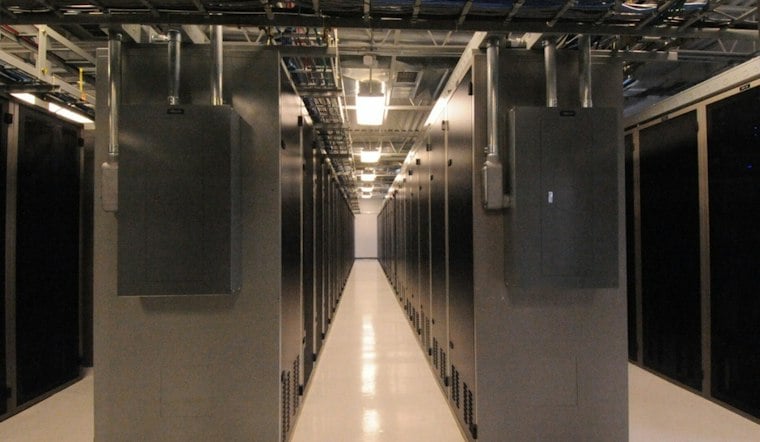
Napoleon Township's board unanimously approved a temporary moratorium on data centers Tuesday night, pausing consideration of any applications for up to a year while officials study how to regulate the sprawling computer facilities powering artificial intelligence and other digital services. No developer has brought a data-center proposal to the township, but officials note that industrial-zoned properties within its borders could become potential sites down the road.
The freeze, passed at the board's Nov. 10 meeting, gives Napoleon Township time to study its ordinances and regulations and possibly revise them before any project moves forward, according to MLive. It will stay in effect for one year or, if sooner, until the effective date of any amended or new township ordinances or regulations addressing data centers, whichever comes first. Board member Julie Stage proposed the pause, saying residents' concerns and widespread national opposition to data centers prompted her to bring it forward.
Napoleon Joins a Countywide Pattern
Napoleon isn't alone. Across Jackson County, 13 other townships have already enacted similar moratoriums, the outlet's report noted. A separate count published a few days earlier found that 13 of the county's 19 townships had passed moratoriums against data centers, with three more townships beginning public discussions and one having already passed an ordinance laying out application requirements.
In neighboring Summit Township, a six-month moratorium had already expired, and the board was weighing whether to enact its own regulating ordinance at a meeting also held Nov. 10. The planning commission there had drafted an ordinance and consulted the township's lawyers, with the draft reportedly requiring closed-loop or municipal water for cooling and capping noise from cooling systems, HVAC equipment, transformers and backup generators at under 55 decibels.
Henrietta Township has already passed its own ordinance, which addresses where data centers can be placed and requires environmental impact assessments along with studies of noise, vibration, traffic, utilities, pollution and water conservation. That ordinance, passed in February, also requires applicants to set buildings at least 300 feet from all non-participating buildings.
Bigger Projects Loom Nearby
The stakes are visible just outside Jackson County. A hyperscale data center for Oracle and OpenAI spanning 2.2 million square feet is under construction in neighboring Washtenaw County's Saline Township. Developer Related Digital sued Saline Township and secured a settlement after the board initially declined to rezone roughly 575 acres for the project.
Statewide, the trend is accelerating. As many as 52 local township and city governments across Michigan had passed data-center moratoriums by July, according to Michigan Public, and more have followed since. The same report noted that Romulus City Council unanimously approved an immediately effective 180-day moratorium on Nov. 9 to buy time for permanent regulations, while Saginaw Township approved an ordinance capping noise at 40 decibels at the property line, requiring a 500-foot setback from residential property, and mandating closed-loop or recycled cooling water, set to take effect Nov. 16.
Concerns From Napoleon Residents
At Napoleon Township's planning commission work sessions, 19-year-old Ellie Hilliker has raised concerns about water use, workers coming from outside the township, facility lighting and sound, and effects on wetlands and sandhill cranes near her home. She said she opposes data centers in their current form but believes they may be a necessary evil, adding that regulations could make them less terrible.
Thirty-two-year-old Thomas Wilson said large corporations and billionaires are building data centers rapidly without regard for their impacts, and said he wants any data center eventually brought to Napoleon by a technology company to operate responsibly. Board member Dan Wymer supported the moratorium but cautioned against unreasonable regulations, saying township officials cannot forbid data centers outright and that such facilities may be appropriate in certain places or circumstances. Wymer suggested that water from the Grand River treatment plant could flow through a future data center for cooling, with its waste heat captured and put to use.
Local governments can enact controls on data centers, but the Michigan Zoning Enabling Act limits how far they can go, prohibiting local governments from barring a land use entirely when a demonstrated need exists in the surrounding area. The Michigan Legislature has also passed a law allowing large-scale commercial solar and other projects to bypass local governments and apply directly to the state.
A June report from the Citizens Research Council of Michigan found the state has about 70 operating commercial colocation data centers, with the total potentially reaching the hundreds once enterprise facilities are counted. The Citizens Research Council of Michigan report. For now, Napoleon Township's planning commission continues its work examining data-center concerns, even with no formal proposal yet on the table.





