

























































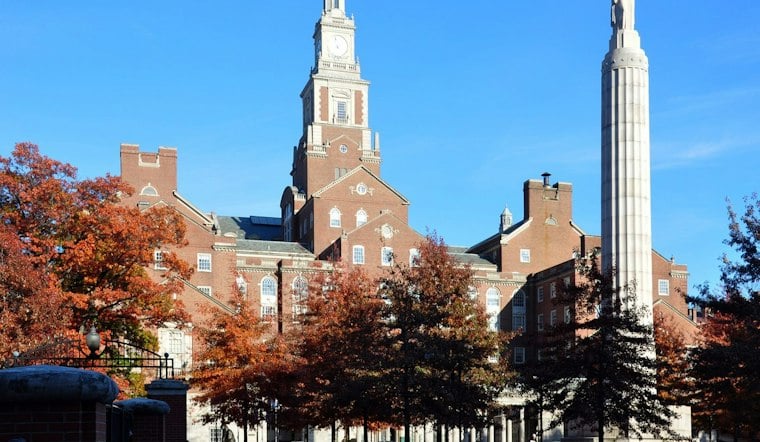
Neighborhood Health Plan of Rhode Island has sued the state, alleging it is owed $100 million in unpaid Medicaid reimbursements stretching back years. The nonprofit insurer, which covers roughly one in five Rhode Islanders, filed the 20-page complaint in Providence County Superior Court on Oct. 30.
The lawsuit targets the Rhode Island Executive Office of Health and Human Services, the agency that administers Medicaid in the state, according to The Providence Journal. Under the state's contracts with managed-care insurers like Neighborhood, Rhode Island is supposed to cover members' administrative and medical expenses and then pay the health plan for its services and billed medical costs, the paper reports. Neighborhood, in turn, manages its members' provider networks and pays providers' bills directly.
According to the complaint, the state has breached those contracts by failing to properly categorize Medicaid patients based on their health needs, failing to enroll some new members, and omitting significant changes in patient care. The lawsuit says Neighborhood cannot control per-member payment rates, eligibility status, or how members are categorized — responsibilities that rest with the state — even though Neighborhood is contractually required to keep covering patient care regardless.
A Years-Long Pattern of Reconciliation Problems
The complaint alleges the state has acknowledged its reconciliation problems since at least 2018, and that a review found large underpayments in a limited sample of Neighborhood's members. Despite that, the lawsuit claims, the state refused to reconcile the remaining members across all contract years. Neighborhood says it repeatedly asked the state to reconcile and pay the capitation it was owed, and that the state has not done so.
Per the complaint, when a member's circumstances change — for instance, transitioning from home care to a nursing facility — costs can rise by thousands of dollars per member per month, and the state is supposed to review and recategorize those cases to reimburse the increased costs. Neighborhood alleges the state failed to make those rate changes when circumstances shifted, forcing the insurer to provide care in some cases without the reimbursement its contracts call for. The complaint estimates Neighborhood incurred millions of dollars in expenses addressing the state's errors and delays while continuing to cover bills in reliance on the state's promises to eventually make it right.
This is not the first time the dispute has surfaced publicly. Earlier reporting from WPRI described the underlying payment disagreement as ongoing since 2016, with Neighborhood at one point saying it was owed $135.5 million through December 2023 — $114.3 million in one payment category and $21.2 million in another. The station reported Neighborhood had offered to settle that earlier claim for $100 million paid over four years, which its CEO said would have discounted the state's debt by $35 million. The same report quoted then-Health and Human Services Secretary Richard Charest saying the state was hiring an outside auditor to review Neighborhood's claims while disputing that it owed the money.
What Neighborhood Is Asking the Court to Order
In the new filing, Neighborhood is asking the court to order the state to complete the payments, subject to review either by Neighborhood itself or by a court-appointed independent auditor. The insurer is also seeking damages in an amount to be proven at trial, along with reimbursement of its legal fees. The complaint was filed on Neighborhood's behalf by the law firm Hinckley, Allen & Snyder in Providence.
EOHHS declined to comment on the lawsuit, citing the pending litigation, the Journal reports.
Backdrop of Turnover and System Troubles
The lawsuit arrives amid broader turbulence at the agencies responsible for the state's Medicaid system. Richard Charest left state service on Nov. 1 to lead CharterCARE Health of Rhode Island, which owns and oversees Roger Williams Medical Center and Our Lady of Fatima Hospital. One day before Neighborhood filed suit, outgoing Attorney General Peter Neronha called for major changes to Rhode Island’s health care system, saying EOHHS lacks the capacity, resources, and authority to properly regulate it.
Medicaid, the public health insurance program for income-eligible Rhode Islanders, has leaned heavily on the state's RIBridges system, a $364 million digital platform launched in 2016 to help deliver Medicaid payments to an estimated 400,000 Rhode Islanders. The complaint alleges RIBridges increased application processing times and created a backlog the state has not addressed. The system was also hacked in 2025, compromising sensitive and financial information for hundreds of thousands of enrolled members.
Those system troubles are not new. A 2017 state audit, reported by Patch, produced 79 findings and recommendations tied to state financial operations and federal-program administration. That audit found the state's claims and capitation payment system had listed 16,000 more Medicaid and CHIP recipients than RIBridges, resulting in duplicate capitation payments to managed care organizations, and that delays enrolling Medicaid-eligible newborns in RIBridges had in turn delayed provider claims adjudication and payments to managed care organizations.
Neighborhood Health Plan of Rhode Island was created as a not-for-profit health plan in 1993 and enrolled its first members the following year, partnering with the state as Medicaid coverage expanded over the decades since. Whether this latest lawsuit resolves the reconciliation dispute that has simmered since at least 2018 remains to be seen, with no indication yet of the case's outcome.





