

























































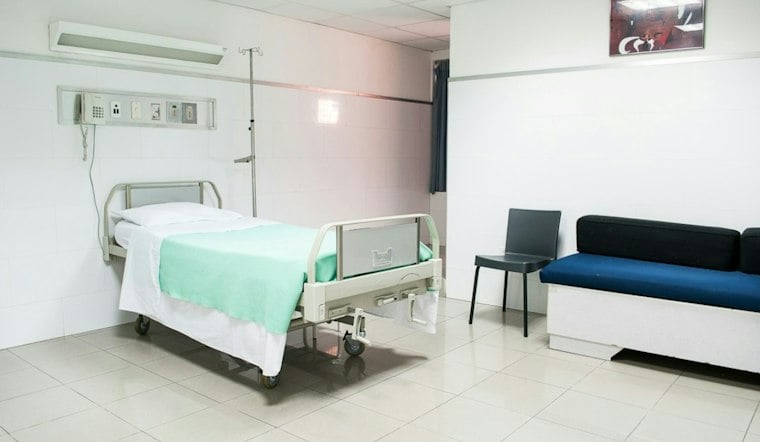
Wilson Medical Center in Neodesha, a town of just over 2,000 people in southeast Kansas, is putting a $1,555,143 state grant toward a planned renovation of its family medicine clinic, expanded lab services and new emergency stabilization equipment. The hospital is also hiring additional medical providers as part of the expansion, a move it says was necessary before it could even think about growing its patient base.
A Statewide Push to Soften Medicaid Cuts
The money comes through the Kansas Rural Health Transformation Program, a state effort administered by the Kansas Department of Health and Environment and funded through the federal Centers for Medicare and Medicaid Services. According to KCUR, the program is designed to soften the impact of Medicaid cuts tied to the reconciliation law President Trump signed in 2025. Wilson Medical Center was among just 17 organizations statewide awarded funding out of 72 applications submitted, according to the hospital’s own announcement on its website, which described the award as part of a statewide $79.1 million investment in rural health care.
Erica Johnson, Wilson Medical Center’s director of marketing, told the Kansas News Service that provider recruitment is a major challenge in southeast Kansas, and that building capacity for new providers had to come before any expansion of patient services. The hospital said planning and design for the Neodesha Family Medicine renovation would begin in the coming months, with construction expected to cause minimal disruption to patients. As of November 18, hospital staff had already reviewed clinic plans drawn up by Torgerson Design Partners.
Checks, Balances and a Purchase-by-Purchase Process
Grant money hasn’t arrived in one lump sum. Miranda Carpenter, the hospital’s foundation director, said the funding has come in gradually and gets spent on a purchase-by-purchase basis, with federal and state government checks and balances built into the process. To qualify for the program, applicants must be designated as a rural health system serving an area recognized as underserved or a shortage area, per the Rural Health Information Hub.
Kansas Gov. Laura Kelly announced that the state received about $225 million for the program’s second year, which the Kansas Department of Health and Environment says would be the sixth-largest second-year award in the country. The exact figure has been reported two ways: the department’s own page cites $226 million, while the office of U.S. Sen. Jerry Moran puts the number at $225,896,117. Matt Lara, KDHE’s chief of staff, said Kansas is performing well and is ready to begin year two and sustain the program’s momentum.
Other Southeast Kansas Hospitals Already Benefiting
Wilson Medical Center isn’t alone in putting first-year grant dollars to work. Health systems in southeast Kansas said first-year funding helped them increase the number of medical providers and improve patient care, per the Kansas News Service. Labette Health, for instance, used first-year grants to buy a laser machine for removing kidney stones, giving patients an alternative to more invasive surgery, according to CEO Brian Williams. Labette Health also joined the new Kansas Anchor Hospital Advancement Program, one of ten regional hospitals eligible to participate under criteria approved by KDHE. The hospital noted that Kansas received $221.8 million in first-year funding from CMS.
A National Program With a Finite Lifespan
The Rural Health Transformation Program is a five-year, $50 billion national initiative, with CMS distributing $10 billion annually to approved states from fiscal years 2026 through 2030, according to KFF. The same analysis projected that the broader reconciliation law would cut federal Medicaid spending by $911 billion over ten years nationally, including an estimated $137 billion in rural areas specifically. Rural patients tend to carry a heavier chronic disease burden than their urban counterparts — 59% had at least one of nine common chronic conditions in 2025, compared to about 52% of nonrural patients, per Healthcare Dive, which also noted that roughly a quarter of rural residents were covered by Medicaid as of June 2025.
Elsewhere in the country, similar grants are already playing out on the ground. In Ohio, 22 rural hospitals each received just over $1.3 million in one-time grants, including six systems serving the northeast part of the state, as reported by WVXU. Fisher-Titus Medical Center there plans to use its award for technology updates, bringing on an ambulatory pharmacist and opening a new nephrology clinic, while Ashtabula Regional Medical Center is directing its funds toward equipment for surgical, lab, respiratory and imaging departments along with IT upgrades. But Ashtabula vice president Tina Stasiewski offered a note of caution that applies just as much in Kansas as in Ohio: the grants are one-time money, and on their own, they won’t create sustainable long-term change for hospitals already operating on thin margins — in 2025, 55% of Ohio’s rural hospitals reported an operating margin of zero or less, according to the Ohio Hospital Association.




