

























































Twelve weeks of paid family leave is likely back in play in Nevada after Attorney General Aaron Ford defeated incumbent Republican Gov. Joe Lombardo in the state's governor's race Wednesday. As of Nov. 5, Ford was governor-elect and Lombardo remained the incumbent, according to NewsNation. Lombardo had vetoed a bill last June that would have extended paid family and medical leave to workers at companies with 50 or more employees, and supporters of the policy are now working on a new proposal for the 2027 legislative session that would cover an estimated 2 million Nevada workers.
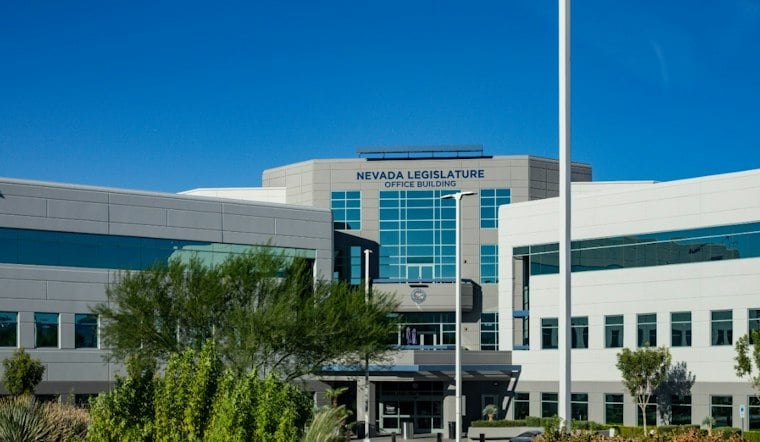
The vetoed measure, A.B. 388, was introduced in the Nevada Legislature on March 10, 2025, and would have required private employers with at least 50 Nevada employees, along with local government employers of the same size, to provide eligible workers 12 weeks of paid family leave after 90 days on the job, according to the Nevada Legislature. The bill's allowed purposes were broad, covering bonding with a new child, adoption or foster placement, serious illness, caring for an ill immediate family member, qualifying military-deployment events and safe leave. Lombardo vetoed the bill, and NewsNation reports that Ford, who was running against Lombardo at the time, supports paid family medical leave.
A newer proposal reported in August would go further than the vetoed bill, aiming to give all workers 12 paid weeks off for qualifying events such as caring for a new baby or a sick family member, according to This Is Reno. That outlet reported the new plan would cover an estimated 2 million workers, double the roughly 1 million Nevadans who would have been covered under the earlier bill. The newer proposal would reportedly be managed by the state and modeled after the system recently passed in Colorado, and was expected to be introduced when the next legislative session begins in February — though the report describes a plan for introduction, not a bill that has already been filed or enacted.
Ford's History With Paid Leave Fights
This is not Ford's first attempt at expanding worker leave protections in Nevada. As Nevada Senate majority leader in 2017, per the same NewsNation report, Ford led a push to require all private employers to provide workers three paid sick days per year. Assemblymember Selena La Rue Hatch proposed legislation in 2025 to expand paid family and medical leave.
Advocates say paid leave laws can reduce financial stress and make workers more productive, while some paid leave measures can stress employers, the NewsNation report notes. The patchwork of different state paid leave laws across the country can also create frustration for workers and businesses alike, according to the same account.
Where Nevada Would Fit Among the States
Nationally, the picture remains uneven. As of October 8, 2026, 14 states and the District of Columbia had enacted mandatory paid family leave systems, while nine additional states had voluntary systems, according to the Bipartisan Policy Center. Of the 24 state paid family leave programs the organization tracked, 22 had already been implemented, while the rest were not yet active. Seven states — Alabama, Arkansas, Florida, Kentucky, South Carolina, Tennessee and Texas — had instead adopted a voluntary legislative blueprint rather than a mandatory system, per the policy center's analysis.
Paid family and medical leave programs typically provide an average of six to twelve weeks of fully or partially paid leave per year, according to KFF. Yet just over one in four workers, 27%, had access to paid family leave in 2023, the most recent year KFF's tracker reports. Paid sick leave is more common: 82% of workers had access to paid sick leave through their employer in 2025, per Bureau of Labor Statistics data cited by KFF, though private-sector workers are offered an average of just seven days of paid sick leave per year.
The Federal Gap That Leaves States to Fill In
The United States has no federal law requiring paid leave of any kind, NewsNation reports. The Family and Medical Leave Act guarantees only unpaid time off, and it does not apply to a large portion of the workforce, including employees of exempt small businesses. Paid family and medical leave, where it exists, is meant to allow time off for treatment or care of a family member or a new child.
Nineteen states require paid sick-time laws, as does Washington, D.C., along with 17 cities and four counties, according to data reported by the National Partnership for Women and Families and cited by NewsNation. On the vacation side, about 80% of U.S. private-sector workers have access to paid vacation through their employers, per the Bureau of Labor Statistics, but roughly one in five private-sector workers lack any paid vacation day at all. Lower-wage workers, part-time employees and workers at smaller employers are all less likely to receive paid vacation time, the report notes. Globally, the picture looks different: NewsNation reports that 95% of countries provide some form of paid leave for personal health.
Whether Nevada's next attempt fares better than A.B. 388 did will depend on what lawmakers actually introduce once the session opens in February — the funding mechanism, eligibility rules and benefit structure for the newer proposal have not yet been detailed publicly. For now, the anticipated change in the governor's office has supporters betting that a bill resembling the vetoed measure, or something larger, has a real shot at becoming law.





