

























































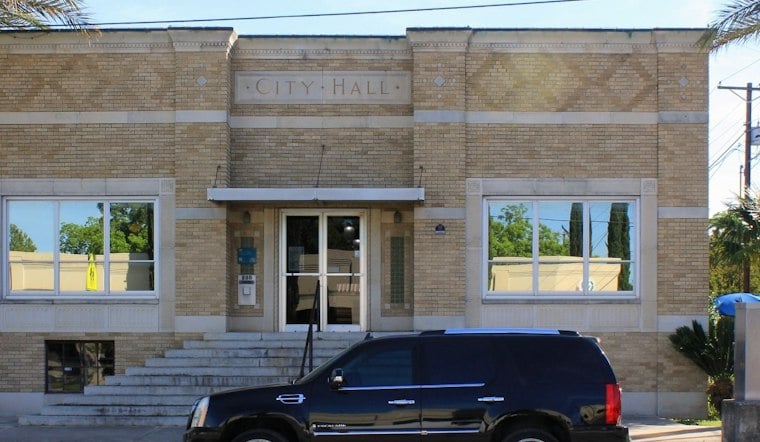
New Braunfels City Council approved the first reading Monday, Nov. 23, of ordinance amendments that would set new maximum roadway impact fees across the city, with the steepest ceiling at $3,377 in Area 4. The amendments reflect an updated maximum assessable fee structure and clarify staff responsibilities, appeals and refund requirements; the structure takes effect April 1, 2027, applying only to projects platted after that date.
The vote capped a monthslong process that began with a study from Kimley-Horn and Associates, which the Roadway Impact Fee Advisory Committee recommended for approval, according to the Herald-Zeitung. City Council unanimously adopted the updated study itself on Oct. 26, with council member Mary Ann Labowski absent from that vote, and passed the ordinance amendments' first reading unanimously on Nov. 23. A second reading of the ordinance amendments is scheduled for Dec. 14.
The fee structure divides New Braunfels into six service areas, and the maximums vary widely: $1,549 per vehicle-mile in Area 1, $1,590 in Area 2, $1,156 in Area 3, $3,377 in Area 4, $1,550 in Area 5 and $1,828 in Area 6, according to Comal.News. The study uses projected growth from 2026 through 2036 to estimate demand and eligible infrastructure costs in each zone, the outlet reports.
Where the Increases Hit Hardest
Compared with the city's 2020 study, the Herald-Zeitung reports that roadway impact fees increased in all six service areas, with the sharpest jumps in Areas 2, 3 and 4. Area 2's maximum rose by $1,271, from $319 to $1,590, while Area 3 climbed by $651, from $505 to $1,156. Area 4 saw an increase of $1,028, from $2,349 to $3,377, per the same report — though Comal.News, citing the study directly, describes that same Area 4 jump as a rise from $2,349 to $3,377 and separately notes Area 2's calculated maximum rising from $319 to $1,590 per vehicle-mile.
Officials attributed the higher rates in those sectors to escalating construction costs and conservative growth forecasts, according to the Herald-Zeitung. Mayor Michael French said on Oct. 26 that he supports setting impact fees at the maximum allowable level.
What the Fees Can and Cannot Pay For
The study is based on each city service area's land use assumptions, service units, capital improvement programs and maximum assessable fees, the Herald-Zeitung reports. Those land use assumptions rely on undeveloped land, master-planned parcels and parcels with known redevelopment potential. State law limits how service areas can be drawn, confining them to a six-mile trip length and the city's corporate boundaries, and the areas cannot align with council or parks districts, according to the Herald-Zeitung, which attributed that detail to Brenadette Faust.
Roadway impact fees cannot pay for maintenance, operations or upgrades serving existing development, Comal.News notes. Instead, the study identifies specific new projects tied to each zone: portions of Hill Country Drive and FM 1863 in Area 1, River Road in Area 2, FM 1101 in Area 3, Solms Road in Area 4, West Zipp Road in Area 5 and Saengerhalle Road in Area 6, per the outlet's reporting.
A Process Years in the Making
The roadway impact fee study is updated every five years, and Chapter 395 of the Local Government Code requires that cycle, according to the Herald-Zeitung. The City of New Braunfels likewise states that its roadway impact fee study was last updated in 2020 and that Chapter 395 requires updates every five years.
City Council continued its public consideration of the matter on Sept. 28, when its agenda included a presentation and discussion on the roadway impact fee study and collected fees, according to the New Braunfels City Council meeting record. That same meeting set an Oct. 26 public hearing to consider updating the study, including its land-use assumptions and calculations. Until the full ordinance process wraps up, the city's actual collection rates under the new maximums remain undecided, Comal.News reports.




