

























































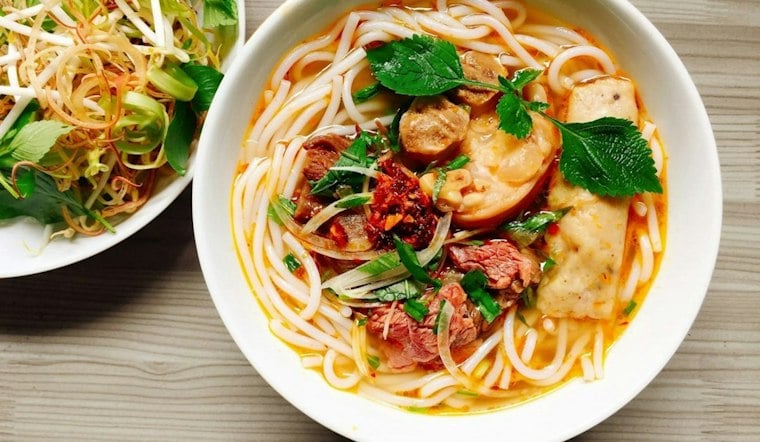
There is a new Thai restaurant on Capitol Hill that will not serve you pad thai, and it will not apologize for it. RUAM, which opened at 340 15th Ave E in the space once occupied by Bites of Bangkok, has built its entire menu around noodle soups, dry noodles, and rice bowls, leaving the dish most Americans associate with Thai food off the table entirely.
“We don't have pad thai. We don't have fried rice,” owner Thisun Polasub told CHS Capitol Hill Seattle News. Polasub said the goal is to showcase a side of Thai cooking that rarely gets attention in Seattle. “I want to highlight that,” he said, describing RUAM as a spotlight on noodle culture rather than the steam-table staples most diners expect. Bites of Bangkok had run the space for seven years before closing, per the same account.
Pad thai’s status as a national shorthand for Thai food has its own history. The dish is a prominent example of Thai-Chinese cuisine, and a wartime government campaign in 1942 encouraged people to eat noodles. Historians differ on whether that campaign created pad thai as it is known today; one account places the familiar recipe’s first documentation in the 1960s. RUAM’s omission is a departure from a dish whose familiarity was shaped, in part, by a broader effort to promote noodles. Smithsonian magazine’s history of pad thai traces that evolution.
A Menu Built Around Isaan Soups and Imported Herbs
The restaurant's name, RUAM, means “together” in Thai, and the menu leans hard into dishes tied to specific regions and traditions. The signature item is a ribeye Jaew Hon, an herb-heavy soup from Thailand's northeastern Isaan region, with a sauce the kitchen makes in-house from lemongrass, galangal, and other herbs, according to CHS. The menu also includes a pink yen ta fo topped with crispy seafood, along with beef noodle dishes that use ribeye and are finished with fried enoki mushrooms and microgreens, the outlet reports.
Isaan cooking comes from Thailand’s northeast, a region whose food traditions overlap with those of neighboring Laos. Its flavors are often built around heat, salt and sourness, with fermented fish paste and sticky rice among the region’s defining ingredients. Som tam, larb and grilled chicken are better-known Isaan dishes, but the region’s cuisine is broader than that familiar trio. That context gives RUAM’s northeastern soup a regional frame beyond its unusual place on a Seattle menu. Thailand Foundation’s overview of northeastern Thai cuisine describes the region’s shared traditions and staples.
Some bowls swap in Japanese udon in place of traditional rice noodles, a detail the report frames as part of RUAM's willingness to bend tradition while still centering noodles. Most of the restaurant's ingredients are sourced locally, though a handful of specialty items are imported from Thailand, per the same reporting.
Day-to-Day Control Belongs to the Chef
Running the kitchen is executive chef and manager Scott Wisitkran, who grew up cooking in his parents' restaurant in Thailand before moving to Sydney in 2012 and later coming to Seattle in 2017, the outlet reports. Polasub said he has given Wisitkran full creative control over the menu and lets him run RUAM day to day.
RUAM is not Polasub's first restaurant. He also owns Thai Rhapsody in Mill Creek, which serves traditional dishes most diners expect — pad thai, pad see ew, fried rice — a contrast the CHS report draws directly against RUAM's noodle-only approach. Polasub described RUAM as a significant financial bet and said opening on 15th Ave E comes with a very different cost structure than running a restaurant in Mill Creek, according to the outlet. The report also notes that RUAM began slowly while staffing settled in and had already started collecting five-star reviews from customers.
RUAM is opening in a metro area with a substantial Thai community: an analysis of 2021–23 American Community Survey data estimates about 8,000 Thai residents in the Seattle metropolitan area, putting it among the country’s largest Thai-population metros. The estimate counts people identifying as Thai alone, not everyone with Thai ancestry, so it is a narrower measure of the local community. Pew Research Center’s Thai American population profile also notes that the national Thai-alone population was about 195,000 in 2023.
Pricing for the menu varies depending on the source. RUAM's own site lists the ribeye Jaew Hon at $35, with a version made with sliced beef for $23. The Infatuation, in a separate review, described the restaurant's dishes as falling in the $20 to $25 range. The two accounts also differ on service style: RUAM's website calls itself full-service dining, while The Infatuation's review describes it as a counter-service spot with a bright, spacious dining room.
A Block in Flux on 15th Ave E
RUAM's arrival comes amid a churn of openings and closures along 15th Ave E. A few blocks away, at 15th and Harrison, Rione XIII, Rubinstein Bagels, and Bar Vacilando all closed as structural issues and landlord problems emptied the 96-year-old building housing them, according to CHS. Ha Ha Coffee opened nearby on 15th Ave E this fall, adding one of the corridor's newer bright spots.
Elsewhere on the block, Hunters Capital has kept the former QFC site active with pop-up businesses while its six-story redevelopment plan sits on hold amid tough economic conditions, the outlet reports. Plans for Fire Tacos & Cantina to take over the former Coastal Kitchen building have been delayed but remain in motion, per the same report. CHS had first flagged RUAM as one of the corridor's newest projects back in September, alongside Ha Ha Coffee, in coverage of the building troubles at 15th and Harrison.



