

























































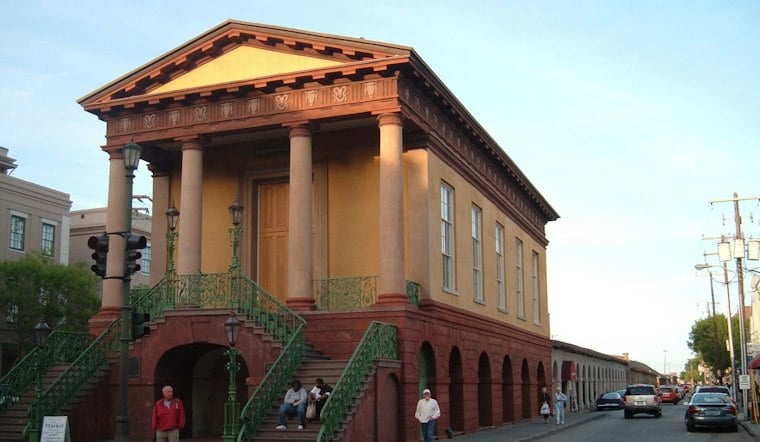
A new chamber opera is about to pull Revolutionary-era Charleston's African market women out of the historical margins and onto the stage. Eliza follows a fictional African market woman navigating the city during the British occupation, and it premieres Wednesday, Dec. 16, at 7:30 p.m. at the Koger Center in Columbia.
The production was commissioned by the Jonathan Green Maritime Cultural Center, according to the Koger Center for the Arts, which describes the opera as set against Charleston's British occupation and centered on Eliza, an African market woman navigating that turbulent moment. As WIS News 10 reports, the opera is bringing to life the story of African women who played a role in shaping Charleston during the Revolutionary era.
Per the Koger Center's event page, the opera draws on the history of African market women who ran the Charleston City Market for more than 200 years — a detail the center highlights as central to the story it's telling. The chamber opera was composed by Armand Hutton, with a libretto by Karen Chilton, the venue notes.
A Story Rooted in Charleston's Wharves and Waterways
The production is set against the backdrop of the city's wharves, waterways, and the tensions of a growing society, placing Eliza's story within the daily commerce and conflict of 18th-century Charleston. Dr. Kim Cliett Long serves as the production's executive producer and historian.
The Real Women Behind the Story
The world Eliza depicts has roots in documented history. A history exhibit from the Lowcountry Digital History Initiative at the College of Charleston details how Black women's most valuable skill in the city was often in needlecraft trades — working as seamstresses, dressmakers, tailoresses and mantua makers. The exhibit also notes that a small number of “Fisher” badges were reserved for women in Charleston who participated in catching seafood, pointing to the range of skilled labor enslaved women performed in the urban Lowcountry.
That same exhibit describes urban enslaved women as encountering a wider variety of people and ideas than those on plantations, even as they remained forced laborers without citizenship status and were subjected to physical and sexual violence. It's a tension that mirrors the backdrop the Koger Center and WIS News 10 describe for Eliza itself: a market woman moving through a city defined by both opportunity and oppression.
Eliza is scheduled to take the stage in Columbia on Dec. 16, bringing a chapter of Charleston's history that rarely gets a spotlight into a chamber opera format for Koger Center audiences.





