

























































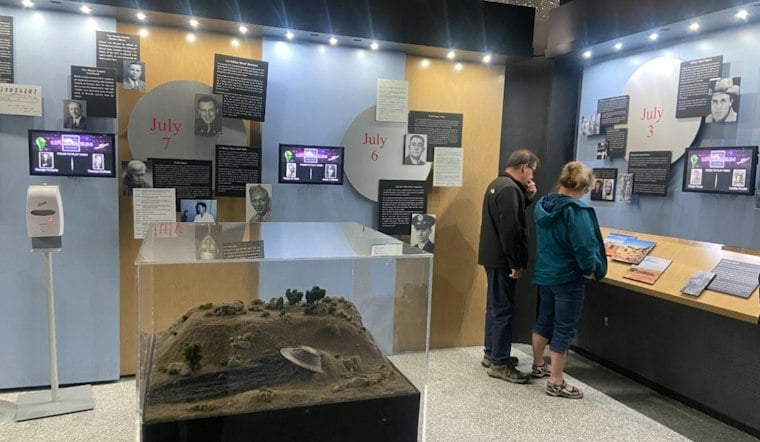
New Mexico’s museums and historic sites are buckling under staffing shortages so severe that the state’s top culture official says the system is nearing a breaking point. Cultural Affairs Secretary Debra Garcia y Griego delivered that warning to state lawmakers in Santa Fe on Thursday, laying out a budget request meant to plug the gap before services start to visibly erode.
Garcia y Griego told the Legislative Finance Committee that current staff vacancies are pushing state museums and historic sites to a “breaking point,” according to Source New Mexico. The Department of Cultural Affairs, which runs 16 museums and historic sites around the state along with the New Mexico State Library, reported a 17.6% vacancy rate, equal to 91 unfilled positions.
The pain is concentrated: museums and historic sites alone account for 72 of those vacancies, the outlet reports. Garcia y Griego said the gaps are having a direct work impact on curatorial work, visitor hours and site maintenance — the day-to-day functions that keep exhibits staffed and buildings open to the public.
Preservation Reviews Stall Under Near-30% Vacancy Rate
The department’s Preservation Division, which handles mandated archaeological and architectural reviews, is faring even worse. The division’s vacancy rate sits near 30%, per the same account, a shortfall officials say is hindering legally required reviews the state is obligated to carry out.
The division’s work reaches beyond preserving buildings: it serves as New Mexico’s State Historic Preservation Office, handling compliance reviews, archaeological permits and nominations to state and national historic registers. State law requires permits for archaeological excavation or removal of cultural artifacts on state land, and also restricts excavation of unmarked burials on state or private land. Those responsibilities make the division’s staffing relevant to development and construction projects as well as preservation work. The division’s statutory and review functions and New Mexico’s archaeological permit rules define that broad role.
Garcia y Griego warned that the lack of funding to fill vacancies is bringing the department to a point where it must change services altogether. She said past funding increases have not kept pace with rising costs and vacancies, and that without intervention, the department will start cutting services and hours.
A $4.3 Million Ask, Mostly for Hiring
To address the shortfall, DCA requested a $4.3 million increase in its FY27 budget, with more than half of that money earmarked specifically to fill vacant positions. The department also asked for $5.5 million in one-time funding for programs and museum upgrades, separate from the staffing request.
The vacancy strain predates the FY27 request. For FY26, DCA sought a $3.3 million general fund increase in personnel costs to reduce vacancies. Those requests show that staffing has been a budget issue across multiple cycles, even as the department returns to lawmakers with a new request. The LFC’s FY26 budget analysis documents the earlier vacancy rate and funding gap.
That one-time funding request is broken into several specific projects: $460,000 to expand the New Mexico Women’s Historic Markers Program, $1.5 million for the Navajo Code Talker Museum in Farmington, $1 million to update the Telling New Mexico exhibit at the New Mexico History Museum, and $500,000 for Apollo 11 exhibit restoration at the New Mexico Museum of Space History in Alamogordo.
Repatriation Work Draws Lawmaker Support
DCA also requested $2 million for the final phase of its compliance with the Native American Graves Protection and Repatriation Act, work that involves determining the appropriate tribe, securing objects and delivering them to that tribe. Rep. Charlotte Little said the department’s repatriation work is important to New Mexico’s culture and tribal communities.
Legislative Finance Committee Chair Rep. Nathan Small said the committee looks forward to continuing to support the repatriation effort despite strong budget demands elsewhere. Sen. Nicole Tobiassen said she supports the department and is pleased with its progress, specifically pointing to the women’s historic marker program.
A System Still Serving Big Numbers
Despite the staffing strain, the department’s reach last fiscal year was substantial. In FY26, DCA served 1.6 million people at its museums and historic sites, reached 957,000 children statewide through arts programs and school tours, and oversaw 4.5 million digital transactions through the New Mexico State Library’s online portal.
Those figures underscore what officials say is at stake if the vacancy crisis continues unaddressed. With the Legislature now weighing the department’s FY27 request, the question lawmakers face is whether the state is willing to fund the positions Garcia y Griego says are needed to keep museums, historic sites and preservation reviews running at full capacity.



