

























































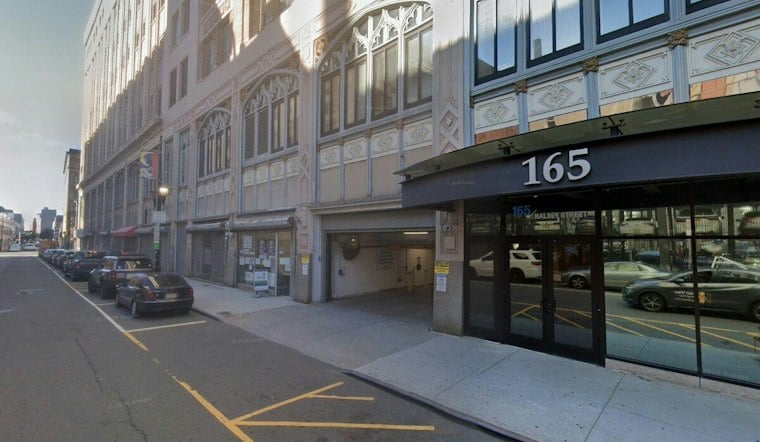
A New York-based fiber infrastructure company has raised $14 million and installed a new leadership team as it looks to expand beyond its signature route running beneath the Hudson River. UrbIN Networks, formerly known as Global InterXchange, or GIX, has named Mike Lingle as chief executive officer, Tayt Rule as chief operating officer, and Greg Wasson as chairman, according to the company. The financing is meant to support the company's plans to grow its fiber footprint into additional major U.S. metropolitan markets.
UrbIN's flagship network connects 165 Halsey Street in Newark, New Jersey, with 60 Hudson Street in Lower Manhattan, running through the PATH Tunnel beneath the Hudson River. The company has operated that network since June 2025, and it spans 10.89 fiber miles underground. That crossing traces back to an April 2024 announcement in which GIX said it was partnering with NYI to build a low-latency, scalable fiber network at 60 Hudson Street, enabled through a public-private partnership between GIX and the Port Authority of New York and New Jersey.
UrbIN describes the route as the southernmost Hudson River fiber crossing into Manhattan and calls it the first privately owned, carrier-neutral fiber installation across the river in roughly two decades. According to the citybiz report that first detailed this week's funding and leadership news, the PATH Tunnel itself underwent resilience improvements after Hurricane Sandy. Trade publication Cabling Installation & Maintenance has separately reported that building the crossing required a continuous pull of fiber optic cable across 1.4 miles of the PATH Tunnel, and that the work was done over a holiday weekend specifically to minimize commuter delays. That outlet also described the project as the first dark-fiber network cross-Hudson tunnel installation in decades.
Latency Claims and Building Access
UrbIN says its network delivers the lowest-latency connection between the two buildings, reporting a one-way latency of 88,883 nanoseconds between 165 Halsey Street and 60 Hudson Street, per the company's own figures. The company also says it owns internal riser infrastructure at 60 Hudson Street and uses diverse building entrances there to deliver fiber directly to customers' equipment floors. On its website, UrbIN Networks describes having two separate building entrances into 60 Hudson Street, calling it one of the most connected buildings in the world, along with its own riser in the building.
The company's customer base includes telecommunications carriers, data center operators, cloud service providers, AI platforms and enterprise customers, by UrbIN's own account. Its business model allows customers to lease capacity on existing routes or to support the development of new fiber connections that can later serve additional network operators. UrbIN says it expects demand for high-capacity metropolitan connectivity to keep climbing, and plans to continue building underground fiber routes for telecommunications, cloud computing and AI infrastructure customers.
New Leadership With Amazon and Walgreens Pedigrees
Incoming CEO Mike Lingle will oversee UrbIN's growth strategy, infrastructure development and expansion beyond the New York metropolitan area, according to the company. Lingle previously held positions at Amazon in operations, finance and customer service and has experience in the data center industry. He co-founded Wasson Enterprise and has spent roughly a decade there; Wasson Enterprise describes him as a founding member of the firm who now serves as its Chief Strategy Officer.
“We have a hard-to-build, hard-to-replicate asset, and now we have the team and capital to scale it,” Lingle said, according to the company. He has also said that demand on metro fiber networks already exceeds supply, and that AI inference will widen that gap further.
New COO Tayt Rule previously held senior operational positions at Amazon, where the company says he managed organizations employing as many as 11,000 people. He currently serves as COO-in-Residence at Wasson Enterprise, supporting portfolio companies with operational development and growth initiatives, and at UrbIN he will lead infrastructure execution and operational scaling.
Chairman Greg Wasson is president and co-founder of Wasson Enterprise. He previously served as president and chief executive officer of Walgreens Boots Alliance and as a board member of Verizon. “Mike brings a customer-first approach and has built an experienced team to scale infrastructure,” Wasson said of the new CEO, according to the company.
A Rebrand Tied to AI-Era Demand
The company says its new name is meant to represent infrastructure, inference and intelligent cities, reflecting a broader strategy to develop carrier-neutral fiber infrastructure for next-generation urban connectivity. UrbIN did not disclose the financing round's participating investors, its company valuation, or specific future network deployment locations.
At the time of its original 2024 announcement, GIX said the 60 Hudson connection represented just the first phase of a multi-phase plan to build a massive connectivity ring serving the New York metropolitan area, with plans already underway for a western route to 111 Eighth Avenue and 32 Avenue of the Americas, as well as a build into the Equinix Secaucus Campus in New Jersey, per NYI's account of the announcement.
That expansion push comes amid a broader surge in dark-fiber demand tied to artificial intelligence and data center growth. A Zayo report covered by SDxCentral found that long-haul dark-fiber demand doubled between 2024 and 2025, while metro dark-fiber demand grew at a 12% compound annual growth rate from 2021 to 2025. The same report found that AI-driven metros including New York, Chicago and Dallas are seeing up to 20 times higher demand for dark fiber, a trend that lines up with UrbIN's stated plan to oversee expansion of its existing Hudson River crossing and additional underground fiber routes in major U.S. metropolitan markets.



