

























































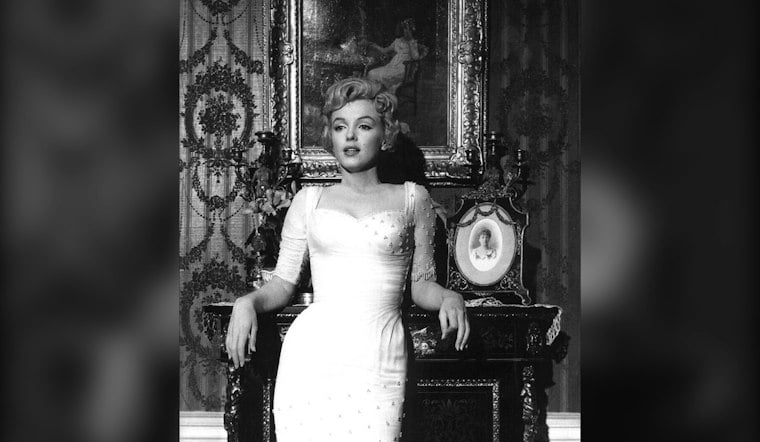
A new exhibit at the New York Historical is marking 100 years since Marilyn Monroe's birth with 36 photographs by Lawrence Schiller, rare ephemera, and audio from the actress's final recorded interview. “Marilyn Monroe Centennial: Photographs by Lawrence Schiller” opened this week at the museum's Jean Margo Raid Center for Women's History and runs through March 28.
According to amNewYork, the show was organized by Susan Bloom and was timed to the 100th anniversary of Monroe's 1926 birth. Dr. Louise Mirrer, president and CEO of the New York Historical, said in a press release cited by the outlet that the exhibit highlights Monroe's agency through photography, personal stories, and archival analysis. The museum frames the show around Monroe's life, career, and what amNewYork describes as her fight to control her own legacy.
That framing echoes broader reporting on Monroe's relationship with the camera. As The New York Times has noted, the exhibit explores how photographs — and the mass-circulation magazines that published them — helped transform a 19-year-old factory worker into a global legend.
Behind the Camera With Lawrence Schiller
The photographs on display were taken by Lawrence Schiller, who worked for Look and Paris Match magazines and photographed Monroe in Los Angeles on the sets of her final two films, per amNewYork. Those films were “Let's Make Love,” a 1960 musical romantic comedy, and “Something's Got to Give,” the unfinished picture Monroe was shooting at the time of her death in 1962.
Schiller has said, per the press release cited by amNewYork, that Monroe acted as both photographer and subject whenever she engaged with the camera. The two reportedly traded a memorable exchange on set: Schiller told Monroe she would make him famous, and she told him photographers could be easily replaced, according to amNewYork's account.
Some of the exhibit's most striking images come from the closed set of “Something's Got to Give,” where Monroe removed the light nude-colored bikini bottoms she had been given and appeared naked in a pool, amNewYork reports. Schiller's resulting pool photographs of Monroe appeared on magazine covers in more than 30 countries, the outlet notes.
A Career Cut Short at 36
Monroe had built a 16-year, 30-film career by the time of her death at age 36, according to amNewYork. The outlet reports she faced ongoing challenges around being taken seriously as an actress, her work with acting coaches Lee and Paula Strasberg, and her efforts to control her own public narrative — including an ambition to become one of Hollywood's first women to launch her own production company.
Schiller saw Monroe on the morning of the day she died, when the two discussed an upcoming photo shoot, amNewYork reports. Separately, according to Digital Camera World, Schiller visited Monroe that same morning, August 4, 1962, to discuss a photo shoot. Monroe's funeral was held four days later at Westwood Village Mortuary Chapel in Los Angeles, amNewYork notes.
Just two days before her death, Life magazine writer Richard Meryman interviewed Monroe for what became her last recorded interview, according to amNewYork. The conversation touched on her life, career, marriages, and fame, and visitors to the exhibit can listen to audio clips from that interview. Life went on to publish a commemorative issue after Monroe's death, and one of Schiller's photographs appeared on its cover, per amNewYork.
From Factory Floor to Magazine Covers
Life's coverage of Monroe extended well beyond that final interview, with the magazine publishing numerous articles on both her professional career and personal life over the years, amNewYork reports. The exhibit draws on ephemera and print magazines held in the New York Historical's Patricia D. Klingenstein Library, alongside film clips and a contact sheet from “Let's Make Love” that is stamped with Monroe's own approval.
Among the other items on view is Bert Stern's famous photograph of Monroe — known as the Niagara photograph — which amNewYork reports inspired Andy Warhol's Shot Sage Blue Marilyn. The exhibit also includes the invitation and program from the 1962 Democratic Party fundraiser at Madison Square Garden, where Monroe famously sang “Happy Birthday” to President John F. Kennedy, according to both amNewYork and Digital Camera World's reporting on the same artifact.
Together, the objects trace a throughline that The New York Times has framed as central to Monroe's story: the way photography and magazine publishing didn't just document her rise but actively built it. The New York Historical's centennial exhibit runs through March 28.




