

























































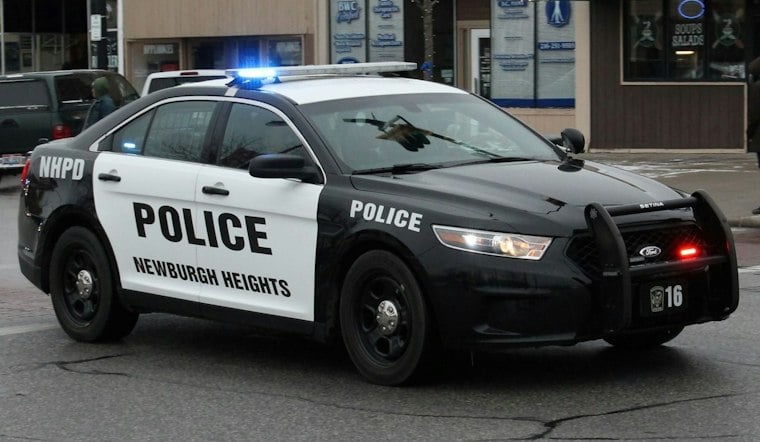
Newburgh Heights police will drop from six patrol officers to five on Nov. 17 after an officer submitted a two-week notice, leaving Chief John Majoy to describe his department’s staffing as a “catastrophic low” — the worst he has seen in 13 years running the force.
The looming reduction comes as the small Cuyahoga County suburb’s police department already runs lean. As cleveland.com reports, one of the department’s three sergeants has been on medical leave and isn’t expected back until at least Jan. 1, 2027, stretching an already thin command structure even further.
Majoy told Village Council that the hiring pipeline is effectively empty. “We have no candidates in the pool. We have no applications pending,” he said, according to the outlet. The chief said the department has rejected 27 candidates over background issues and five more because they lacked certification, while another 25 prospective applicants picked up application packets but never turned them in. Two other applicants took jobs elsewhere, and one current Newburgh Heights officer is now in the hiring process at another agency, per the same report.
Overtime Hours Rise by 100 in a Month
The staffing crunch is already showing up in the budget. The department logged 152 overtime hours in September and 252 in October, the station’s report notes, and projects needing 272 hours in November and 296 in December. Those projections only account for keeping two officers on duty per shift, the department’s stated per-shift minimum, and do not include additional coverage that might be needed for sick leave, vacation, or personal time.
Majoy has personally absorbed some of that burden, covering patrol shifts as often as three days a week during July and August, the same report states. He told Council that officers are burned out and increasingly mandated into extra shifts, and that officers had stopped submitting some time-off requests because of staffing problems.
In response, Village Council unanimously approved a temporary measure paying Majoy time-and-a-half for any hours he works beyond 40 per week when he steps in to cover shifts, according to the report. Despite the strain, Majoy said the department will keep placing two officers on duty around the clock and does not expect the staffing drop to change police response times.
Pay Gap Looms as a Recruiting Obstacle
Part of the recruiting struggle traces back to wages. Starting pay under the department’s collective bargaining agreement sits at $23.50 an hour, the outlet reports, while Majoy said the next-closest advertised police job he found started at roughly $30 an hour. Nearby Cuyahoga Falls, for comparison, advertised starting pay between $32.66 and $37.71 an hour for applicants with prior Ohio police experience, according to a City of Cuyahoga Falls job posting that closed June 7, 2026. The posting especially encouraged current officers and people enrolled in or recently graduated from a police academy to apply, and listed an OPOTC certificate as a document that could earn extra-credit points.
Majoy said wage changes are needed to attract additional officers, and Newburgh Heights is preparing to enter contract negotiations, according to the report. A snippet from the Village of Newburgh Heights employment page indicates the village is accepting applications for a full-time patrol officer and is also hiring part-time officers, though the freshness of that posting could not be confirmed.
A Regional Pattern of Police Staffing Pressure
Newburgh Heights isn’t alone in grappling with police staffing and funding questions this fall. In nearby Parma, Police Chief Kevin Riley recently said staffing is his department’s biggest issue even with 113 officers on the roster, cleveland.com reported separately. Parma voters just approved a renewal of a 2-mill police levy that generates about $2.79 million a year for officer salaries, equipment, and technology — revenue the outlet says represents 14 percent of the department’s budget, with final unofficial returns showing 14,157 votes in favor to 11,977 against. The levy funds previously went toward 15 in-car cruiser video systems and 10 body-worn cameras purchased last year, according to that report.




