

























































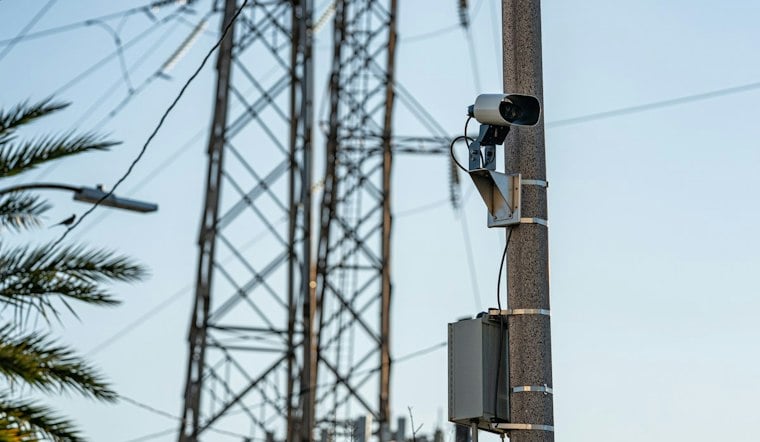
Newton City Council voted 5-0 to approve a no-cost, 90-day trial installing one Flock Safety camera at the city’s landfill, a move aimed at curbing trespassing, vandalism and illegal dumping that officials say has been on the rise. The camera would sit near the landfill’s 24-hour drop-off center and would be able to view an area within the landfill grounds.
The trial carries no upfront cost to the city, according to Newton Daily News, but if it goes well, the city could enter a three-year agreement costing $3,750 per year. That future contract would be paid out of landfill enterprise funds rather than property tax dollars, the paper reports. The Newton Sanitary Landfill, located along Highway 14, stores equipment, supplies and disposed materials, and city officials say landfill-related crimes have caused lost expenditures, lost time and reduced services for Newton and Jasper County residents.
Why the City Says It Needs Eyes on the Landfill
Beyond dumping and vandalism, the city has also raised concern about people injuring themselves while scaling the landfill’s fences to get in. A Flock Safety camera can be programmed to notify city staff and law enforcement when necessary, and Newton has already used Flock cameras for several years elsewhere in the city, per the same report.
City officials say increased security at the landfill could allow existing services to remain in place, and if the trial proves successful, the city may even reintroduce 24-hour recycling drop-off — a service it previously pulled due to abuse. Council member Mark Hallam said he would vote in favor specifically because the installation was being framed as a trial rather than a permanent commitment, according to the report.
One Resident’s Fourth Amendment Objection
Not everyone welcomed the move. Resident Chad Gebhart opposed the broader use of Flock cameras in Newton, calling their use a “direct, blatant and obscene violation” of the Fourth Amendment. Gebhart claimed the cameras read more than just license plates, pointing to language Flock Safety has reportedly noted in its city contract stating the cameras can identify vehicle make, model, color and details such as bumper stickers or decals.
Gebhart said he sees a Flock camera flash at his truck every day at work through his infrared camera, calling the experience creepy, and said U.S. Sen. Bernie Sanders shares his view on the cameras, per the Newton Daily News account. The landfill camera specifically will not store personal data such as license plate numbers, the report notes, though whether automated license plate readers broadly violate the Fourth Amendment remains an unresolved legal question, with pending cases that could change the answer.
A Statewide Reckoning Over Flock Cameras
Newton’s trial arrives as Iowa communities are increasingly split on the technology. Roughly 900 automated license plate reader cameras are operating statewide, part of a nationwide fleet of 120,000 Flock Safety cameras, according to The Gazette. Cedar Rapids currently runs 70 pole-mounted Flock cameras under a contract that began in August 2024 and runs through February 2027, but CBS2 Iowa reports the city plans to drop Flock when that deal ends and shift to Axon Enterprises for its plate-reader services instead.
At least 10 local governments and police departments nationwide have moved since the summer to curb, restrict or end their use of Flock technology, according to TechCrunch, which also reported that Flock announced in August it would shorten its default data-retention period from 30 days to seven and now requires agencies to enter a case code before searching its database. North Liberty’s City Council voted 3-1 on Oct. 27 to end its Flock contract and deactivate the city’s 12 ALPR cameras, the Iowa City Press-Citizen reported, while Coralville’s council voted 3-1 back in February to end a two-year, $36,000 Flock contract and remove two cameras, per Iowa’s News Now Pulse.
Indianola’s police department announced on Aug. 17 that it was suspending its Flock contract amid privacy concerns, and Waukee suspended its own service that same month, according to Iowa Public Radio. Urbandale took a different path, amending its contract to require prior written consent before Flock discloses any customer data to third parties. Iowa Public Radio also reported separately that state lawmakers introduced six bills addressing automated license plate readers during the 2026 legislative session, though none passed.
Newton itself isn’t new to these debates. The city has used Flock Safety cameras elsewhere and last week approved a narrower landfill-specific trial. Whether the new 90-day test leads to a permanent camera, and whether it revives the city’s shuttered 24-hour recycling drop-off, remains to be seen.




