

























































A canvas travel bag doodled with a sketch of Diamond Head, kept by a soldier who was likely homesick for the islands he left behind, is now part of a new exhibit opening in Honolulu. “I Am An American: The Nisei Soldier Experience” debuts Saturday at Capitol Modern, the Hawaiʻi State Art Museum, bringing the personal stories of second-generation Japanese American soldiers who fought for a country that questioned their loyalty back to the place many of them called home.
The bag belonged to Sgt. Gary Uchida, who served with the 100th Infantry Battalion and survived severe wounds on the battlefield of Italy, according to KHON2. Uchida was hit by artillery on November 5, 1943, while advancing through open terrain on Hill 600 near Pozzilli, Italy, and he returned home to Hawaiʻi on October 17, 1944, still carrying shrapnel in his body, according to the 100th Infantry Battalion Veterans archive. He died in 2009 at age 95, KHON2 reports. His daughter, Janice Sakoda, told the station her father drew Diamond Head on the bag, perhaps because he was homesick, and that “every soldier has a story.”
A Lei That Survived More Than 80 Years
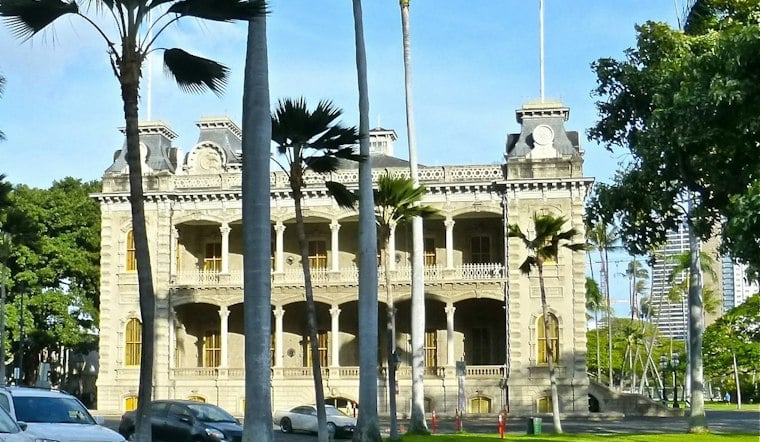
Among the objects on display is a preserved lei from 1943, tracked down with help from a group called Discovering Friends, per KHON2's report. It recalls a farewell ceremony held March 28, 1943, in front of ʻIolani Palace, where soldiers wore leis bearing tags as they prepared to ship out. The George C. Marshall Foundation records that the Honolulu Chamber of Commerce held that send-off for 2,686 Nisei volunteers from Hawaiʻi.
Those soldiers, per Sakoda, went on to form what she described as the most decorated unit of its size at the time in military history. The exhibit folds that legacy into roughly 40 historical objects, 120 photographs, 70 personal stories, three interactive programs and two audiovisual kiosks, according to the National Veterans Network, the exhibit's organizing body.
Loyalty Questioned, Service Undeterred
Nisei soldiers faced discrimination at home even as they served, and some of their own families were incarcerated by the government the soldiers were defending, KHON2 reports. Christine Sato-Yamazaki, the exhibit's co-curator and executive director of the National Veterans Network, said the soldiers demonstrated they were American through their military service. “Their commitment and loyalty, despite fear and prejudice, is what makes their story so powerful,” Sato-Yamazaki said, according to KHON2's report.
Sato-Yamazaki also said more than half of the soldiers who served in the Military Intelligence Service were from the Hawaiian Islands, the station notes. Sources differ slightly on the overall scale of that service: the National Veterans Network's exhibit page cites more than 33,000 Nisei soldiers serving in the Army across Europe, the Pacific and stateside during World War II, while a separate NVN news release puts the figure at nearly 33,000 in the European theater. Separately, the National Archives notes that Nisei were barred from serving in several other military branches, with rare exceptions, pushing many into the Army, where the majority formed the 442nd Regimental Combat Team.
Second Stop on a Five-Year National Tour
Hawaiʻi marks the second stop on the exhibit's planned 11-city national tour, after the show began in San Francisco, per KHON2. The National Veterans Network describes the overall tour as a five-year journey launching in 2026, and Axios reported that San Francisco served as the first stop, with future dates planned in Portland, Los Angeles, Salt Lake City and Chicago.
Accounts differ on exactly when the San Francisco run was set to wrap: the National Veterans Network's own exhibit page lists September 13, 2026, as the closing date at the Military Intelligence Historic Learning Center in the Presidio, while a separate NVN release said the show would remain there only through August 31, a date KQED also reported in its coverage of that stop.
In Honolulu, the exhibit opens with a 10 a.m. ceremony Saturday in Capitol Modern's second-floor courtyard. The family-perspectives panel is scheduled for 10:30 a.m. Sunday, November 8, 2026, followed by a 1 p.m. panel on the Medal of Honor, according to the National Veterans Network. The museum keeps regular hours of Wednesday through Saturday, 10 a.m. to 4 p.m., and admission is free, per Capitol Modern. The exhibit runs through March 13, 2027.
Families Carrying the Stories Forward
Sato-Yamazaki said stories can be lost as each generation passes, which is part of why families like Sakoda's are helping keep the soldiers' accounts alive within the exhibit, KHON2 reports. A University of Hawaiʻi Press collection of Hawaiʻi's World War II Nisei soldiers' own diary and letter writings, described as a rare and powerful collection of personal thoughts written by the soldiers themselves, reflects that same effort to preserve firsthand memory. For families like Uchida's, a simple doodle of Diamond Head on a canvas bag has become one more piece of that record, now held alongside the rest of his service history at the National Museum of the US Army.





