

























































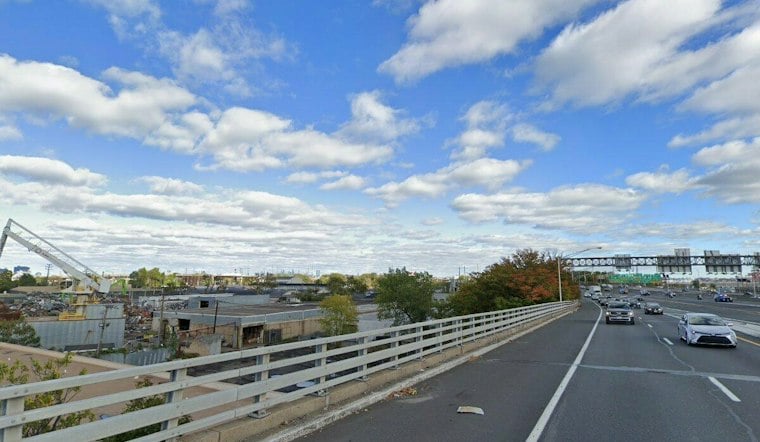
The New Jersey Supreme Court has unanimously reinstated a $562,500 jury verdict against Newark, ruling that the city can be held liable for a 2015 crash in which a truck driver slammed into a low railroad overpass after following a city-posted truck-route sign straight toward it.
David B. Wilson was driving a 13-foot-6-inch tractor-trailer in February 2015 when he crashed into a railroad overpass near Avenue P and Foundry Street that had just 12 feet 2 inches of clearance, according to New Jersey Monitor. Wilson had followed a Newark-placed truck-route sign directing drivers toward the bridge, but the city had not posted the required maximum-clearance warnings on the overpass or at the last safe exit, the outlet reports. He sustained neck injuries in the crash.
The Supreme Court’s ruling, issued Thursday, found that a jury could reasonably conclude Newark created a dangerous condition by posting what amounted to a deceptive truck-route sign while leaving drivers with no warning of the bridge’s low clearance, per the same account. The decision reverses an appellate panel that had previously overturned the jury’s original verdict in Wilson’s favor.
A Sign Replaced Four Times in Four Years
A Sign Replaced Four Times in Four Years Court records cited by the outlet show Newark replaced the required sign four times between 2011 and 2015, with workers reinstalling it just five weeks before Wilson’s crash. The city relied on driver reports and its own employees’ observations to learn when signs went missing, the report states. Newark’s road network spans roughly 350 miles, and the city assigned only a three-person maintenance crew to maintain tens of thousands of traffic signs across that system.
City attorneys had argued that the sign may have disappeared only moments before the crash, making it impossible for Newark to have had notice of the hazard in time to fix it. Justice Rachel Wainer Apter, who authored the court’s decision, rejected that notice argument, according to New Jersey Monitor’s report.
Court Rejects Tort Claims Act Shield
Newark and state lawyers had argued that the Tort Claims Act immunized the city from liability for failing to post what they characterized as an ordinary traffic sign. Justice Wainer Apter wrote that mandatory low-clearance signs are not the kind of ordinary signage exempt from liability under that law, the outlet notes. The Tort Claims Act holds public entities liable when a dangerous condition is created through an employee’s negligence or omission, and the court found that standard applied here.
New Jersey legislators passed a law in 1986 requiring warning signs at bridges and overpasses with less than 14 feet 6 inches of clearance, according to the New Jersey Courts opinion in the case. That law requires municipalities to place warning signs both on or before the low-clearance structure itself and at the last safe exit or detour point, giving drivers a chance to avoid the hazard altogether.
Newark officials did not respond to New Jersey Monitor’s request for comment on the ruling, the outlet reports. The article was authored by Dana DiFilippo, a senior reporter at the New Jersey Monitor, which is part of States Newsroom.
Overpass Strikes Remain a Recurring Hazard
Low bridges continue to pose risks for truck traffic moving through Newark. In a separate incident, a tractor-trailer struck an overpass on Interstate 78 in Newark on a Wednesday afternoon, triggering a major traffic backup, according to News 12 New Jersey. That incident forced the closure of the westbound express lanes while traffic continued to move through the local lanes, per the station’s report. There is no indication the I-78 strike involved the same bridge or circumstances as Wilson’s case, but it underscores how often low-clearance crossings collide with truck traffic in the city.
For now, the Supreme Court’s ruling leaves Newark on the hook for the $562,500 verdict originally awarded to Wilson, reaffirming that cities bear responsibility for making sure the signs guiding trucks onto their streets don’t lead drivers into hazards the signs themselves were supposed to prevent.




