

























































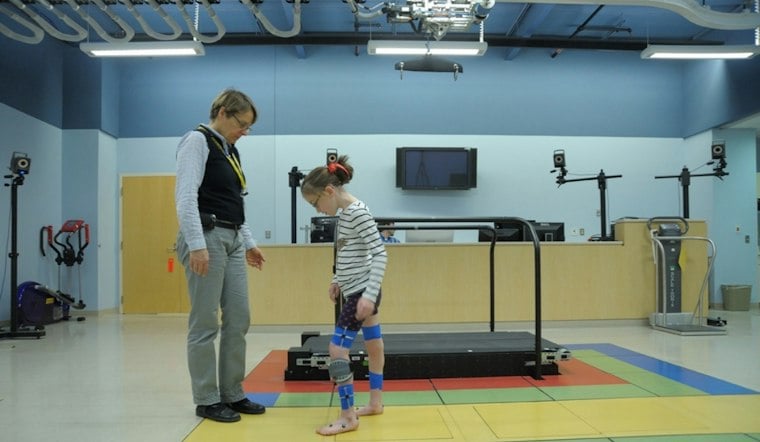
A Norman family's effort to fund care for three-year-old Benji, who has cerebral palsy, is entering a second round. His mother, Cassey Ashby, says his mobility has improved over the past year after stem cell treatment and therapy. The family's account describes progress; it does not by itself establish which treatment, if any, caused the changes.
In a report by News 9, Ashby credited Benji's improvement to stem cell treatment followed by Dynamic Movement Intervention, or DMI. Before treatment, she said, he had struggled with muscle spasms, tightness and using his hands.
Ashby also described what she sees as cognitive growth. She said Benji has now managed exercises that were previously difficult for him.
A Diagnosis That Started at Birth
Ashby has said Benji sustained a brain injury at birth and was diagnosed with cerebral palsy at six months, according to earlier News 9 reporting. That report estimated the stem cell treatment and intensive therapy afterward would cost upwards of $30,000, prompting the family's original fundraising effort.
A GoFundMe fundraiser for Benji describes raising money for his occupational therapy intensive, travel, lodging and related therapy expenses, noting an update that the funds were raised. The page also identifies Benji as three years old and diagnosed with cerebral palsy.
Raising Thousands More for a Second Round
Ashby is now fundraising for a second round of stem cell treatment and DMI. So far, $10,000 has been raised toward Benji's next stem cell treatment, and his family still needs roughly $20,000 more, per the station's report. The family said it aims to raise $1,000 a week through 40 donations of $25.
Ashby has built a following of more than 100,000 TikTok followers, which she says she uses to show other parents they are not alone and to encourage them to celebrate progress. She said the family celebrates each new ability Benji gains rather than focusing only on major milestones.
What the Research Says About Stem Cells and DMI
The treatments Ashby credits sit in an area of medicine still under active study. A 2025 systematic review and meta-analysis in Stem Cell Research & Therapy that included thirteen randomized controlled studies found stem cell therapy remarkably improved Gross Motor Function Measure scores in the treatment group, though the authors said further high-quality randomized controlled trials with standardized protocols are necessary.
A separate review in Translational Pediatrics found that stem cell-based regenerative therapies may offer modest improvements in motor function in children with cerebral palsy, particularly with umbilical cord-derived products, but cautioned that the evidence is limited by heterogeneity, small sample sizes and short follow-up periods. That review states that at present, these therapies should be considered experimental.
As for DMI specifically, the NAPA Center, which offers the therapy, acknowledges there is currently limited published evidence evaluating its effectiveness. A separate source reviewed in the broader literature states that DMI and a related approach, Cuevas Medek Exercises, are supported only by anecdotal evidence, and that their theoretical base and practice are not supported by neurophysiological research or established motor learning principles.
What the FDA Says About Stem Cell Approval
The FDA says the stem cell products it identifies as approved for use in the United States are blood-forming cells derived from umbilical cord blood, approved for disorders affecting blood production—not other uses. The agency's approved uses therefore do not include treatment for cerebral palsy, according to the FDA.
None of that research speaks directly to Benji's case, and no independent medical records have been cited verifying the family's account of his progress. For Ashby, though, the measure of success remains what she's watched her son accomplish firsthand — one overcome exercise at a time, with a new fundraising goal now in front of her.




