

























































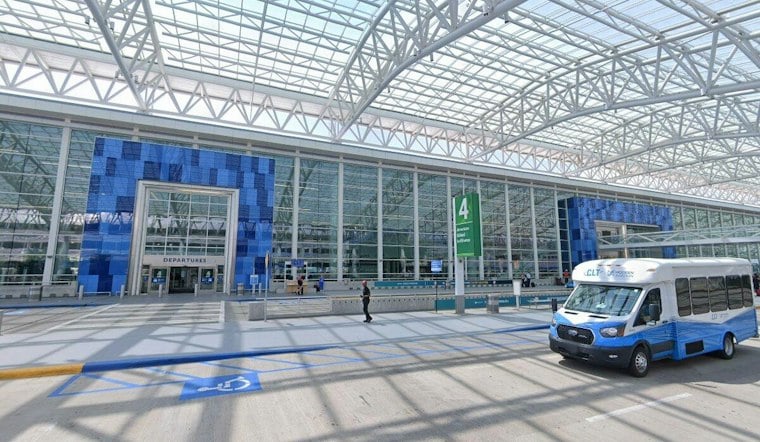
More than 80 years after dying in a Japanese prisoner-of-war camp, 1st Sgt. Sherman MacDonald returned to North Carolina. His remains arrived at Charlotte Douglas International Airport on Tuesday, ending an eight-decade effort to identify him and bring him home for burial.
MacDonald served in the Philippines after the attack on Pearl Harbor, was captured and died in captivity in 1942, according to WBTV. He was buried in a common grave. The station reported that forensic limitations prevented authorities from positively identifying his remains for decades.
His nephew, Robert MacDonald, was among those waiting at the airport. He told the station he never met his uncle but grew up knowing what had happened to him.
A Repatriation Decades in the Making
The repatriation involved the military, federal agencies, American Airlines and the United Service Organizations, WBTV reported. Greg Smith of the USO Honors Support Team described the moment as bittersweet. “While there's emotion, it turns out to be a joyous occasion,” Smith said.
Though MacDonald was raised in California, his nephew believes he would be proud of the peaceful setting chosen for his final resting place. 1st Sgt. MacDonald will be laid to rest in Black Mountain, his nephew said.
Part of a Broader Push to Account for the Missing
MacDonald's homecoming comes amid a renewed national effort to resolve Pacific POW cases that have lingered for generations. Defense POW/MIA Accounting Agency specialists, using techniques including next-generation DNA sequencing, have resumed work to recover and identify remains from camps and transport ships tied to the Bataan Death March, as Marine Corps Times reports. At least 20 American POWs from the Pacific had their remains identified and returned to their families between the start of 2026 and April 21, according to the outlet.
Similar homecomings have unfolded elsewhere this year. Army Air Forces Pvt. Bennett H. Waters was buried with full military honors in Blackshear, Georgia, in April, Marine Corps Times notes. Around the same time, Technician Fifth Grade Robert W. Hirst, who died of malaria at Cabanatuan Prison Camp in 1942, was returned to Louisville more than 84 years after his death, as WISN reported at the time.
Other cases trace back even further. Marine Corps Sgt. David Quinn, who died during the 1943 Battle of Tarawa, was identified with the help of mitochondrial DNA collected from two of his nieces before his remains were brought home to New Hampshire, according to Military Times. The National WWII Museum separately notes that Marine Sergeant Frank L. Schmaltz was identified through DNA analysis more than 80 years after the Battle of Saipan and laid to rest in Louisiana with full military honors.
The scale of the task remains significant, though estimates vary. Military Times has reported that 72,934 service members from World War II are still unaccounted for, while the National WWII Museum describes the figure as nearly 72,000. The museum notes that the Graves Registration Service identified 280,000 fallen Americans after the war, arranging final burials according to surviving families' wishes — a legacy effort that continues today as agencies work through the remaining cases, one family at a time.
What the Records Show About Missing Personnel
DPAA’s World War II figures page labels its accounting “Missing as of 1973” and lists 71,644 personnel as unaccounted for. The agency says nearly 1,000 Americans killed in the war have been identified and returned since recovery efforts resumed in the 1970s, in addition to roughly 280,000 identified immediately after the war. DPAA’s Cabanatuan Project history documents one challenge of camp identifications: when the project ended in 1951, 1,007 missing personnel and civilians remained unidentified among 2,764 camp burials, according to DPAA and its Cabanatuan Project account. Camp burials are not the only focus of recovery work. A separate mission to identify U.S. soldiers lost with a sunken World War II ship began in Subic Bay, Philippines, in February 2026, Hawaiʻi Public Radio reported.




