

























































For the first time in his 16 months and 7 days of life, baby Kian Carr slept under his own roof this week. The North Las Vegas toddler, born with a heart defect so severe that doctors say it is uniformly fatal without intervention, came home on Nov. 22 after hospital care and a heart transplant two months earlier.
“For the first time in his life, baby Kian was coming home,” according to the Las Vegas Review-Journal, which detailed the family's marathon stretch of surgeries, airlifts and hospital stays that finally ended with Kian walking through his own front door. He was born with hypoplastic left heart syndrome, a congenital defect in which the left side of the heart fails to develop correctly during pregnancy, the paper reported.
A Diagnosis Found Before Birth
Doctors first noticed heart abnormalities during a checkup when Dani Carr was 20 weeks pregnant, and she was later induced at 38 weeks, per the Review-Journal's account. Kian was born July 15, 2025, at Sunrise Hospital and Medical Center, and soon after his blood oxygen levels plummeted, sending him straight to the hospital's neonatal intensive care unit for intubation. He had his first surgery at just 3 days old, a procedure in which surgical bands were placed around his pulmonary arteries to restrict blood flow to his lungs. Dani and her husband, Jordyn, did not get to hold their son until he was 10 days old.
A follow-up procedure at 3 months old failed to improve his condition, the outlet reported. On Nov. 24 of that year, he was airlifted to Los Angeles while his parents drove five hours to reach him, according to the same report. During Thanksgiving 2025, Kian stopped breathing and needed to be intubated again.
Months At The Ronald McDonald House
The family ended up living at the Ronald McDonald House in Los Angeles for nearly a year while Kian received treatment, leaning on the housing, meals and peer support the organization provides to families with children in medical care. Jordyn, who works as an aviation mechanic at Nellis Air Force Base, and Dani described a family tradition of weekly grill-out meals that had been interrupted by their son's diagnosis, she told the paper.
The stay came amid an expansion of family lodging near UCLA Mattel Children’s Hospital. The Westside Los Angeles Ronald McDonald House opened an initial phase on Feb. 18, 2025, with space for up to 11 families; the organization said the move responded to an urgent need for nearby, no-cost housing for families of children receiving care at UCLA. The organization’s Westside House opening announcement described the new space as within walking distance of the hospital.
In March 2026, Kian received a Berlin Heart, a device that provides circulatory support for infants awaiting a transplant or recovery, while the family waited for a donor heart. The device carried only about 30 minutes of battery life, and Kian later required dialysis after his kidneys shut down following the surgery to implant it. Through it all, he was gradually weaned off fentanyl, methadone and morphine administered during his procedures, the outlet reported.
The Call That Changed Everything
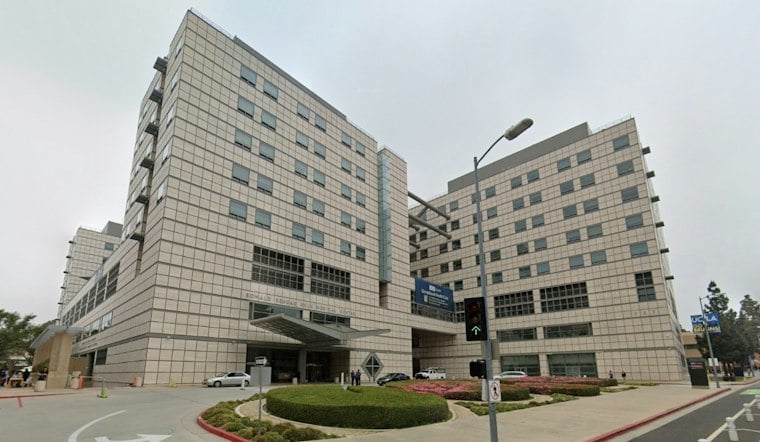
Dani got the call a little after 11:30 p.m. on Sept. 26 that a donor heart was available, and the UCLA cardiology team accepted the offer, with surgery scheduled for the next day. Kian underwent a roughly six-hour transplant operation on Sept. 27 at UCLA Mattel Children's Hospital in Los Angeles. Dani later said the donor heart was connecting and blood was flowing by around 2 a.m. the following morning, according to the report.
A donor-heart offer is governed by national matching rules, not simply by who has waited longest. For hearts, the federal allocation system considers medical urgency and distance from the donor hospital, while blood type and organ size also affect matching. Because hearts can generally be preserved for only a short time—usually up to six hours—the timing and logistics of an offer are especially consequential. The rules provide context for the rapid overnight call the Carrs received, though they do not establish why this particular heart was offered to Kian.
He was monitored in the hospital until Sunday morning after the transplant, then returned to the Ronald McDonald House 12 days after surgery. Under donor network policy, the family cannot contact the donor's family for at least one year, the paper noted.
Living With HLHS
Hypoplastic left heart syndrome is rare — fewer than 1,000 babies, or roughly 1 in 3,800, are born with it each year, per the Review-Journal, citing the CDC. Dr. Michael Taylor, chief of cardiology at Children's National Hospital in Washington, said about half of patients born with HLHS either die or require a heart transplant by the time they are 12. Dr. Seth Hollander, clinical professor of pediatric cardiology at Stanford University and medical director of pediatric heart transplantation at Stanford Medicine Children's Health, said the condition is uniformly fatal without intervention and that HLHS patients require frequent medical supervision from the time of diagnosis. Neither physician was involved in Kian's care, the outlet reported; UCLA's Congenital Heart Defects Research Program was unavailable to comment for the story, according to UCLA Health spokesperson Rocio Cruz.
Fewer than 1,000 babies, or about 1 in 3,800, are born with HLHS each year in the United States. Treatment can include multiple operations, but those repairs do not cure the condition: the CDC’s HLHS guidance says affected children need surgery soon after birth and ongoing heart-doctor care. That longer medical course helps explain why Kian’s story spans emergency newborn treatment, mechanical support and ultimately transplantation.
Kian will take medications for the rest of his life and may eventually need a second heart transplant — Hollander noted that a repeat transplant is typically needed within 15 to 25 years of the first. Hollander said most child heart transplant recipients go on to have full functional capacity compared with healthy peers and relatively few limitations.
Dani put it simply: there is no such thing as quitting. A printed banner at the homecoming read, “Welcome Home Kian, Heart Transplant Survivor,” and displayed the figure “453 days” as the family began a new chapter adjusting to life at home.




